
You crossed your first $200K, mentioned reviews to an agency or a Slack group, and someone said the word Okendo. Maybe twice. And now you are looking at your Judge.me dashboard, which costs you either nothing or $15 a month, wondering what you are missing.
Here is the short version of Judge.me vs Okendo. Judge.me is a reviews app with a flat price that never moves. Okendo is a customer marketing platform where reviews are one of five products, and the price climbs with your order volume. Both collect reviews well. They are not really competing on review collection at all.
The confusion comes from one number. Okendo is quoted everywhere as starting "from $19 a month," and most people read that as a starting point. It is not a starting point. It is the complete price of Okendo Reviews at up to 200 orders a month, and the next step up is $119.
So the real question is not which app is better. It is whether the thing Okendo does that Judge.me doesn't is worth roughly $1,250 a year at your current order volume. For most stores under $200K, it isn't. Past that, it depends entirely on your category, and I'll show you exactly where the line sits.
This post sits next to the four-app comparison covering Judge.me, Loox, Stamped, and Yotpo. Okendo is the one that was missing.
What Okendo is, and why your agency keeps naming it
Okendo launched on the Shopify App Store in June 2018 and sells five connected products: Reviews, Loyalty, Referrals, Quizzes, and Surveys. It is Shopify Plus certified, which is a real thing that matters to agencies and almost nothing to a store doing 150 orders a month.
Agencies name it for three reasons that are all legitimate. It is built only for Shopify, so the integrations are deeper than a platform-agnostic tool can manage. It collects structured data alongside the review text, which is the part Judge.me's free plan doesn't match. And it comes with an onboarding manager and a success manager, which means the agency doesn't have to do the setup.
That last reason is the one nobody says out loud. Part of what you are paying for is somebody else's implementation time.
The review counts are worth a glance before you assume popularity equals fit. Okendo holds 4.8 stars across about 1,424 Shopify App Store reviews. Judge.me holds 5.0 across roughly 46,980. Those numbers describe two different install bases, not two different quality levels.
Judge.me vs Okendo pricing as your orders grow
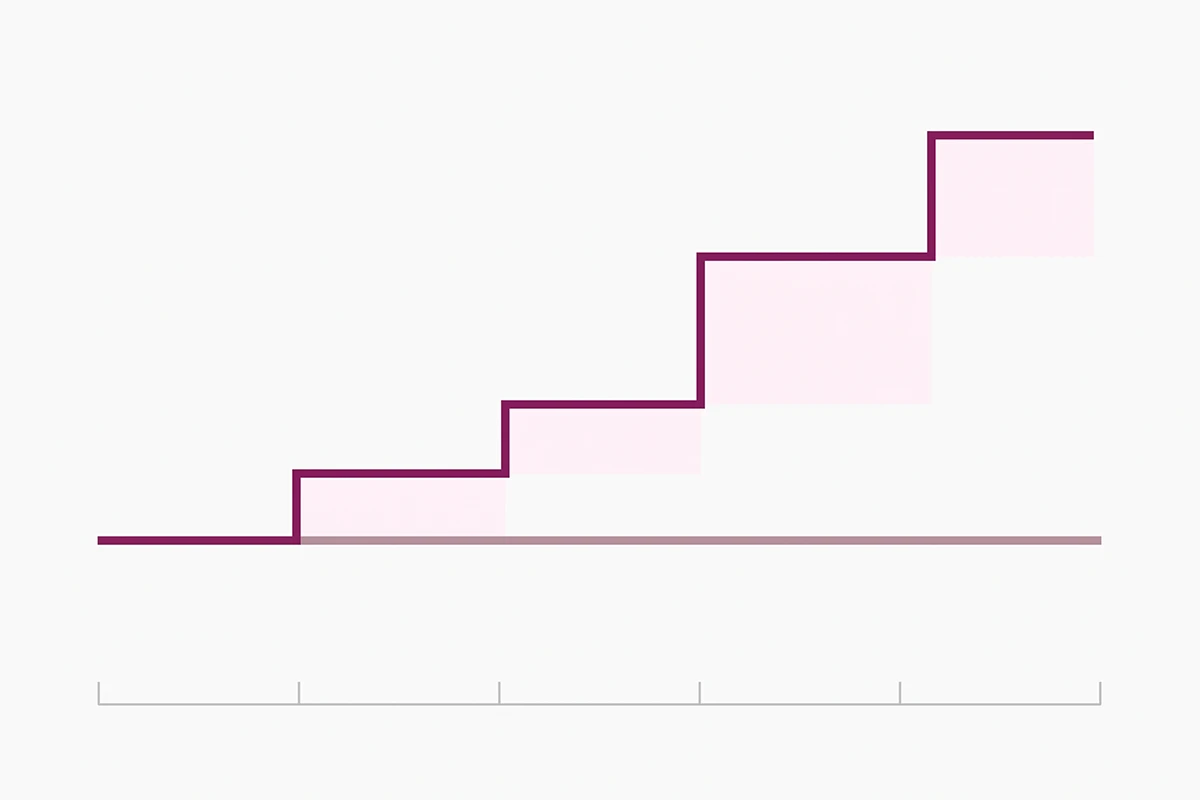
This is the section people come for, so here it is plainly. Judge.me runs a free plan with no order cap and a single paid plan at $15 a month. That $15 is the ceiling. It does not scale with orders, reviews, or revenue.
Okendo prices Reviews against your monthly order volume, in four published steps, per its Shopify App Store listing. Judge.me's listing shows the flat structure next to it.
| Monthly orders | Okendo Reviews | Judge.me | What changes at this step |
|---|---|---|---|
| Up to 50 | Free | Free | Both free. Okendo caps the free plan at 50 orders a month. |
| 51 to 200 | $19 (Essential) | Free or $15 | Okendo starts billing. Judge.me still costs nothing unless you want Awesome. |
| 201 to 1,500 | $119 (Growth) | Free or $15 | Okendo adds AI summaries, review keywords, a Q&A widget, and TikTok. |
| 1,501 to 3,500 | $299 (Power) | Free or $15 | Okendo adds review campaigns, a CSS editor, email and SMS integrations, and branding removal. |
| 3,501 and up | Quoted, usually annual | Free or $15 | Okendo moves you to platform pricing. Judge.me does not move at all. |
Where the $200K store actually lands
At a $60 average order value, $200K a year is about 278 orders a month. That puts you in Okendo's Growth tier at $119 a month, or $1,428 a year. Judge.me Awesome over the same year costs $180.
So the honest gap for a store at your stage is roughly $1,250 a year. That is not a rounding error, and it is not ruinous either. It is about the cost of one month of a decent freelancer. The question is whether the structured review data buys you more than $1,250 of anything.
One detail that catches people: Okendo's order cap is on orders, not reviews. A good BFCM week can push you into the next tier on volume you were happy to have.
Attribute reviews: fit, shade, and skin type
This is the real feature difference, and it is worth understanding properly rather than as a bullet on a comparison page.
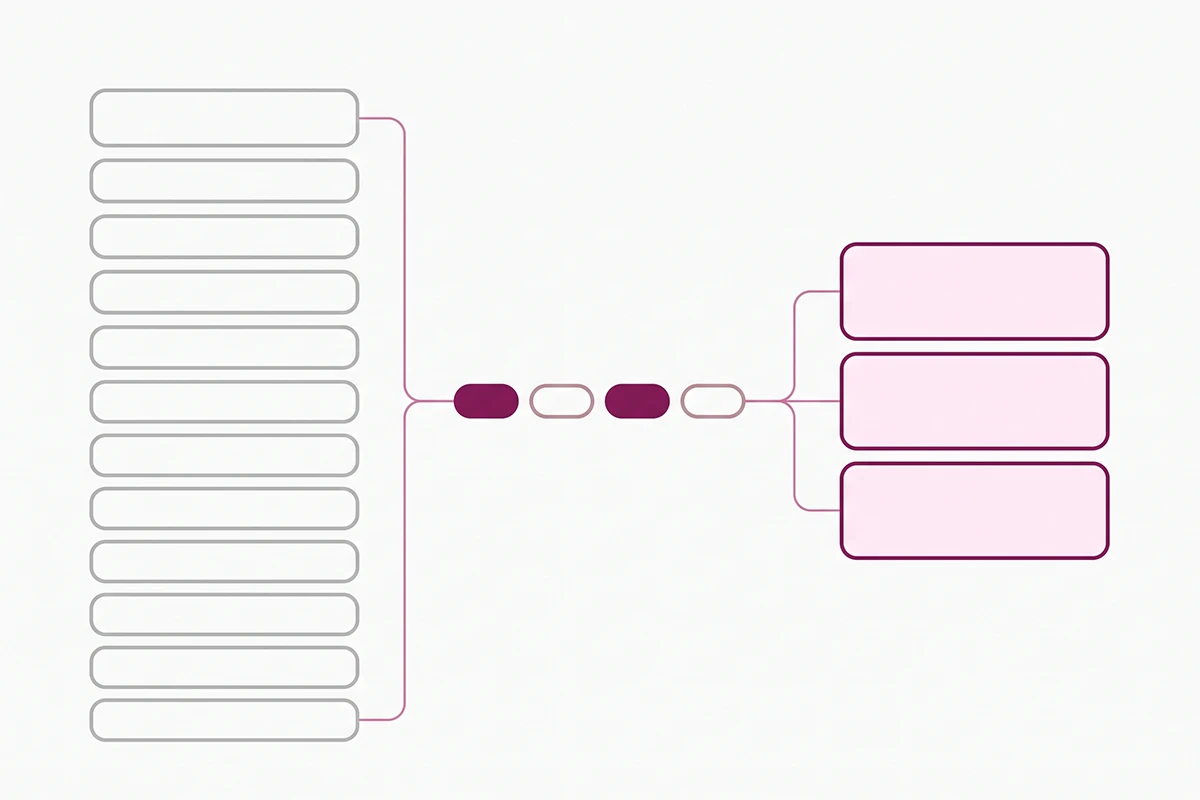
Okendo attributes are structured questions attached to the review form. Four types exist: a 1 to 5 range for things like quality, a centered range for sizing (runs small, true to size, runs large), multi-select for up to ten options, and single-select for one answer. Okendo suggests three to five per product collection so the form doesn't get long, and attributes can be set to collect privately without showing on the page.
For a clothing store, that means a shopper sees "runs slightly small" summarized above the reviews instead of reading fourteen reviews to find out. For skincare, it means filtering to reviewers with the same skin type. For shade-based products, it means shade data you can actually sort.
Does Judge.me have an equivalent?
Yes, and most people comparing these two don't know it. Judge.me custom questions support five types: single choice, multiple choice, rating scale, free text, and a slider. Single and multiple choice answers can be turned into filters on the review widget, and any answer can be kept internal.
The catch is that custom questions sit on the Awesome plan. So the honest framing is this: attribute reviews are not an Okendo-only feature. They are a $15-a-month feature on Judge.me and a $119-a-month feature on Okendo at the same order volume.
What Okendo does better is the display layer. The attribute summaries and filters are more polished out of the box, the widget styling controls go deeper, and the data flows into the rest of its platform. Whether that polish is worth the gap depends on how much of your conversion problem is actually a fit problem. If you sell apparel and your return rate is driven by sizing, it might be. If you sell candles, it is not, and your money is better spent getting more photo reviews instead.
How deep does the Okendo Klaviyo integration actually go?
Okendo sends event and profile data from across all five of its products into Klaviyo in real time: review submissions, loyalty activity, referral events, quiz answers, survey responses. In practice that means you can build a flow that emails everyone who left a four-star review mentioning fit, or segment by quiz answer.
Judge.me integrates with Klaviyo too, on the Awesome plan, along with roughly 130 other tools. The difference is breadth of data, not whether the connection exists.
Two things to check before you buy Okendo specifically for Klaviyo. First, Okendo's own help documentation does not name a plan requirement for the integration, while its App Store listing lists email and SMS integrations under the Power plan at $299. Merchants in public review sites report being told they needed Power. Ask Okendo directly and get the answer in writing before you commit.
Second, Klaviyo now sells its own reviews product, and Klaviyo's documentation is clear that it is billed separately from your email and SMS plan. If the whole reason you are considering Okendo is Klaviyo depth, you are choosing between three stacks now, not two.
Are you buying a reviews app or a five-product suite?
Okendo's pricing page sells bundles: Attract (Reviews, Referrals, Surveys), Convert (Reviews, Quizzes, Surveys), and Retain (Reviews, Loyalty, Surveys), at a discount against buying products separately. The full platform is typically an annual commitment and comes with onboarding and a success manager.
This is where the comparison stops being fair, in Okendo's favor. If you were already going to pay for a loyalty program and a survey tool, bundling them behind one customer profile is a real saving and a real reduction in app bloat. Three apps that know the same customer beat three apps that don't.
But be honest with yourself about the sequence. Buying a loyalty program because it came in the bundle is how stores end up paying for three products and running one. If you do not have a loyalty program today and were not planning one this quarter, the bundle is not a discount. It is a larger purchase.
The same logic is why Yotpo is usually wrong for stores at this stage. Suite pricing rewards stores that will actually run the suite.
Switching either way: what migrates and what gets left behind
Both directions work, and neither is frictionless. Judge.me exports reviews to CSV on the free plan, including title, body, rating, date, reviewer name and email, replies, and images, at up to 100,000 reviews per file. Okendo imports from a CSV template and matches reviews to products by product ID, handle, or SKU, with product ID as the recommended method.
Three things to plan for.
Videos do not travel. Judge.me's export does not include video files (they download separately from the dashboard), and Judge.me's own importer accepts images only. Okendo's importer takes media by public URL, not file upload. If you have built up video reviews, budget real time for them or accept the loss.
Your star snippets go quiet for a bit. Reviews keep their original dates when imported correctly, but the schema on your product pages is generated by whichever widget is installed. Between removing one app and getting the other's widget placed and validated, Google can drop your stars. Do the swap in a slow week, not in October.
Reviews attached to deleted products need a plan. This is the one that quietly costs stores years of social proof. If you have retired SKUs, those reviews are orphaned in the export unless you map them to a replacement product first. Judge.me handles this natively with product grouping, which is one reason it stays the default recommendation here, and it is why Studio Niza's reviews work includes the discontinued listing redirect at all. Sort that out before you migrate, not after.
Which one should you use? The verdict by revenue band
No hedging. Here is where each one belongs.
| Your revenue | Use this | Why |
|---|---|---|
| Under $200K a year | Judge.me, free or $15 | Okendo's order cap bites before its features pay for themselves. Nothing here is worth $1,428 a year yet. |
| $200K to $1M, simple products | Judge.me Awesome, $15 | Custom questions cover the attribute gap. Spend the difference on collecting more reviews. |
| $200K to $1M, fit or shade driven | Okendo Growth, $119 | Apparel, footwear, beauty, skincare. Structured fit and shade data lowers returns and answers the objection on the page. |
| $1M+, already running loyalty or surveys | Okendo bundle | One customer profile across reviews, loyalty, and surveys beats three apps that don't talk. |
| $1M+, reviews only | Judge.me, or compare Stamped | Paying platform prices for one product is the expensive way to buy reviews. |
If you land in that last row and want a middle option, Stamped sits between the two on both price and polish.
Wrapping up
Three things to take away from this Judge.me vs Okendo comparison.
First, the $19 figure is not a starting price, it is a ceiling for 200 orders a month. Price Okendo at the tier you will actually be in six months from now, not the one you are in today.
Second, attribute reviews are the genuine difference, and they are worth paying for in categories where fit, shade, or skin type is the objection standing between a shopper and checkout. In every other category, they are a nice chart nobody reads.
Third, Judge.me's custom questions close most of that gap for $15 a month. Try them before you conclude you have outgrown the app. It costs you fifteen dollars and an afternoon to find out.
The work that moves your numbers is mostly not app selection. It is asking every customer for a review at the right moment, replying to all of them, and keeping the reviews you already earned attached to products that still exist. A store with 400 reviews on Judge.me free beats a store with 40 reviews on Okendo Power, every time, and it is not close.
If you are still on the fence, stay where you are and revisit it when your order volume actually crosses the tier you are worried about. The switch is a CSV file. It will still be there in three months.
Want someone else to run the reviews program?
Studio Niza's Reviews Management service covers request automation, replies to every review, and the discontinued listing redirect most services skip. It works on whichever app you land on, Judge.me or Okendo. From $299 setup, $199/month.
See pricing & services →Or email contact@studioniza.com if you have a specific question about your store. I read every one.
Frequently asked questions
If you're still unsure after reading these, just send the question.
Is Okendo worth it for a Shopify store under $200K a year? +
For most stores under $200K a year, no. Okendo's free plan caps at 50 orders a month and the next step up is $19, then $119 once you pass 200 orders. Judge.me's free plan has no order cap at all. The one exception is apparel, footwear, or beauty, where structured fit and shade data can pay for itself in lower returns even at smaller volume.
Does Judge.me really have no order limits on the free plan? +
Yes. The Judge.me free plan covers unlimited product and store reviews, unlimited photo and video reviews, Google rich snippets, and the review widgets, with no order or review cap. The paid Awesome plan is $15 a month flat and does not scale with volume either, so $15 is the most you can pay.
What does the $19 Okendo plan leave out? +
The Essential plan at $19 a month caps you at 200 orders a month. AI review summaries, review keywords, the Q&A widget, and the TikTok integration start on the Growth plan at $119. Review campaigns, the CSS editor, email and SMS integrations, advanced reporting, and removing Okendo branding sit on the Power plan at $299.
Can you move reviews from Judge.me to Okendo without losing them? +
Mostly, yes. Judge.me exports to CSV on the free plan with review text, ratings, dates, reviewer details, replies, and images, and Okendo imports that with a CSV template matched by product ID, handle, or SKU. Video reviews are the weak point in both directions, and reviews attached to products you have deleted need to be mapped to a replacement first.
Do Judge.me and Okendo both get star ratings into Google search results? +
Yes, both support review rich snippets on their free tiers, so this is not a reason to pick one over the other. What matters more is that only one reviews widget is generating product schema on your page at a time. Running two review apps at once is the usual cause of stars that never show up.
Does Okendo replace Klaviyo, or work alongside it? +
Alongside. Okendo sends review, loyalty, referral, quiz, and survey data into Klaviyo so you can build flows and segments from it. Klaviyo also sells its own reviews product now, billed separately from its email and SMS plans, so compare all three before you assume Okendo is the only way to get review data into Klaviyo.