
Your Loox bill went up and nothing about your store changed. That is the usual reason Shopify owners start searching for Loox alternatives. The app did not get worse. Its price is tied to your order count, so growing the store is the thing that raises the invoice.
Here is the mechanic, because most comparison posts skip straight to feature tables. The Loox Convert plan is $49.99 a month and includes 300 orders, then charges $50 for every additional block of 300, according to the app's Shopify App Store listing. At 1,000 orders a month that lands near $200. At 1,800 orders you have reached $299.99, exactly what Loox charges for its Unlimited plan, so you have paid your way into the top tier without ever choosing it. The most expensive plan Judge.me sells is $15 a month. That gap is why this search exists.
Price alone is a bad reason to switch, though, because switching costs something that never shows up on an invoice. You lose features, you lose some review data, and you spend a weekend re-doing widgets. So this post ranks five Loox alternatives (Judge.me, Junip, Stamped, Okendo, and Yotpo) by what you actually give up, not by who has the longest feature list. It also covers the thing none of the ranking posts mention: Loox has a free plan now, and for a lot of stores under 500 orders a month, the cheapest Loox alternative is Loox.
Why people leave Loox
Three reasons come up again and again, and only one of them is about the number on the bill.
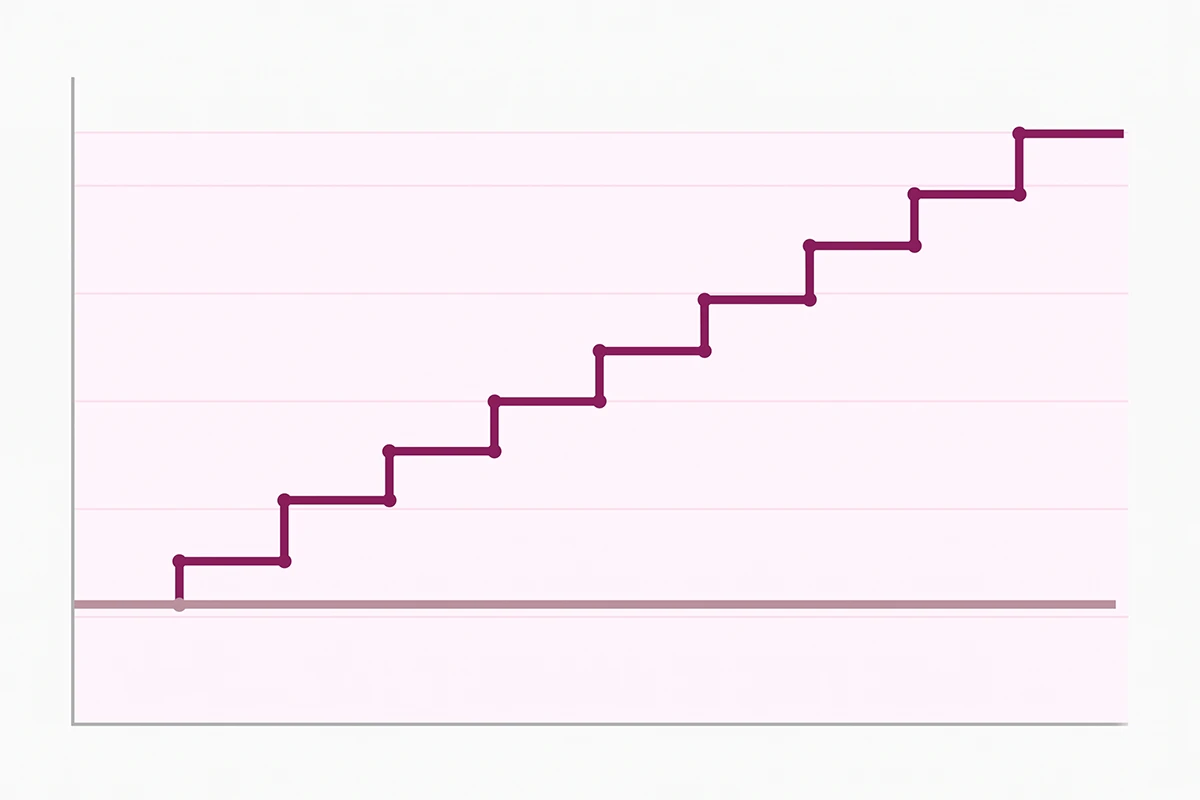
The bill is indexed to your growth
Order-based pricing means your review app gets more expensive in exactly the months you had a good run. A store doing 400 orders in January and 1,300 in November is not getting more software in November. It is paying four times as much for the same widgets and the same emails. That is a defensible model for the vendor, and a hard one to budget against when you are the only person doing the budgeting.
The bill is hard to predict in advance
Usage charges on the Convert plan apply once you pass the order allowance included in your base price, and Loox's own billing documentation notes those charges can be split across several Shopify invoices. So the amount you owe for a busy month can arrive in pieces, after the month is over. The complaint I hear most from store owners is not that Loox is expensive. It is that they could not tell you what next month costs.
Text reviews are the quiet weak spot
Loox is built around the photo. That is its strength, and it is why apparel, home goods, and beauty stores stay. But most reviews any store collects are still text-only, and Loox's text review experience is thinner than what Judge.me or Junip give you for less. If 80% of your reviews are three sentences and no image, you are paying a visual-reviews premium for a text-reviews reality.
Is Loox's free plan enough to stay on?
For a surprising number of stores, yes. Check this before you migrate anything: a downgrade takes two minutes, a migration takes a weekend.
The Loox free plan covers up to 500 orders a month and includes review request emails and reminders, the option to offer a discount for photo reviews, 17+ display widgets, Google rich snippets and schema, and Shop app syndication. That is a complete reviews setup for a store under 500 orders. What it leaves out: video reviews, the referral program, Google, Meta and TikTok syndication, the AI features, API access, and removing Loox branding from the widget.
So the honest test is a short one. Open your last 90 days of reviews and count how many have a video attached. If it is under 5%, video is not doing real work on your store and you are paying $49.99 a month plus overages for a feature nobody uses. Check your referral program for the same quarter. If neither is producing and you are under 500 orders a month, downgrade to free and stop reading. You just solved this without a migration.
The 5 Loox alternatives, ranked by what you give up
These are ranked by cost of switching, not by feature count. Number one gives up the least. If you want the same apps compared by revenue band instead, the four-app comparison takes that angle.
| App | Entry price | Cost at ~1,000 orders/month | Order-based bill? | What you give up vs Loox |
|---|---|---|---|---|
| Loox (for reference) | Free to 500 orders | About $200 (Convert) | Yes | Nothing, that is the baseline |
| Judge.me | Free | $15 | No | Referrals, visual polish, AI review stories |
| Junip | Free, unlimited orders | $29 (Core) | No | Referrals, syndication until the $79 tier |
| Stamped | $23 (to 200 orders) | $99 | Yes | Referrals, and you keep an order-based bill |
| Okendo | Free to 50 orders, then $19 | $119 (to 1,500 orders) | Yes | Budget, and you keep an order-based bill |
| Yotpo | Free to 50 orders | $119 (Pro) | Yes | Pricing predictability |
Every price here was read from each app's Shopify App Store listing and pricing page on September 17, 2026. App pricing moves, so check before you commit.
1. Judge.me: you give up referrals and keep almost everything else
Judge.me has a free tier with unlimited photo and video reviews and Google rich snippets, and a paid plan at $15 a month that adds Google Shopping syndication, AI replies, referrals, and full customization. Judge.me's pricing page puts it plainly: $15 is the most you can ever pay them, at any order volume.
What you give up is polish and program depth. Loox's widgets look better out of the box, its photo-collection flow is more insistent, and its referral program is a real product rather than a checkbox. Judge.me's widgets are fast and functional rather than beautiful.
It is still the app I recommend by default for any Shopify store under roughly $200K a year, for one unglamorous reason: Judge.me merges products natively, which is what makes moving reviews off a discontinued product possible without a manual CSV round trip. If you retire SKUs regularly, that is worth more than widget styling. The full Loox vs Judge.me comparison runs the cost at 100, 500, and 2,000 orders a month.
2. Junip: you give up the order-based bill entirely
Junip's free plan carries unlimited orders, photo and video reviews, review request emails, product page widgets, and rich snippets, per its Shopify App Store listing. Core at $29 a month adds incentivized reviews, review replies, and product grouping. Growth at $79 adds Google Shopping, TikTok Shop, Shop app, and Meta syndication.
This is the cleanest answer to the complaint that brought you here. There is no order meter running anywhere in Junip's pricing, so a good November costs the same as a slow February.
What you give up: there is no referral program, Google Shopping syndication sits behind the $79 tier where Judge.me includes it at $15, and incentivized media (the discount-for-photo offer that makes Loox work) starts at $29.
3. Stamped: you trade one order-based bill for a flatter one
Stamped's reviews tiers run $23 a month to 200 orders, $99 to 1,000 orders, and $199 to 5,000 orders, according to its Shopify App Store listing. Photo and video UGC collection is included from the entry tier, and so is Q&A.
Be clear-eyed about what this buys you. At 1,000 orders a month you go from about $200 to $99, which is real money, but you are still on a plan that gets more expensive as you grow. You have flattened the curve, not removed it. Stamped earns its place for stores that want Q&A on product pages and a path into loyalty with the same vendor. If you only want reviews, you are paying for a suite you have not opened yet.
4. Okendo: you give up budget and get a platform
Okendo starts free to 50 orders, then $19 a month to 200 orders, $119 to 1,500 orders, and $299 to 3,500 orders. Reviews, loyalty, quizzes, referrals, and surveys sit under one roof, and the display quality is a step up, with attribute ratings (fit, quality, comfort) that read well on apparel and beauty product pages.
For a store leaving Loox over cost, Okendo is a strange destination: $119 at 1,000 orders a month is the smallest saving on this list, and the bill still climbs with volume. It belongs here for one reader, the store past $200K that wants a single vendor for reviews and loyalty.
5. Yotpo: you give up pricing predictability
Yotpo has a free tier to 50 monthly orders, a Starter plan at $15 a month, and a Pro plan at $119 a month, and both paid tiers carry the note that pricing changes based on order volume. That sentence should stop you. If you are leaving Loox because your bill moves with your order count, Yotpo's paid tiers reproduce the problem you are trying to leave.
It is on this list because it is the most capable platform of the six, with SMS, loyalty, subscriptions, and reviews in one account, and because it is the app Loox users compare against most. It is the right call at Shopify Plus scale and overkill below it. Loox vs Yotpo in detail covers where the crossover sits.
Which Loox alternative captures photo reviews as well?
None of them, and it is worth saying that plainly rather than pretending the apps are interchangeable. Every app here can store a photo. That is not the hard part. The hard part is asking for one in a way that gets a customer who already typed three sentences to also open their camera roll. Loox's whole request flow is built around that moment, and the discount-for-photo incentive sits on its free plan.
Roughly where the others sit: Judge.me accepts unlimited photo and video on its free tier, but the ask is gentler, so expect a lower photo rate at the same order volume. Junip includes photo and video on free, with the incentive that drives submissions starting at $29. Stamped includes photo and video UGC from $23, Okendo carries media across its tiers, and Yotpo starts media collection on its $15 Starter plan rather than the free tier.
So run this number first. In your Loox dashboard, take the last 200 reviews and work out what share carry an image. Above 25% and photo collection is load-bearing for your store, so the migration will cost you conversion for a few months while you rebuild the incentive flow elsewhere. Under 10% and you are paying for a photo engine your customers are not using, in which case any app here will do.
How to migrate off Loox, and what does not transfer
The export is easy. In Loox, open Manage Reviews, click the three dots, and choose Export to .csv, once for product reviews and again for store reviews. In your new app, open the import screen and pick Loox as the source. Judge.me processes the file in the background, usually within a few minutes. The part nobody writes about is what arrives on the other side in worse condition than it left.
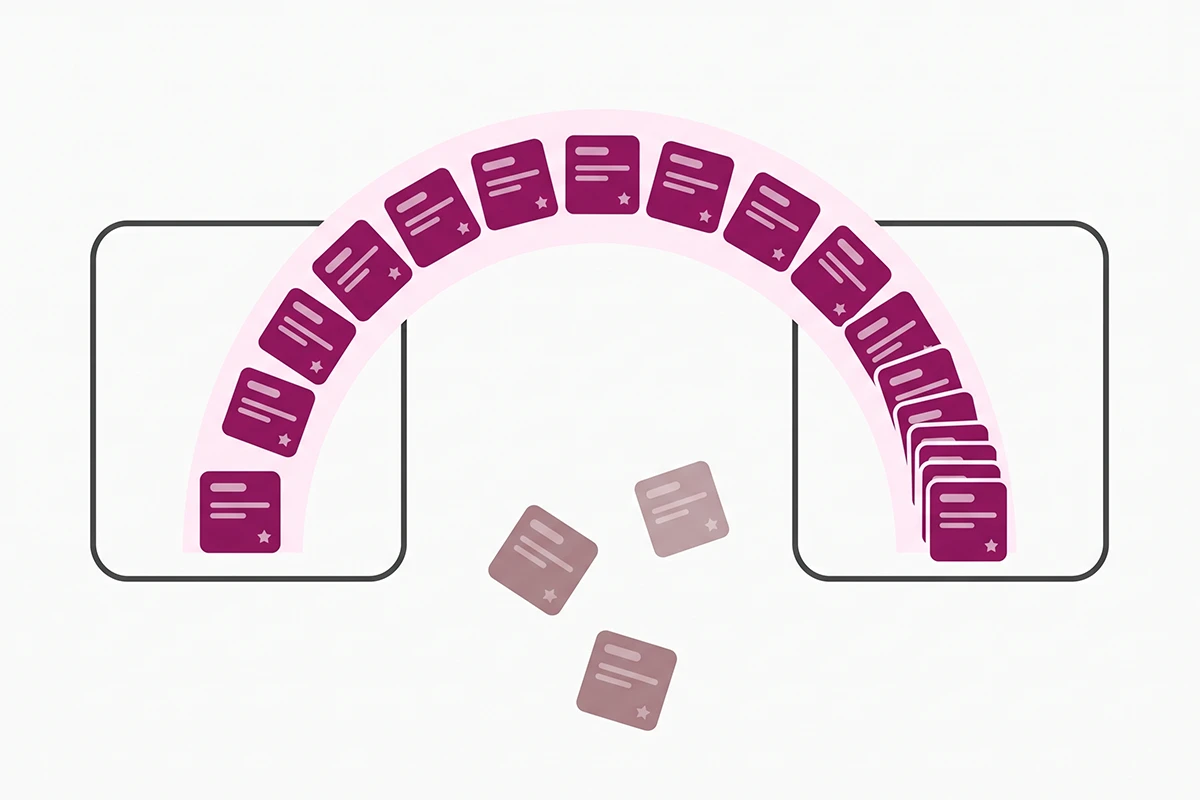
Videos do not come by default. Judge.me's migration documentation states that videos are not imported and have to be added manually by editing each review afterwards. If you have 40 video reviews, that is a real afternoon.
Reviewer names can change. If you turn on verification during import, names come from your matching Shopify customer records instead of the Loox file, so any record without a first and last name shows as "Customer" on your product page. Spot-check a dozen reviews before you take the old widget down.
Unverified imports stay out of your Google feed. Reviews that are not verified during the import will not appear in the Product Ratings feed for Google Shopping. This is the most expensive thing to get wrong, because it decides whether your stars survive the move. Turn verification on and accept the name tradeoff above.
Replies and program data do not travel. Your replies to reviews, your referral history, and any Loox-specific widget styling are not part of the export. If you have written thoughtful replies to your negative reviews, save them before you uninstall.
One sequencing rule saves a lot of pain: keep both apps installed for at least seven days. Import, verify, place the new widget, confirm your stars still validate in Google's Rich Results Test, and only then uninstall Loox. Uninstalling first is how stores lose reviews permanently.
When staying on Loox is the right call
Three situations, all more common than the comparison posts suggest.
You are under 500 orders a month. The free plan covers you. Downgrade instead of migrating and you keep your reviews, your widgets, and your afternoon.
Your referral program produces orders. Judge.me includes referrals at $15, but if Loox referrals already drive revenue, moving means rebuilding a working program in a less mature tool. Check the number before you assume it is small.
Your photo rate is above 25%. Visual reviews are doing the selling on your product pages. Find the $100 a month somewhere with lower stakes.
And one fix that is not a migration at all: if you are on Convert and past roughly 1,800 orders a month, your overages have already reached $299.99, the flat price of the Unlimited plan. Switch plans. You get unlimited orders and priority support for money you were already paying in blocks.
Wrapping up
First, check whether you have a plan problem rather than an app problem. Loox's free tier to 500 orders and the Convert-to-Unlimited crossover near 1,800 orders both solve real bills without a CSV file changing hands. Most people searching for Loox alternatives have checked neither.
Second, if you do switch, the ranking is short. Judge.me at $15 flat if you want the lowest ceiling and native product merging. Junip if you want no order meter at all and can live without a referral program. Stamped if you want Q&A and a path to loyalty. Okendo and Yotpo are right for stores past $200K that are buying a platform, not a reviews app.
Third, plan the migration around the Google feed, not the reviews. The reviews will import. The stars are what you quietly lose, and you find out weeks later when a product page stops showing ratings in search results.
Done carefully, this is a weekend: export, import with verification on, rebuild the request emails, place the widgets, validate the schema, run both apps in parallel for a week, then uninstall. None of it is beyond a solo founder. It is just fiddly, and the fiddly parts are the ones that cost you stars if you rush them.
Rather not run the migration yourself?
Studio Niza's Reviews Management service handles the export, the import, the widget setup, and the review requests that run after it, including the discontinued listing redirect most reviews services skip. $299 setup, $199/month.
See how reviews management works →Or email contact@studioniza.com if you have a specific question about your store. I read every one.
Frequently asked questions
If you're still unsure after reading these, just send the question.
Is there a free alternative to Loox for Shopify? +
Yes, two good ones. Judge.me's free plan includes unlimited photo and video reviews with Google rich snippets, and Junip's free plan carries unlimited orders. Loox itself also has a free plan covering up to 500 orders a month, so check that before you migrate anything.
Does Loox charge per order? +
Effectively, yes, on its paid plan. The Convert plan is $49.99 a month with 300 orders included, then $50 for every additional block of 300 orders. The free plan covers up to 500 orders with no usage charge, and the Unlimited plan is a flat $299.99 a month.
Can I keep my Loox reviews if I switch apps? +
Yes. You export your reviews from Loox as a CSV file from the Manage Reviews screen and import that file into the new app. The text, ratings, and dates transfer cleanly. Videos and replies are the parts that need manual work afterwards.
Which Loox alternative is cheapest at 1,000 orders a month? +
Judge.me at $15 a month, flat, with no order-based component at all. Junip's Core plan at $29 a month is the next cheapest and also has no order meter. For comparison, Loox Convert lands near $200 a month at that volume.
Will switching review apps hurt my Google star ratings? +
It can, and this is the part worth planning. Imported reviews that are not verified during the import will not appear in the Product Ratings feed for Google Shopping. Turn verification on during import, keep both apps live for a week, and validate your product pages in Google's Rich Results Test before you uninstall the old app.
How long does it take to migrate from Loox to another reviews app? +
The import itself usually processes in under ten minutes. The real time cost is everything around it: rebuilding your review request emails, placing and styling widgets, re-adding video reviews by hand, and validating schema. Budget a weekend for a store with a few hundred reviews.