
You launched the store. The products are live, the checkout works, and the reviews section sits there empty. Now you are stuck in the loop every new Shopify owner hits: no sales because there is no social proof, and no reviews because there are no sales.
This is the chicken-and-egg trap, and it is real. Around nine in ten shoppers read online reviews before buying, and most hesitate to order a product that shows none. A brand-new store with zero reviews is asking a stranger to go first, with their card, on a brand they have never heard of.
The good news is that you have more honest options than you think. The bad news is that the fastest-looking ones (buying reviews, writing a few yourself, having friends quietly post five stars) are exactly the ones that can get you fined now that the FTC's review rule has teeth.
This post is about how to get reviews for a new store with no sales the compliant way. What the FTC rule actually allows, how to seed your first honest reviews before you have customers, and the trust signals that do the social-proof job while the real reviews accumulate. It is written for pre-launch and just-launched founders, though anyone in their first year will find the playbook useful.
One thing up front: there is no honest way to have 200 reviews on launch day. Stop trying to fake the finish line. Seed the start instead.
Why a store with no reviews struggles to make the first sale
A store with no reviews struggles because reviews are how strangers decide you are safe to buy from. Without them, every product page asks the shopper to take all of the risk.
The numbers are blunt. Roughly 93% of consumers read reviews before they buy, and close to that share say reviews influence what they purchase. More pointed for a new store: a large majority of shoppers will not commit to an unfamiliar business without checking reviews first.
The jump that matters most is not from 50 reviews to 100. It is from zero to a handful. Research compiled from the Spiegel Research Center found that displaying five or more reviews lifts conversion sharply compared with a product that shows none. In other words, the first five honest reviews on your best product do more work than the next fifty.
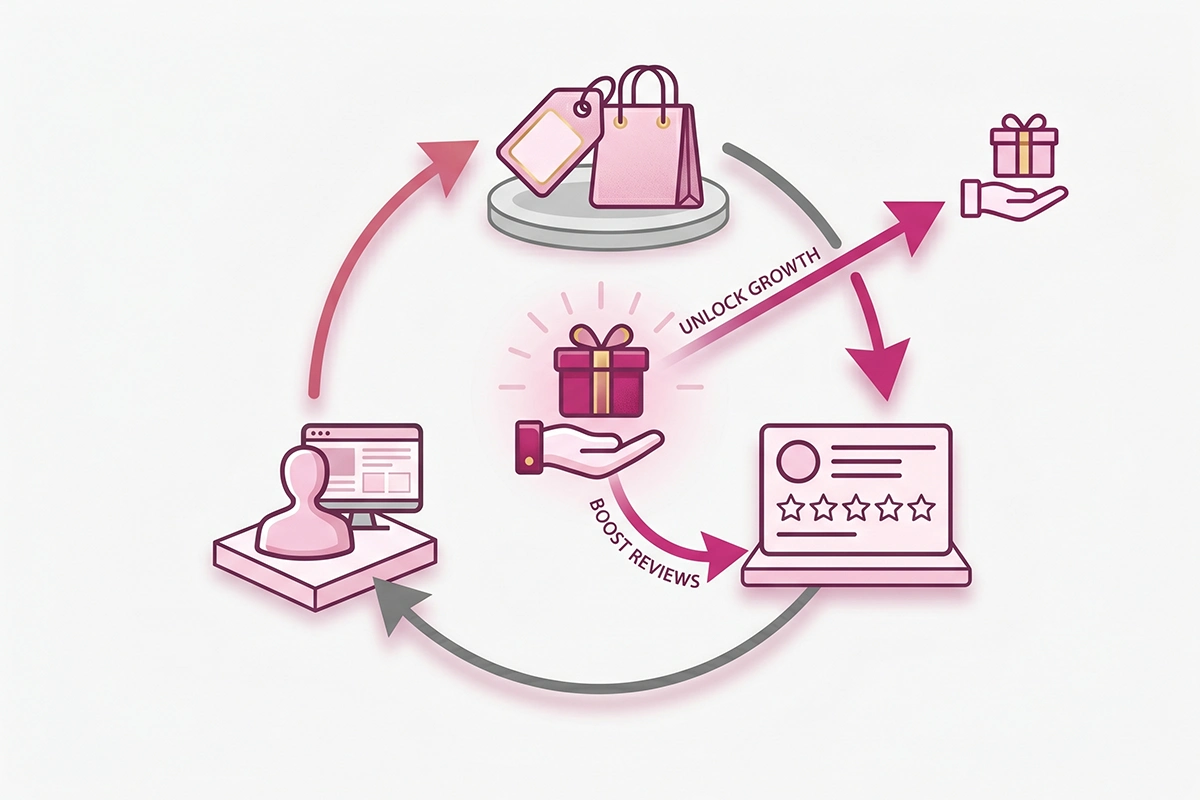
That is the trap in one picture. No sales means no reviews. No reviews means the next visitor bounces. No new buyer means no new review. The loop does not break on its own. You break it on purpose, by getting your product into real hands and by giving shoppers other reasons to trust you while the reviews are still thin.
The rest of this post is the two-part way out: seed real reviews compliantly, and lean on trust signals in the meantime.
What the FTC rule lets you do, and what it bans
Here is the rule in one line: you can ask for honest reviews and even reward them, but you cannot buy, fake, or sentiment-gate them, and any non-obvious connection has to be disclosed.
The relevant law is the FTC's Consumer Reviews and Testimonials Rule, in effect since October 21, 2024. It lets courts impose civil penalties for knowing violations, which is why writing a few yourself is a worse idea in 2026 than it was two years ago. Three parts of the rule matter most for a brand-new store.
Fake reviews are banned outright. Writing reviews for your own store, buying them, or having someone create reviews from people who never used the product all fall under prohibited conduct.
Incentives are allowed, but only if the reward is not tied to a sentiment. You can offer store credit for an honest review. You cannot offer it for a positive one. "Leave a review for $5 off, positive or negative" is fine. "Tell us how much you loved it for $5 off" is not.
Insider reviews are allowed only with clear disclosure. If an employee, a business partner, or a family member writes a review, they have to disclose the relationship clearly and conspicuously, in a way the reader cannot miss.
Can you offer a discount for a review?
Yes, with two conditions. The offer has to be open to any honest review regardless of star rating, and you cannot imply the review needs to be positive to qualify. The cleaner framing is a simple "share your honest take for 10% off your next order." If you flag the review as incentivized, most reviews apps add the disclosure badge for you, which keeps you on the right side of the FTC's separate endorsement guidance. If you want the full breakdown, I wrote a dedicated guide on how to ask customers for reviews without breaking the FTC rules.
Can friends and family review your store?
They can, but it is riskier than it sounds. The rule allows it only if they clearly disclose the relationship, and the disclosure has to be unavoidable, not buried at the end. There is a second catch: even with a disclosure, if those reviews noticeably lift your average star rating, the FTC has warned that can still be deceptive, because shoppers often see only the star number and never read the individual review.
My honest take: a couple of disclosed reviews from people who genuinely bought and used the product is fine. A wall of five-star reviews from people who share your last name is not social proof. It is a liability.
| Tactic | Compliant? | What you must do |
|---|---|---|
| Asking any buyer for an honest review | Yes | Just ask, with no sentiment strings attached |
| Offering a discount or credit for a review | Yes | Open it to any rating and disclose the incentive on the review |
| Free product in exchange for an honest review | Yes | The reviewer discloses they received it for free |
| A review from a friend or relative | With care | Clear, unavoidable disclosure of the relationship |
| Writing reviews for your own store | No | Prohibited as a fake review |
| Buying reviews or review packages | No | Prohibited, and a known enforcement target |
| Requiring a 5-star review to earn the reward | No | Sentiment-gating is banned |
Compliant ways to seed your first reviews before you have customers
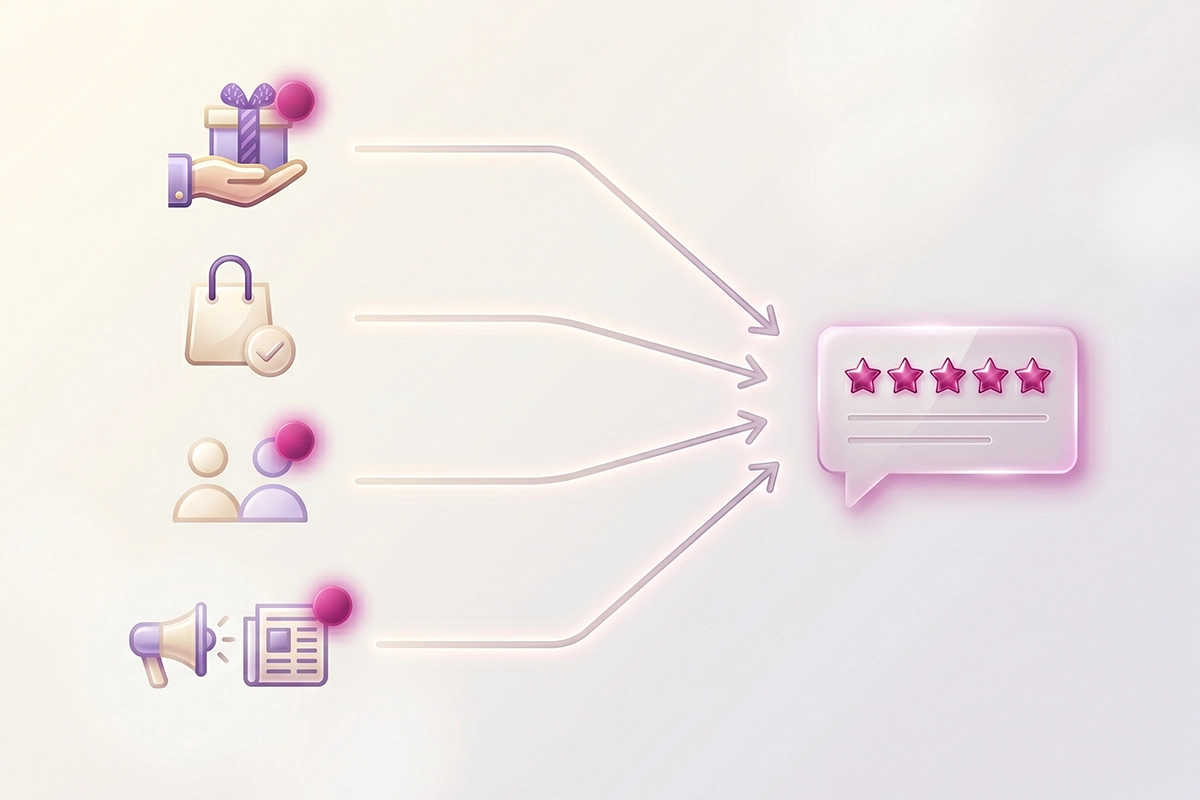
The way to seed reviews before you have customers is to create real first experiences, not fake testimonials. Put the product in real hands, ask honestly, and disclose any connection. Here are the four plays that work, in rough order of value.
Get the product into real hands with a small sampling round
The most honest shortcut is to give a small batch of product to real people and ask for their genuine opinion. This is product sampling, sometimes called seeding. You send the product, free or at cost, to a handful of target customers, and you ask for an honest review, not a positive one.
The compliance part is simple. Anyone who got the product free has to disclose that on their review, because the free product is a material connection the reader would want to know about. A short line on the review saying they received the product for free handles it. Keep the batch small, ten to twenty people, and resist the urge to hand-pick only people you know will rave. Mixed, honest reviews read as more credible anyway.
One caution the FTC flags: reviews that appear suspiciously fast, in unusual volume, or that get the product details wrong are red flags for fake reviews, and a business that ignores those signals can be liable. So space the reviews out and let people actually use the thing first.
Ask your very first buyers immediately, while it is fresh
Your earliest orders are your most valuable review source, and most new stores waste them. The first ten or twenty customers are usually early adopters who like supporting new brands. Ask them, by email, a week or two after delivery, for an honest review.
Set this up before you launch so no early order slips through. A free reviews app like Judge.me handles the automated request on its forever-free tier, which is all a new store needs. Once orders start flowing, the playbook shifts to volume, and I covered that in how to get your first 50 reviews on Shopify.
Use friends and family sparingly, and only with disclosure
If you do ask people you know, keep it to those who actually bought and used the product, and make sure each one discloses the relationship clearly. Two or three disclosed, genuine reviews are a reasonable bridge to your first real customer reviews. Do not build your whole review base this way. It is fragile, it can trip the star-rating problem above, and savvy shoppers can usually sense it.
Pursue expert and press reviews, a different kind of proof
Customer reviews are not the only social proof that moves buyers. A review from a niche blogger, a podcast mention, a "best of" roundup, or a write-up in a trade publication carries weight, sometimes more than an anonymous five-star rating. These are editorial reviews, and they are worth pursuing in parallel.
The approach is unglamorous: find the small publications and creators who cover your category, send a sample with a short, honest pitch, and let them say what they think. A mention you earn can be quoted on your site with a link, which doubles as a trust signal before customer reviews arrive.
The trust signals that substitute for reviews while you wait
While your review count is still low, trust signals do the reassurance job that reviews normally handle. Trust badges and clear policies reduce checkout anxiety and cart abandonment on stores shoppers do not yet recognize. Here are the ones that matter most for a new store with few or no reviews.
Put a real face and story on the brand
The most underused trust signal for a new store is the founder. A brief, honest About page with your name, your photo, and why you started the store does what a review cannot: it tells the shopper a real person stands behind the order. New brands that hide behind a faceless logo look like the throwaway stores buyers have learned to skip.
Make your guarantee and returns impossible to miss
A clear money-back guarantee or easy return policy directly removes the fear of a bad first purchase. Guarantee badges placed near the Add to Cart button tend to lift add-to-cart rates, because that is where hesitation peaks. The one rule: keep the promise, and link the fine print so nobody feels tricked later.
Show secure-checkout and payment signals
Shoppers worry about payment safety on stores they do not recognize. Visible secure-checkout language and the payment-provider logos you already support reassure buyers their card is handled by a name they trust. Place these near the buy button and at checkout, where the anxiety actually lives.
Lean on any media mentions and third-party marks
If you earned a press mention or an expert review from the seeding work above, display it. An "as seen in" line or an endorsement mark from a relevant organization signals outside validation. Avoid inventing badges or awards. A self-made "Best Store 2026" seal does the opposite of building trust.
Write product pages that answer every doubt
Trust is not only badges. Complete, specific product content (clear photos from several angles, real dimensions, materials, sizing, what is in the box) closes the gap a review would otherwise fill. When a shopper can answer their own question, the missing reviews matter less.
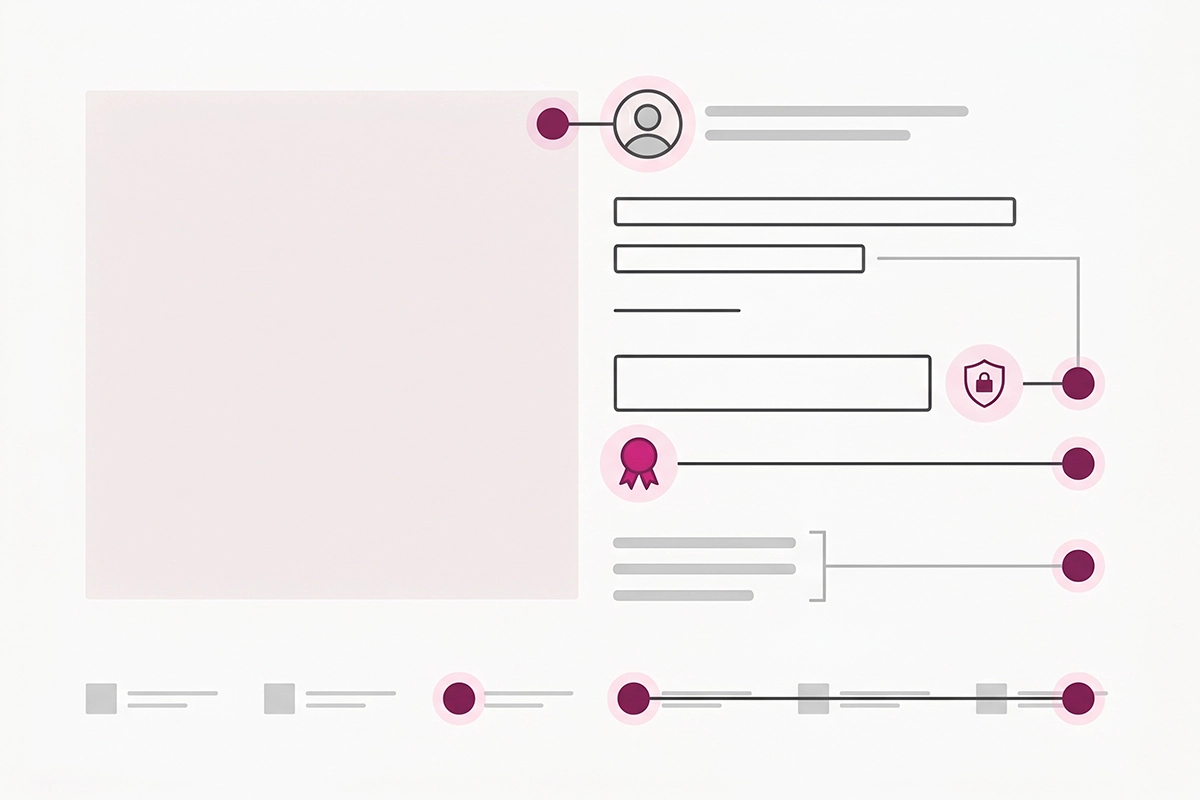
A note on restraint: more badges is not more trust. Two or three relevant signals placed where the doubt actually appears beat eight badges crammed under the buy button, which can read as insecurity.
A realistic first-90-days plan to go from zero to your first 10 reviews
Here is a realistic plan to go from zero reviews to your first ten honest ones in about 90 days, without faking anything. Most of it is setup you do once, then small weekly effort.
| Phase | What to do | Why |
|---|---|---|
| Before launch (week 0) | Install a free reviews app, write the About page, add guarantee and secure-checkout signals, set the request email to send 7 to 14 days after delivery | Trust signals carry the page while reviews are still zero |
| Weeks 1 to 4 | Run one small disclosed sampling round (10 to 20 people), ask every early buyer, pursue two or three niche blogger or press reviews | Real first experiences, spaced out and disclosed |
| Weeks 5 to 8 | Approve and publish reviews as they arrive, add an honest review incentive if volume is slow, reply to every review | Momentum, plus an FTC-safe nudge |
| Weeks 9 to 12 | Push for photo reviews, validate your review schema so stars can show in search, keep the request flow running | Turns a small base into a compounding one |
A few honest expectations. A sampling round of fifteen people might return six to ten reviews. Early buyers convert to reviews at maybe one in five without an incentive. So ten honest reviews across your top products in 90 days is a reasonable target, not a guarantee. Volume depends on how many people try the product and how good it is, and no tactic can fake either.
Once the reviews start landing, two follow-ups pay off. Push for photo reviews, because photo reviews convert better than text on visual products. And make sure your reviews are marked up correctly so the star rating can show up in Google search results, where they pull double duty as both social proof and a reason to click.
If you would rather not run the request flow, disclosures, and replies yourself, that is the kind of systematic execution the Studio Niza Reviews Management service handles. Worth saying plainly: a good service guarantees the system runs correctly, not a specific number of reviews. Anyone promising you 50 reviews this month is either ignoring the FTC rule or making up the math.
Wrapping up: seed the start, do not fake the finish
The chicken-and-egg trap is real, but it is not permanent. It breaks the moment you stop trying to fake a full review section and start creating real first experiences instead.
Three things to take with you. First, the FTC rule made the honest path the only safe one: ask for honest reviews, reward them without sentiment strings, and disclose any free product or personal connection. Second, you can seed your first reviews through a small disclosed sampling round, your earliest buyers, a couple of disclosed friends-and-family reviews, and expert or press coverage. Third, while the count is low, trust signals such as a real founder story, a clear guarantee, and complete product pages do the work reviews will eventually take over.
None of this is fast in the way buying reviews pretends to be. A disclosed sampling round, an automated request email, an honest incentive, and patient approval will get a new store to its first handful of credible reviews in a few weeks to a couple of months. That handful is the part that matters most, the jump from zero to enough that a stranger feels safe going first.
Set up the trust signals this week. Plan your sampling round for next. Then let real customers do what no shortcut can: tell the truth about your product, in their own words, on your page.
Want help building reviews the honest way?
Studio Niza Reviews Management sets up compliant request flows, replies to every review, and keeps your accumulated trust signals attached when products retire. Pricing starts at $199 per month.
See Reviews Management pricing →Or email contact@studioniza.com if you have a specific question about your store. I read every one.
Frequently asked questions
If you're still unsure after reading these, just send the question.
Can I write my own reviews for my Shopify store? +
No. Writing reviews for your own store is a fake review under the FTC's Consumer Reviews and Testimonials Rule, and the rule lets courts impose civil penalties for knowing violations. Even a glowing review you write about your own product misrepresents a customer experience that never happened. Ask real users instead, and disclose any connection.
Is it legal to give a free product in exchange for a review? +
Yes, as long as two things are true. The review has to be honest and not required to be positive, and the reviewer has to clearly disclose that they received the product for free. A short line on the review noting the free product handles the disclosure.
How many reviews does a new Shopify store need before it converts? +
The most important jump is from zero to about five honest reviews on a product, not from fifty to a hundred. Research compiled from the Spiegel Research Center shows that displaying five or more reviews lifts conversion sharply versus a product with none. Aim to get your top one or two products to five credible reviews first.
Can my friends and family leave reviews on my store? +
They can, but only if they actually used the product and clearly disclose their relationship to you, and the disclosure has to be unavoidable. Be careful: if those reviews noticeably raise your average star rating, the FTC has warned that can still be deceptive, since many shoppers only see the star number. A couple of disclosed, genuine reviews are fine. A wall of them is a liability.
What is the fastest compliant way to get my first reviews? +
Run a small sampling round. Send your product to ten to twenty real target customers, ask for an honest review at any rating, and have anyone who got it free disclose that. Space the reviews out so they reflect real use, and you can have your first handful within a few weeks.
Do I need a paid reviews app to collect my first reviews? +
No. Judge.me's forever-free tier covers automated review requests, photo reviews, and product-page display, which is everything a new Shopify store needs to collect its first reviews. You can move to a paid tier later for delivery-based scheduling once you have steady orders.