A one-star review just landed on your store, and you are almost certain it is fake. Maybe it names a product you do not sell. Maybe it appeared the same week a competitor launched something similar. Your first instinct is to get it gone, fast, and that instinct is where a lot of Shopify owners get themselves into trouble.
Here is the thing to understand before you touch anything: the rules around removing reviews changed in 2024. The Federal Trade Commission's review rule now bans some of the exact moves a frustrated owner reaches for first, like threatening a reviewer to make them take a review down. So the real question is not just how to remove a fake review on Shopify. It is how to remove it without creating a bigger problem than the review itself.
This post walks through the legitimate removal paths in the order you should try them, the lines you cannot cross under the FTC rule, and how to respond in public while a fake review is still sitting there waiting on a decision. Most of it is free. The hard part is staying calm when the review feels personal, which it usually does.
Is the review actually fake, or just negative?
Before you report anything, sort the review into one of two buckets. This single step decides whether you have a real shot at removal or whether you are about to waste a week.
The first bucket is reviews that break a rule. A review from someone who never bought from you. A review that names a product you do not carry. A review you can tie to a competitor, a former employee, or anyone with a reason to damage your rating. Spam, bot-written text, hate speech, or a review that exposes someone's personal information. These have a path to removal because they violate platform policy, and in some cases they violate federal law.
The second bucket is reviews you simply do not like. A real customer who had a genuinely bad experience and said so. The review might be harsh, one-sided, exaggerated, or unfair. It still stays. Platforms remove policy-violating content, not negative opinions, and they will not take a side in a dispute between you and a real customer.
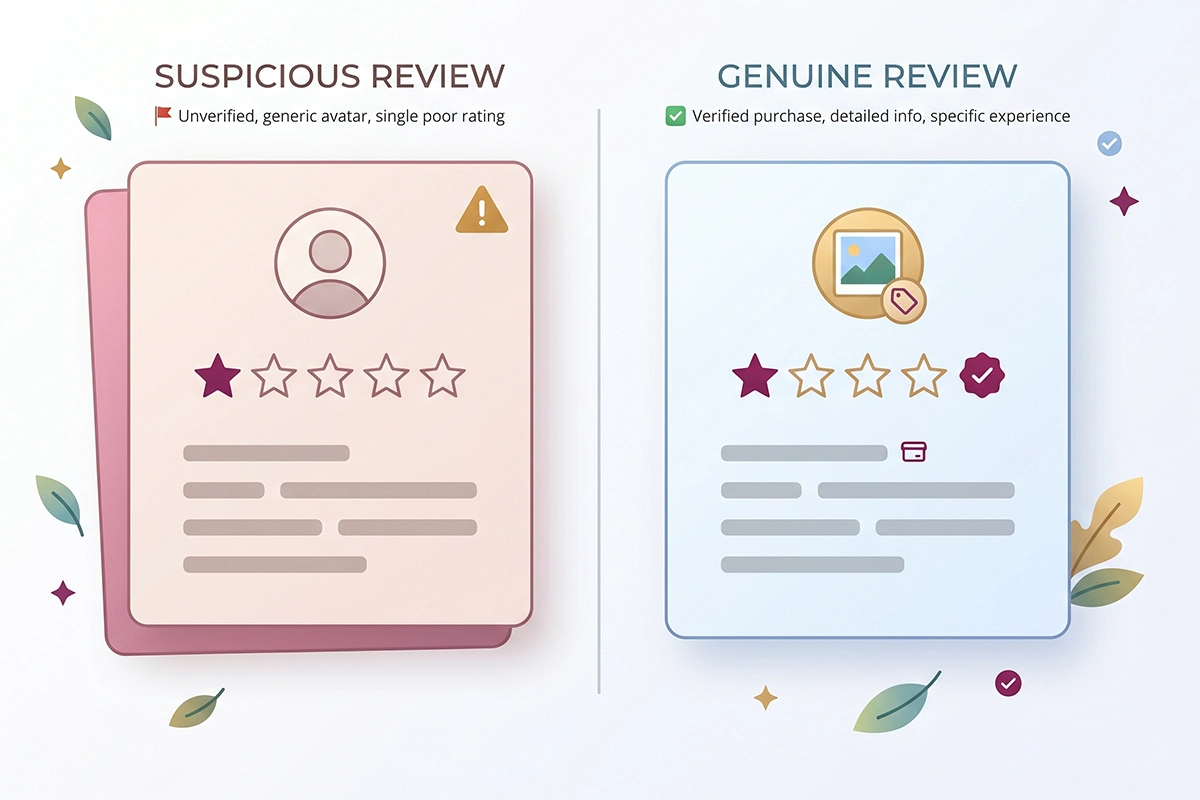
The reason this matters: the removal tools only work on the first bucket. Try to force down a genuine negative review and you will not just fail, you risk crossing into territory the FTC now treats as a violation. So be honest with yourself. Can you prove the review is fake or rule-breaking, or are you mostly just angry that it exists?
If it is genuinely fake or against policy, gather your evidence now: a screenshot of the review, the date it posted, the reviewer's name or handle, and anything that ties it to a non-customer. You will need all of it for every path below.
How the FTC rule changed fake-review removal
The Federal Trade Commission's Rule on the Use of Consumer Reviews and Testimonials took effect on October 21, 2024. Most coverage focused on the ban against buying and selling fake reviews. The part that matters for you is quieter: the rule also bans review suppression.
Review suppression means using an unfounded legal threat, a physical threat, intimidation, or a false public accusation to get a review removed or to stop one from being written. In plain terms, the rule targets the business owner who tries to bully a review out of existence, not only the people who write fake ones. Knowing violations can carry civil penalties of up to $53,088 per violation, and the FTC sent its first batch of warning letters in December 2025.
So the moves a lot of owners reach for first are now the actual risk. Emailing the reviewer to demand they take it down or else. Threatening a lawsuit you have no intention of filing. Accusing them in public of being a paid competitor when you cannot prove it. Any of those can turn a fake review into an FTC problem. For the longer version of staying compliant when you handle reviews, I wrote a companion piece on how to stay on the right side of the FTC rule.
What counts as an "unfounded or groundless legal threat"
The rule defines it precisely: a legal threat based on claims unwarranted by existing law, or on factual claims that have no evidentiary support. The plain version is this. You cannot fire off a cease-and-desist or threaten to sue purely to scare someone into deleting a review when you do not have a real case.
You can still threaten genuine legal action if you actually have a legitimate basis for it. A review that is provably false and that you can show is causing real harm may be defamation, and that is a real conversation with a lawyer. It is not a template threat you copy off the internet and send to every one-star you do not like.
What you are still allowed to do
The rule does not stop you from defending your store. You can flag a review you reasonably believe is fake, as long as you have a real basis and are not tagging every negative as fake. You can contact a customer privately to fix a problem, ask a happy customer to update an out-of-date review, and reply in public any time. None of that is suppression. The line is simple: solve problems and report rule-breaking, but do not threaten or intimidate.
The legitimate ways to remove a fake review
Here are the real removal paths, in the order you should try them. Which one applies depends on where the review actually lives, and that is the part most owners get wrong.
1. Flag it in your reviews app (Judge.me and others)
Most product reviews on a Shopify store do not live on Shopify itself. They live in a reviews app, and the star ratings you see in Google search come from that app's structured data. So your first stop for an on-store review is the app dashboard, not Shopify admin and not Google.
In Judge.me, every review sits in one of four states: Published, Pending, Hidden, or Archived. You moderate them from the Reviews tab. You cannot directly delete a review a real person left, but you can hide it, and the app makes you choose a reason: Spam, Fake, or Legal reasons. Reviews you imported yourself can be deleted outright.
The app also screens incoming reviews automatically and lets you flag anything that slips through. Moderation tools and trust badges work a little differently in each app, so if you are weighing your options, I compared the main ones in this breakdown of how the reviews apps differ.
One honest caveat. Hiding or archiving verified reviews can lower your app's transparency badge, the public signal that says you do not cherry-pick. Hiding a genuinely fake review is fine. Hiding real negative reviews to tidy up your rating is exactly the behavior the FTC rule was written to stop. Use the reason field honestly, because it is also your own record of why the review came down.
2. Report a platform policy violation (Google and third-party sites)
If the fake review is on your Google Business Profile, Trustpilot, or another public site, you report it on that platform, not in your reviews app. This is the step owners most often get wrong: they dig through their app settings for a review that is actually sitting on Google.
Google removes reviews that break its policies: off-topic reviews from non-customers, conflict-of-interest reviews from competitors or employees, spam and bot content, hate speech, and reviews that expose personal information. It will not remove a genuine negative review, even an unfair one. To flag a Google review, open your Business Profile, Google Maps, or Search, click the three-dot menu on the review, and choose the violation reason that fits.
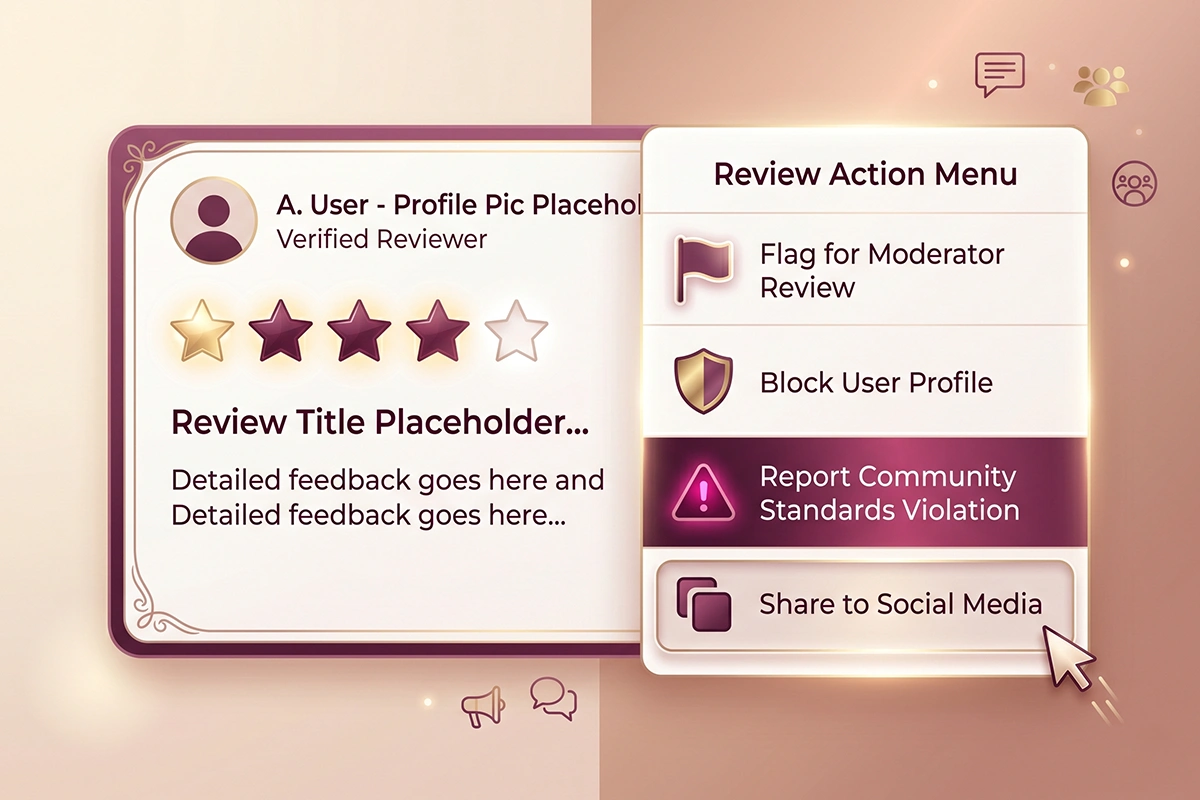
Two things make these reports succeed or fail. First, pick the most accurate category. A competitor review flagged as spam is weaker than the same review flagged as a conflict of interest with proof. Second, attach evidence: screenshots, order records that show the person never bought, anything concrete. Google removed more than 292 million policy-violating reviews in 2025, so the system does act, but it is slow and strict. After you submit, you get a status, and a one-time appeal is available if the first answer is no.
If your goal is getting star ratings to show in Google search results, protecting those listings from fake content is part of the same job. The FTC also keeps a plain-language guide on reporting suspicious reviews across platforms.
3. Report it to the FTC (what this does and does not do)
If you believe the fake review is part of something bigger, like a competitor planting reviews or a paid review network, you can report it to the FTC at ReportFraud.ftc.gov. Writing or selling fake reviews violates the federal rule, and reports help the agency build cases.
Be clear-eyed about what this does, though. The FTC uses reports to spot patterns and bring enforcement actions. It does not resolve your individual complaint and will not get a specific review taken down, and there is no private lawsuit option under the rule, only the FTC enforces it. So treat this as the long game alongside your app and platform reports, not the fast fix for the review in front of you today.
Because the right move depends entirely on where the review lives, here is the short version.
| Where the review appears | Who can remove it | How to act | Realistic outcome |
|---|---|---|---|
| On-store product review (your reviews app, e.g. Judge.me) | You, the merchant | Hide it from your dashboard and pick a reason (Spam, Fake, Legal). You cannot delete a genuine one. | Immediate, but misuse hurts your transparency badge |
| Google Business Profile, Maps, or Search | Flag via the three-dot menu, choose the violation, add evidence. One appeal if denied. | Days to weeks, and only if it breaks policy | |
| Trustpilot or another public review site | That platform | Use the site's flag or report tool with evidence. | Varies by platform's own rules |
| Shop app review synced into your store | Shopify and Shop | These cannot be hidden individually. Disable Shop syndication instead. | Limited control over single reviews |
What you must never do under the FTC rule
Here is the short list of moves to avoid, because they are the ones a frustrated owner reaches for first.
Do not threaten the reviewer with a lawsuit you have no real basis to file. Do not harass or intimidate them into deleting the review. Do not accuse them in public of being a paid competitor when you cannot prove it. All three are forms of review suppression the rule now treats as violations.
Do not try to bury a fake review under a pile of positive ones you bought or incentivized. Paying for reviews, or offering a discount in exchange for a five-star rating, is its own violation of the same rule. And do not hide or archive genuine negative reviews to inflate your average, which is the suppression the FTC cares about most.
For what it is worth, this is also where I draw my own lines. I do not dispute legitimate negative reviews on a client's behalf, and I will not buy reviews to bury a bad one. Partly because the rule now forbids it. Mostly because it does not work, and a store built on a rating it did not earn is a store that breaks the first time a real customer reads the comments.
How do you respond publicly while a fake review is under review?
Reports take time. A Google flag can sit for days or weeks, and the fake review stays visible the whole time. This is not wasted time, because your public reply is doing the real work, and it is aimed at the next buyer, not the person who left the review.
Keep the reply short, calm, and factual. If you cannot match the review to any order, say so plainly and invite the person to contact you directly so you can help. Something like: "We take this seriously but cannot find an order that matches this review. Please email us so we can look into it." That is the whole reply.
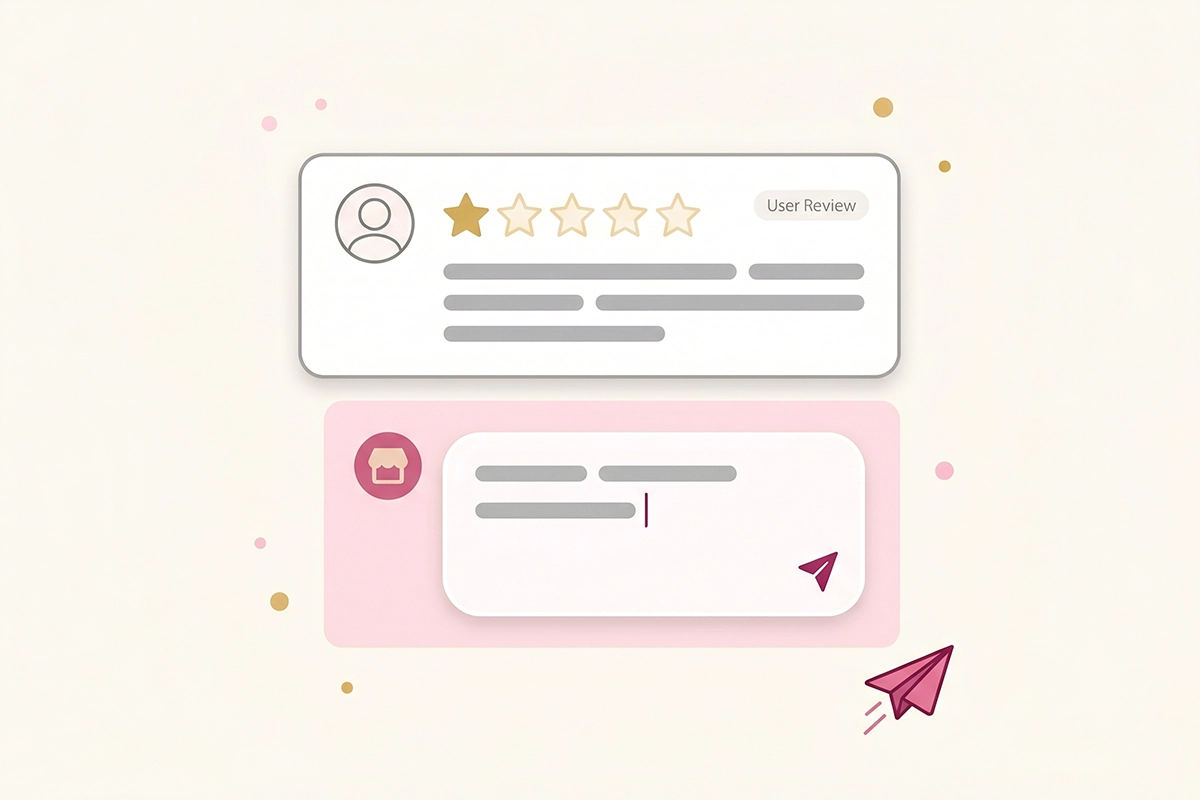
Do not argue, do not accuse, and do not match the review's tone. Future customers read your replies more closely than the reviews themselves, and a measured response to an unfair review often builds more trust than a perfect wall of five stars. The reply stays useful even if the review is later removed, because it shows how you handle conflict. If you want ready-made wording for different situations, I keep a set of reply templates that actually help conversion.
What if the review cannot be removed?
Sometimes the review is genuine, or the platform looks at your report and decides it stays. That is frustrating, but it is not the end of the story, and the fix is the least dramatic one on this page: more real reviews.
A single fake one-star is devastating to a store with eight reviews and barely a rounding error to a store with two hundred. Volume is the real defense. A steady stream of genuine reviews, requested automatically after every order, pushes any one bad review down the page and shrinks its pull on your average. It is slower than a takedown, but it is the only defense that builds on itself.
It also helps to make peace with a hard truth: a flawless five-star rating reads as fake to shoppers anyway. A handful of honest three- and four-star reviews, answered well, makes the rest of your reviews more believable, not less. The goal was never a spotless wall. It was a trustworthy one.
The calm version of all this
Removing a fake review on Shopify comes down to three things. Sort the review honestly first, because the tools only work on reviews that actually break a rule. Use the path that matches where the review lives: your reviews app for on-store reviews, the platform itself for Google or Trustpilot, and the FTC portal for the bigger pattern. And stay far away from the moves the FTC rule now treats as suppression, because a threat or a bought review can cost far more than the one-star ever could.
The part nobody likes to hear is that the strongest defense is the slow one. A store with a steady flow of real reviews and calm, public replies is almost immune to a single planted review. A store with a thin review count and a hair-trigger reply is not. You build the first kind one honest review at a time.
If you would rather not manage all of this yourself, that is the work I do.
Want your reviews handled without the guesswork?
Reviews Management covers requests after every order, a considered reply to every review, and the cleanup when something looks off. I do not buy reviews, and I do not dispute honest ones. Here is how the service works.
See how Reviews Management works →Or email contact@studioniza.com if you have a specific question about your store. I read every one.
Frequently asked questions
If you're still unsure after reading these, just send the question.
Can I delete a bad review on Shopify myself? +
For reviews in your app, you can hide a review and pick a reason like Spam or Fake, but you usually cannot delete a genuine customer's review outright. Reviews you imported yourself can be deleted. Hiding verified reviews can lower your app's transparency badge, so use it only for content that actually breaks a rule.
Is it illegal to ask a customer to remove a negative review? +
Asking is fine. You can contact a customer to resolve a problem or ask them to update an out-of-date review. What the FTC rule bans is using an unfounded legal threat, intimidation, or a false public accusation to force a review down.
How long does Google take to remove a fake review? +
It varies. After you flag a review, Google assigns it a status and may take anywhere from a few days to several weeks to decide. If the first decision is no, you get one appeal, and only reviews that break Google's policies are removed.
Can a competitor get in trouble for leaving fake reviews? +
Yes. Writing or planting fake reviews violates the FTC's review rule, and knowing violations can carry civil penalties of up to $53,088 each. You can report it at ReportFraud.ftc.gov, though the FTC builds cases from reports rather than resolving individual complaints.
Will reporting a review to the FTC get it taken down? +
No. The FTC uses reports to spot patterns and bring enforcement actions, not to remove individual reviews. To actually take a review down, you still have to go through the app or platform it lives on.
Should I reply to a fake review while it is still under review? +
Usually yes. A short, calm, factual public reply speaks to future buyers who read it long after the review is posted. Keep it free of accusations, and it stays useful even if the review is later removed.