
Most Shopify owners solve the topic problem and then stop. You brainstorm thirty subjects, or you pull them from a list like 30 Shopify blog content ideas, and you end up with a spreadsheet full of things to write about. Then you open the first one and freeze, because a topic is not a shape.
"Silver jewelry care" could be a 700-word how-to, a 2,000-word buying guide, or six lines inside an FAQ post. Those three versions reach different people, answer different questions, and give the reader completely different reasons to click through to a product. Same topic, three outcomes.
The missing step is format, and the eight Shopify blog post types below are what that step looks like. The format decides who finds the post, what they expect when they land on it, and whether they have any reason to buy at the end. Choose the wrong one and you can write 2,500 careful words that rank for nothing and sell nothing.
Shopify's own guide to ecommerce blog post templates names four, and it has not been updated since November 2022. Four is a start. It is not a system for a catalog.
So here are eight formats, each with a real example headline, the search intent it serves, a word count range, and the kind of product it suits. At the end there is a worksheet that takes any product in your store and tells you which format to write first. This is written for new Shopify stores, the ones in their first year with more topics than time.
Why the format decides whether a post sells anything
There is a pattern that shows up constantly in Shopify owner forums. The store has a blog. The blog posts rank. Traffic arrives, reads, and leaves. Meanwhile the product pages are invisible in search, and the owner cannot work out why the traffic never turns into orders.
The most useful reply I have seen to that complaint put it this way: those posts answer curiosity but never answer the buying question. Fit. Use case. What to choose. The reader got what they came for and had no reason to go further, because the post was never shaped to carry them there.
That is a format problem described without the word format. And it is measurable now, because AI search makes the intent-to-format match visible in a way Google's ten blue links never did.
Wix Studio's AI Search Lab analyzed 75,000 AI answers and more than a million citations across ChatGPT, Google AI Mode, and Perplexity. The results, published in March 2026, split cleanly by intent: for commercial queries, listicle-style pages took 40.9% of citations, while for informational queries, article-style pages took 45.5%.
Read that as a formatting instruction rather than a statistic. When someone is deciding what to buy, engines pull from structured, comparative, scannable pages. When someone is learning something, engines pull from explanatory prose. Write an explainer for a buying question and you are handing in the wrong shape.
The 8 Shopify blog post types at a glance
Four of these formats serve people who are actively deciding what to buy. Four serve people who are learning, troubleshooting, or sizing you up. Both groups matter, but they need different things, and most stores accidentally write only for the second group.
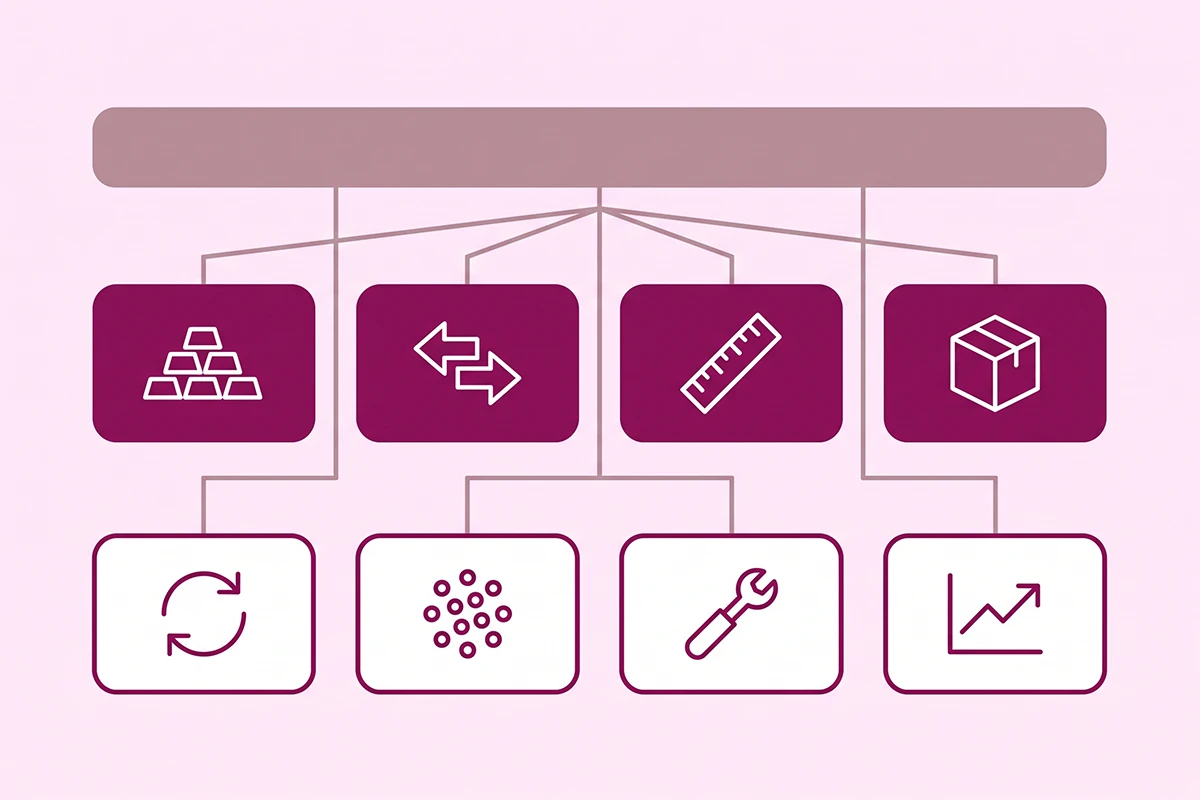
| Format | Intent it serves | Word range | Best for |
|---|---|---|---|
| Buying guide | "best X for Y" and other commercial research | 1,800 to 2,500 | Catalogs with real variety inside one category |
| Comparison | "X vs Y" from someone choosing between two named things | 1,200 to 1,800 | Products people confuse, or you against a common alternative |
| Sizing and fit | "what size" hesitation right before checkout | 900 to 1,500 | Apparel, footwear, rings, furniture, anything dimensional |
| Gift guide | Seasonal "gifts for" searches | 1,200 to 2,000 | Giftable price points, usually under $100 |
| How-to and care | "how to" learning and post-purchase upkeep | 800 to 1,400 | Products needing maintenance, assembly, or a routine |
| FAQ roundup | Dozens of small "does it / can I / is it" searches | 1,000 to 1,600 | Anything that generates repeat support questions |
| Behind the product | Brand and trust queries, plus on-site readers | 700 to 1,200 | Handmade, small-batch, sourced, or single-origin goods |
| Data or case study | Original numbers nobody else can publish | 1,200 to 2,000 | Any store sitting on its own order or survey data |
The four formats that answer buying questions
These are the posts that earn their place in a store rather than a magazine. Every one of them ends with the reader closer to a decision than when they arrived.
1. The buying guide
A buying guide takes one category and helps someone choose inside it. Not "here is our range," but "here is how to tell which one is right for you, including when the answer is none of them."
Google publishes its criteria for this kind of content, and they are stricter than most stores assume. Google's guidance on writing high-quality reviews asks for quantitative measurements of how something performs, the benefits and drawbacks based on your own testing, an explanation of what sets something apart from its competitors, and ranked lists with enough substance to stand on their own.
Example: "The Best Beeswax Candle Size for Every Room (and How Long Each One Burns)."
That headline works because it has a decision built into it and a number you can only give if you have actually burned the candles. The full structure is in the post on how to write a buying guide.
2. The comparison
A comparison answers a query with two named things in it. There are two versions worth writing: your product against a common alternative material or method, and two of your own options that buyers keep confusing.
One finding from that same AI citation study should shape how you write it. In professional services categories, third-party comparison lists took 80.9% of citations while self-promotional lists took 19.1%. Engines are visibly skeptical of a comparison where the author wins every round.
So write the losing case honestly. Every comparison post should contain a plain sentence that begins "choose the other one if." If you cannot write that sentence, you are writing an ad with a table in it.
Example: "Soy vs Beeswax Candles: Burn Time, Scent Throw, and Cost Per Hour."
3. Sizing and fit
This is the most underwritten format on this list, and the data is not subtle. In Baymard Institute's apparel research, drawn from 1,765 hours of usability testing, 82% of sites fail to provide sufficient sizing information, and uncertainty about size was a frequent reason test participants abandoned a purchase outright.
In the forums, sizing shows up as a theme question: how do I add a UK/US/EU conversion table to my product template. It is a theme question. It is also a content question, and the content half is the half nobody writes. A sizing post can rank for measurement queries your product pages never will, and it gives your support inbox and your chatbot one link to send.
Example: "Ring Sizing at Home: Three Methods, and Which One to Trust."
4. The gift guide
The gift guide is one of the four formats Shopify names in its own blog documentation, and it is the one format on this list with a hard deadline attached. A gift guide published in November has no ranking runway. Publish between August and early October, then update the same URL every year rather than starting a new post each season.
Build it around a recipient, not around your catalog. "Gifts for someone who just moved into their first apartment" is a search. "Our holiday collection" is not.
Example: "Gifts Under $40 for Someone Who Just Moved Into Their First Apartment."
The four formats that build trust and pull traffic
These four rarely convert on the first read. They do something slower: they bring people in, cut your support load, and give search engines and AI models a reason to treat your store as a real business with knowledge behind it.
5. How-to and care
The workhorse format, and the one most stores overuse. A how-to teaches a process. A care post teaches upkeep after purchase. Both are genuinely useful, both rank steadily, and neither is a substitute for a buying-intent post.
The quiet return on care content is operational. Every care question answered in a post is a support email you do not answer twice, and a return you might not process.
Example: "How to Keep a Linen Shirt From Wrinkling in a Carry-On."
6. The FAQ roundup
Take the questions that arrive in your inbox every week, give each one its own H3, answer it in three sentences, and add FAQPage schema. One post, twenty long-tail queries.
Be clear about why you are doing it. Google dropped FAQ rich results in May 2026, so this is no longer about a fancier-looking search listing. It is about giving AI engines a clean question-and-answer pair they can lift and attribute. If you run a chatbot, the same post doubles as training material.
Example: "Everything People Ask Before Buying a Weighted Blanket."
7. Behind the product
How it is made, where the material comes from, why it costs what it costs. Search volume here is low and you should not expect traffic from it. Write it anyway, for two reasons.
First, it is the one format a competitor cannot copy from you. Second, it satisfies the thing Google's helpful content guidance keeps asking for: first-hand expertise that comes from actually having made or used the thing, and original information rather than a rewrite of someone else's page.
Example: "Why Our Mugs Take Nine Days to Make."
8. Data or case study
The rarest format on a small store's blog, and the one with the highest ceiling. You publish numbers only you have: return rates by size, which scent gets repurchased, what 400 customers said in a survey.
Google's same guidance asks whether content provides original information, reporting, research, or analysis. A data post is the only format where the answer is unambiguously yes. It also earns links and citations that no amount of how-to content will.
Example: "We Asked 400 Customers Which Candle Scent They Repurchase. Here Is the Data."
How do you match a product to the right format?
Open a spreadsheet. One row per product or collection, one column per question below. Work down the list and mark yes or no. You do not need an app for this and you should not buy one.
| Ask about the product | If yes, write | Why |
|---|---|---|
| Do buyers choose between several of your options? | Buying guide | The choice is the search |
| Do they weigh you against one specific alternative? | Comparison | That query already exists, with or without you |
| Do they ask "will it fit" before buying? | Sizing and fit | Sizing doubt kills carts quietly |
| Is it bought as a present? | Gift guide | Seasonal volume, but only if you publish early |
| Does it need care, assembly, or a routine? | How-to and care | Steady traffic, fewer support emails |
| Do the same five questions hit your inbox weekly? | FAQ roundup | Twenty long-tail queries in one post |
| Is how it is made part of why it costs what it costs? | Behind the product | Nobody else can write it |
| Do you have numbers nobody else has? | Data or case study | Links and citations follow original data |
Most products come back with two or three yes answers. That is the post order for that product, top of the list first. If a product returns no yes answers at all, it probably does not need a blog post yet, and saying so out loud saves you a week.
For a brand-new store with nothing published, the sequencing question comes before the format question. That order is laid out in the first ten posts in order.
What most stores get wrong when picking a format
Writing everything as a how-to. It is the only format most owners have seen named, so it becomes the default. The result is a blog that is entirely informational, ranking for questions asked by people who were never going to buy that day.
Writing all eight formats for one product. Format variety across your catalog beats format completeness on one SKU. Three formats rotated across ten products will outperform eight formats stacked on your bestseller.
Publishing the gift guide in November. Covered above, but it is the single most common timing mistake for new Shopify stores, and it repeats every year.
Writing a comparison you always win. Readers notice, and so do the engines pulling citations. A comparison without an honest "choose the other one if" paragraph reads as marketing and gets treated as marketing.
Counting posts instead of formats. This is the one I push back on most with clients who arrive asking for thirty posts a month. Thirty thin posts in a single format lose to twelve posts spread across four formats, every time. Depth and coverage beat volume, and volume is the easiest thing to sell you.
Wrapping up: pick the format before you pick the title
Three things to take away. Format is search intent made visible, so the shape of the post has to match the question the reader typed. Four of these Shopify blog post types answer buying questions and four build trust and traffic, and a blog made only of the second group will rank without selling. And the worksheet turns format choice from a feeling into a ten-minute pass through your catalog.
Here is the honest limit. Choosing the format is maybe twenty minutes of the work. Writing 1,800 useful words with real numbers in them, formatting them so they can be scanned, adding schema, linking them to the right product pages, and then doing it again next week is the rest, and there is no version of this where that part gets easy.
What does get easier is starting. Once the format is decided, the outline mostly writes itself, because each format has a known structure. The post template I use for every article covers that structure section by section.
Start with the product you most want to sell, run it through the worksheet, and write whichever format comes back first. Not the one you find most comfortable to write. The one the buyer is actually searching for.
Want your topic list turned into finished posts?
The Studio Niza Blog Content service makes the format call for you, then writes, formats, and schemas each post. Keyword research, internal links, and indexing follow-up are part of it.
See how Blog Content works →Or email contact@studioniza.com if you have a specific question about your store. I read every one.
Frequently asked questions
If you're still unsure after reading these, just send the question.
How many Shopify blog post types do I actually need? +
Three or four, rotated across your catalog. Covering all eight is a goal for year two, not month two. Most new stores get further with a buying guide, a comparison, a sizing post, and an FAQ roundup than with one of everything.
Which Shopify blog post type ranks fastest for a new store? +
Comparison and sizing posts, because the competition on those queries is thin and the search volume is low enough that established sites ignore them. They will not bring big traffic numbers, but they bring people who are already deciding.
Should a size guide be a blog post or a Shopify page? +
Use a page when the sizing applies to one product line and shoppers reach it from the product page. Use a blog post when the guide covers a whole category and you want it to rank for measurement queries on its own.
Do gift guides still work if I publish them in November? +
Not really. A new gift guide needs a ranking runway of roughly two to three months, so August to early October is the window for that year's holiday season. Publishing in November is worth doing for email and social, not for search.
Can I use the same blog content type for every product? +
You can, and most stores do, usually the how-to. The cost is that your whole blog answers informational questions while the commercial queries go to someone else. Mixing formats is what makes a blog carry readers toward a purchase.
How long should each Shopify blog post type be? +
The ranges in this post run from 700 words for a behind-the-product story to 2,500 for a full buying guide. Let the format set the length rather than applying one word count to everything, because a padded FAQ post reads worse than a short one.