
Your Shopify blog tab has one post in it, and Shopify wrote it. It says something about talking about new product launches, and you have not deleted it because you are not sure what to put in its place.
That is the real starting problem. Not “what should I blog about,” which has too many answers, but “what goes first,” which has one.
Here is the short version. The first blog posts a new store should write are the ones closest to a buying decision. Not your story. Not industry news. The buying guide, the comparison, the sizing guide, the FAQ roundup. The posts somebody reads with their wallet already half out.
I have watched this play out on my own site. The Studio Niza journal published 86 posts between May 8 and August 1, 2026, and the ten oldest carry roughly 40 percent of every search impression the journal has earned. Age explains part of that. It does not explain why the biggest post on the site is post number one, and why that post is a checklist.
This post gives you those ten, in order, with the search intent each one serves and an example headline you can adapt to whatever you sell. It also covers why the “our story” post belongs at number ten, and how the ten link together into a starter topic cluster instead of ten unrelated pages. If you want a menu rather than a sequence, I keep a longer list of 30 Shopify blog topics. This one is the order.
Why “our story” should not be your first blog post
Shopify's own blog templates documentation suggests you might share the story behind your store, give context about your products, or introduce the people working behind the scenes. It is reasonable advice. It is also the wrong first move.
Nobody searches for a brand they have not heard of. An “our story” post targets a query that does not exist yet: your name, plus curiosity. Until people know your name, that post has an audience of your mother and your last three customers.
There is a second problem. A brand story has no shape a search engine can work with. No question answered, no comparison resolved, no decision made. Google's guidance on creating helpful, people-first content asks whether a reader leaves having learned enough to achieve their goal. A shopper who has never heard of you does not have a goal your story serves.
None of this means skip it. The story post is one of the strongest trust signals you own, it gives AI search engines something concrete to understand about who you are, and it is the page people read once they have decided they like you. It just is not a doorway. It is a room inside the house.
So write it. Write it tenth.
The rule that decides the order: closest to the buying decision first
One rule sets the whole sequence. Write the post closest to the buying decision first, then work backwards from there.
Someone searching “enamelled vs bare cast iron” is closer to buying than someone searching “how to cook better at home.” Both are worth writing eventually. Only one is worth writing this week.
Two things make this matter more in 2026 than it did a few years ago. Competition at that end of the funnel is thinner, because every content mill on the internet has published “10 tips for X” and far fewer have published the specific comparison your catalog needs. The search surfaces also moved. Semrush's six-month study of more than 600,000 keywords found that AI Overviews on commercial-intent results grew 71 percent while transactional ones shrank slightly. Google is answering more of the browsing questions itself and passing people onward for the deciding ones. Search Engine Land's read is blunt: commercial-intent content still converts.
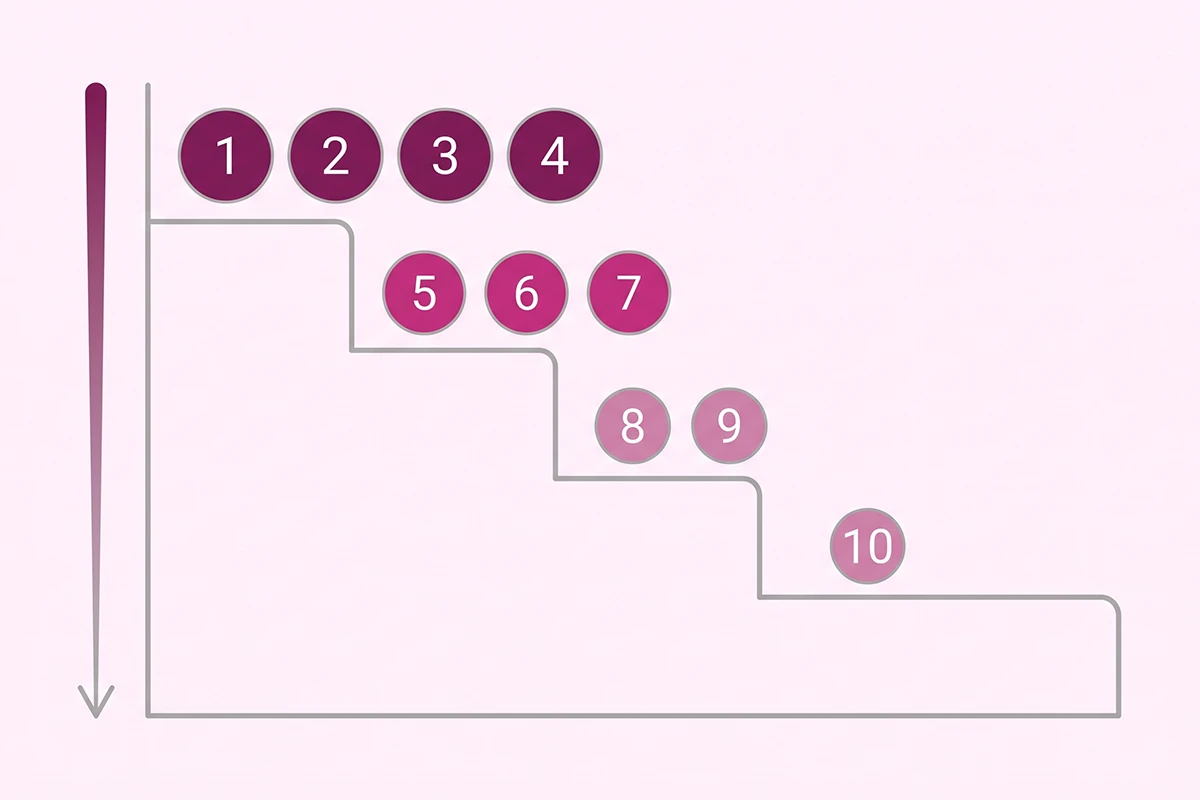
Here is what that looks like with real numbers. Between May 8 and August 1, 2026, the Studio Niza journal published 86 posts and collected 8,746 impressions in Google Search Console. The ten oldest posts carry 3,456 of those, about 40 percent. Three months of extra age explains a good chunk of that, and I am not going to pretend otherwise.
The formats are the more interesting part. The top performer by a wide margin is a checklist post at 2,224 impressions, a quarter of the whole site's total. Three “X vs Y” comparison posts carry another 1,152 between them. Nothing resembling brand storytelling comes close. One small site is not proof, but it matches the format research.
Here are the ten at a glance. The example headlines all use one category so the pattern is visible. Swap in whatever you sell.
| # | Post | Search intent | Example headline |
|---|---|---|---|
| 1 | Buying guide for your main category | Commercial investigation | How to Choose a Cast Iron Skillet: Size, Weight, and What Actually Matters |
| 2 | “X vs Y” comparison for your hero product | Direct comparison | Enamelled vs Bare Cast Iron: Which One Belongs in Your Kitchen? |
| 3 | Sizing, fit, or spec guide | Pre-purchase confidence | Cast Iron Skillet Sizes Explained: When 8, 10, or 12 Inches Is Right |
| 4 | Best [product] for [specific person] | Long-tail commercial | The Best Cast Iron Skillet for a Small Apartment Kitchen |
| 5 | Care, cleaning, or maintenance guide | Ownership and objection | How to Season a Cast Iron Skillet Without Ruining It |
| 6 | FAQ roundup from your inbox | Mixed long tail | Cast Iron Questions We Get Every Week, Answered |
| 7 | Is [product type] worth it? | Skeptic intent | Is Cast Iron Worth It If You Only Cook Twice a Week? |
| 8 | How-to or use-case post | Informational | Five Weeknight Meals That Only Need One Skillet |
| 9 | Seasonal or gift guide | Seasonal commercial | Cast Iron Gifts for People Who Actually Cook |
| 10 | Your story | Brand and trust | Why We Started Making Skillets in a Two-Person Workshop |
Posts 1 to 4: the ones closest to the sale
These four do the commercial work. If you only ever write four posts, write these four.
1. The buying guide for your main category
This is the post that helps someone choose within your category before they have chosen a brand. Not “why our skillets are great.” “How to choose a skillet.”
It goes first because it is the widest commercially useful net you can cast, and because every product page you add later has a reason to link to it. It is also the format AI engines reach for hardest when someone asks how to choose something. Give it 1,500 to 2,000 words and real criteria, not adjectives. Here is a full walkthrough of how to write a Shopify buying guide.
2. The “X vs Y” comparison for your hero product
Every category has a fork in the road, and shoppers search that fork by name. Enamelled or bare. Merino or synthetic. Ceramic or mineral. Whatever the fork is in your category, somebody is typing it into Google right now.
Two rules. Pick the comparison your best-selling product actually wins, and be honest about where the other option wins instead. A post that concludes “ours is better in every way” reads like an advertisement and converts like one. Comparison queries also get summarized heavily by AI search, and the cited sources get the credit, which makes this post worth more than its search volume suggests.
3. The sizing, fit, or spec guide
Around 19.3 percent of online sales come back as returns, according to the 2025 Retail Returns Landscape report from the National Retail Federation and Happy Returns, and fit and sizing is consistently the largest single cause. A sizing guide is the rare blog post that earns search traffic and cuts a cost line at the same time.
If you do not sell apparel, the equivalent is a spec guide: capacity, wattage, coverage area, run time. Whatever number your customers get wrong. Put real measurements in it, because generic size charts are a big part of why the returns happen.
4. The “best [product] for [specific person or use]” list
Not “best skillets,” which you will not win. “Best skillet for a small apartment kitchen,” which you might.
Ranked, numbered lists are the format AI engines cite most often for commercial queries, and a narrow qualifier is what makes a small store competitive on them. You can include products you do not sell. Recommending something outside your catalog is exactly what makes the rest of the list believable.
Posts 5 to 7: the ones that remove doubt
These three do not chase the biggest keywords. They close the gap between interested and confident, which is where most new stores lose people.
5. The care, cleaning, or maintenance guide
Two people search this: somebody who already owns the thing, and somebody deciding whether they want the upkeep. The second person is who you are writing for. Maintenance posts rank steadily, age well, pick up links from other sites more often than anything else on this list, and quietly answer an objection nobody emails you about.
6. The FAQ roundup built from your actual inbox
Open your email, your DMs, and your chat logs. Write down every question a customer has asked more than once. That list is post six.
It is the cheapest post here to write, because you have already written most of it one reply at a time. It is also the one most likely to get quoted directly by an AI assistant, because it is structured as question and answer and it is answering things nobody else bothered to write down. If your support volume makes this post easy, that is a good sign, and I have written separately about how to turn support tickets into blog posts.
7. Is [product type] worth it? The honest answer post
Somebody in your category is searching “is X worth it” right now and landing on a page written by a person with an affiliate link. Be the honest version.
The rule that makes it work: the answer has to sometimes be no. “Cast iron is not worth it if you cook twice a week and hate maintenance” costs you a customer who would have returned the pan anyway, and buys you the trust of everyone the sentence does not apply to.
Posts 8 to 10: the ones that build the brand
By now you have seven posts earning search traffic. These last three are for the people that traffic brings you.
8. The how-to or use-case post
This is the first post on the list somebody might read before deciding to buy anything at all. Wider net, softer intent, and your product shows up as a tool rather than the subject. It will not convert like post two, but it brings in people who would never have searched for you otherwise.
9. The seasonal or gift guide
Written once, refreshed and republished every year. Gift guides pull traffic on a schedule you can plan around, which makes them the easiest post on this list to put in a calendar.
Publish it at least eight to ten weeks before the season starts. That is roughly how long a new post needs before Google trusts it enough to rank during the window that matters.
10. Your story, finally
Now write it. You have nine posts bringing strangers to the site and a story page they can land on once they want to know who is behind it.
Make it specific. Not “we are passionate about quality.” The actual reason you started, the thing you got wrong first, the person you make this for. That specificity is the experience signal both Google and AI engines look for, and it is the one part of your content no competitor can copy. Link it from your About page, and link your About page back from it.
How the first ten link into one topic cluster
Ten unlinked posts are ten pages. Ten linked posts are a subject.
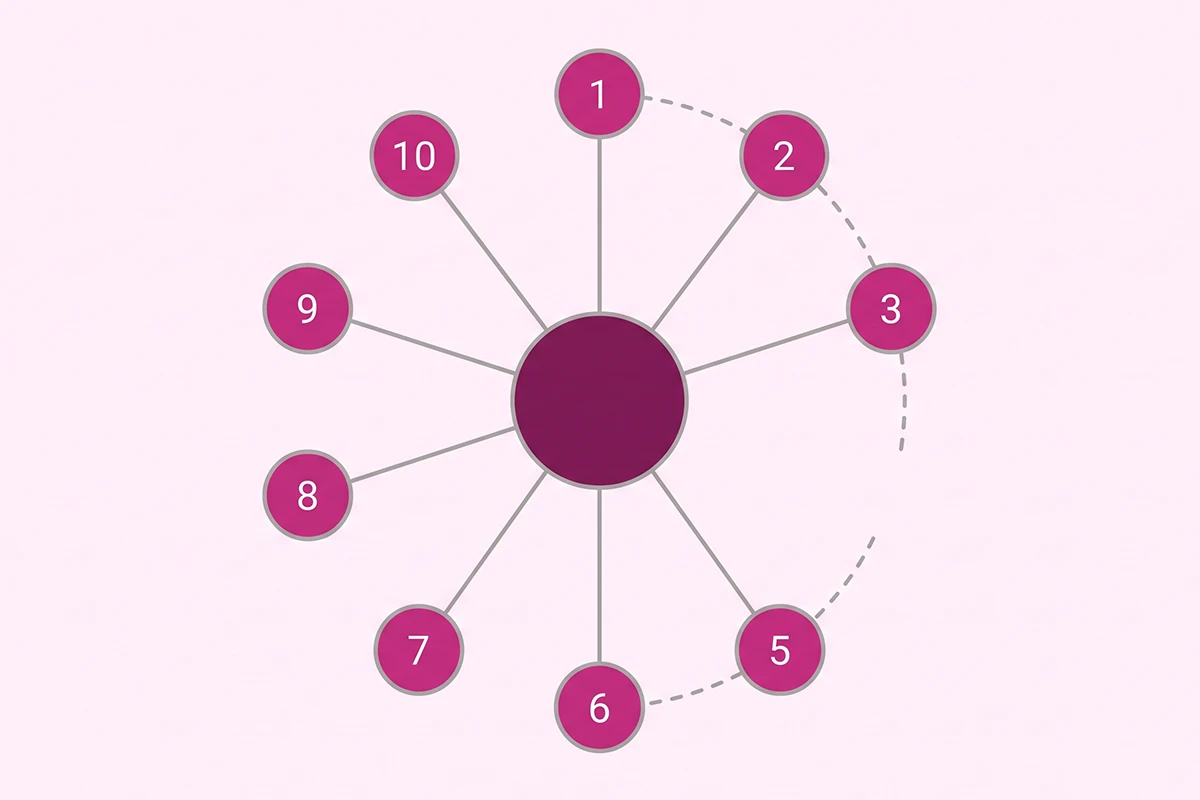
The shape is simple. Your main collection page is the hub, and all ten posts link to it. The posts also link sideways to each other wherever the connection is real: buying guide to comparison, comparison to sizing guide, sizing guide to care guide.
Two rules keep it clean. Use anchor text that says what is on the other end (“how to season cast iron,” not “read more”). And when you publish a new post, go back and link to it from the older related post. Most people only add the forward link and leave the older post orphaned.
This is what makes ten posts perform like more than ten posts. There are fuller walkthroughs of internal linking and how to build a topic cluster, but the version above covers your first ten.
How fast to write them, and what to actually expect
Four to six weeks, two or three posts a week. Not ten posts in ten days.
I turn down the ten-in-ten-days version regularly, so here is the reasoning. Ten thin posts published in a sprint perform worse than ten thorough posts published over a month. Google's self-assessment questions ask whether content provides a substantial, complete description of the topic and whether a reader leaves satisfied. Volume answers neither. I have written more on why two to three posts a week beats daily posting.
On expectations, Shopify's own guide to starting a blog makes a version of the 80/20 point: a small number of posts drive most of a blog's traffic, and the job is to find them and double down. That has been exactly true here. One post out of 86 carries a quarter of the impressions.
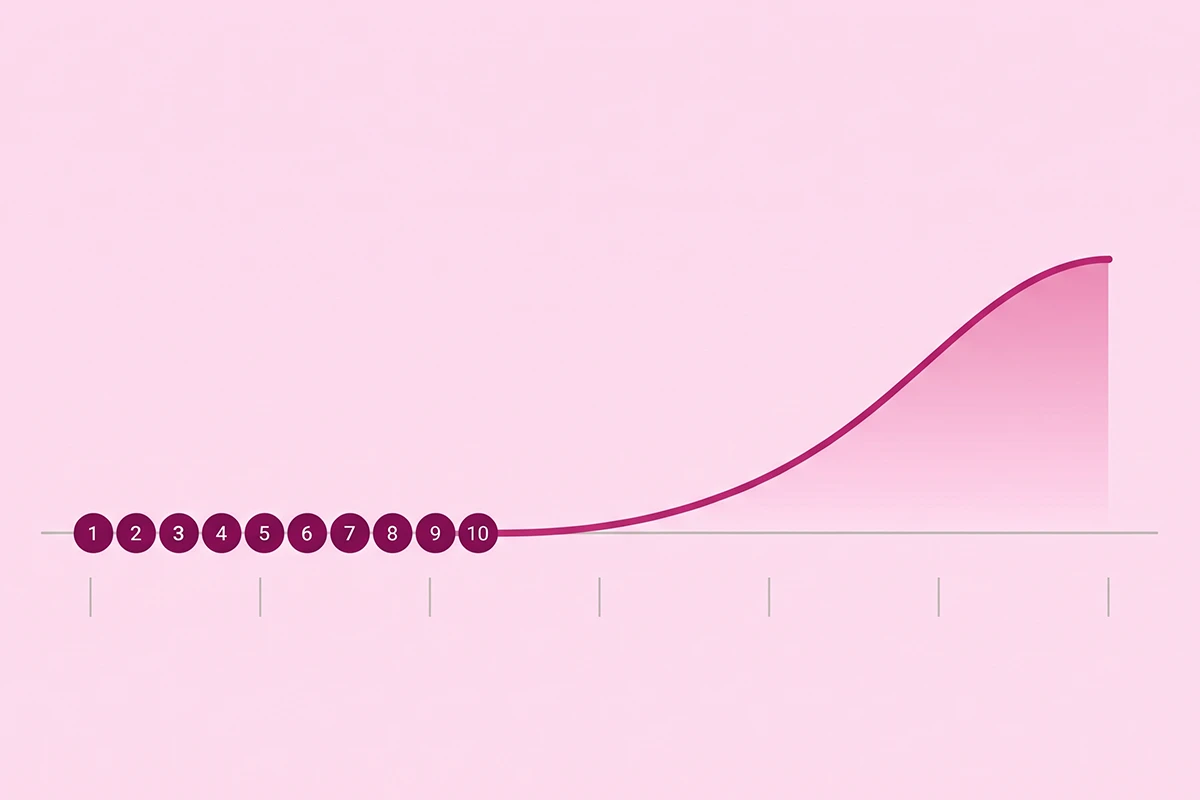
So, the honest timeline. Weeks 1 to 6, you write. Weeks 4 to 12, pages get indexed and start collecting impressions at unimpressive positions. Months 3 to 6 is when positions improve enough that impressions turn into clicks. My own site went 86 posts and 8,746 impressions before it crossed 50 total clicks. That is not a failure, it is what the first quarter looks like. Here is a fuller month-by-month timeline.
Wrapping up
Three things worth carrying out of this.
The order is the strategy. Ten reasonable posts in the wrong sequence will underperform the same ten in the right one, because the early posts are the ones that collect age, links, and crawl attention. Spend that age on the commercial posts.
The example headlines are examples. Swap cast iron for whatever you sell and the ten slots still hold. Every category has a fork in the road, a spec people get wrong, a maintenance question, and a skeptic worth answering.
And position ten is not a punishment for your story. It is a better post once there is traffic to read it.
What is still on you is the ten-minute keyword check. Before writing any of these, type the working headline into Google and look at what comes back. If page one is Amazon and a major review site, narrow the qualifier until it is not. That check is most of the difference between a post that ranks and a post that merely exists.
And if your store has three products and no orders yet, some of this can wait. You will not know your FAQ roundup until customers have asked you things. Write posts one through four now and come back for post six.
Want the first ten written for you?
The Studio Niza blog content service maps this exact sequence to your catalog: keyword research per post, the ten posts written and formatted, internal links wired between them, and schema on every one. Async only, no calls.
See blog content pricing →Or email contact@studioniza.com if you have a specific question about your store. I read every one.
Frequently asked questions
If you're still unsure after reading these, just send the question.
How many blog posts does a new Shopify store need before it starts ranking? +
There is no threshold number. Ten well-targeted posts will outperform fifty thin ones, because ranking depends on matching a real search rather than hitting a count. Expect the first ten to start collecting impressions within four to twelve weeks of publishing, and expect clicks to lag impressions by another month or two.
Should my first blog post be my brand story? +
No. Nobody searches for the story of a brand they have not heard of yet, so that post has almost no search demand on day one. Write it tenth, once you have nine posts bringing strangers to the site who might actually want to know who you are.
How long should each of the first blog posts be? +
Most of them land between 1,200 and 1,800 words. The buying guide and the comparison post usually need more, closer to 1,500 to 2,000, because they carry the most decisions. Length should follow the question being answered, not a word count target.
Can I use AI to write the first blog posts for my new store? +
For outlines, structure, and first drafts, yes. For the parts only you know, no. Your real sizing measurements, the questions customers actually email you, and the honest answer to whether your product is worth it are the parts that make a post worth reading, and a model cannot invent them for you.
What if my products are too simple to write ten posts about? +
Simple catalogs are usually easier, not harder. The ten posts come from buyer decisions rather than product features, and every category has a choice to make, a comparison, a spec people get wrong, and a skeptic to answer. If you sell one candle, the posts are about scent, burn time, wax type, sizing, and gifting.
Do I need a paid keyword research tool before writing the first blog posts for a new store? +
No. Google autocomplete, the People Also Ask box, and your own customer emails will cover the first ten posts. Google Search Console is free and will tell you which of them is working once they are live. Paid tools start earning their cost somewhere past post twenty.
Should I publish all ten posts at once or space them out? +
Space them across four to six weeks at two or three posts a week. Publishing all ten in one day gives search engines a single crawl event instead of a steady signal that the site is active, and in practice it usually means the last few posts were rushed.
Where do these blog posts live on a Shopify store, and does the URL matter? +
They live at yourstore.com/blogs/{blog-handle}/{post-handle}. Keep one blog rather than several, keep post handles short and keyword-aware, and do not change a handle after publishing. Changing it breaks the live URL and you lose whatever ranking that post had built.