
Roughly seven out of ten people who add something to a cart on your Shopify store leave without paying. That number has barely moved in a decade, and it holds whether you sell candles or kettlebells. So the question is fair: can a chatbot do anything about it, or is chatbot abandoned cart recovery just another app upsell?
The honest answer is yes, with a tight limit. A chatbot will not save the shopper who was only browsing. It can help the shopper who wanted to buy and got stuck on one unanswered question. Those are two very different groups, and most cart recovery advice blurs them together.
This post is about the second group. We will look at how a proactive chat trigger differs from a cart recovery email, the on-page moments where a nudge actually helps, the line between helpful and pushy, and the recovery numbers that are realistic for a store doing under $1M a year. No 4x promises. Just what the channel can and cannot do, and how to turn it on without irritating the people you are trying to keep.
What "abandoned cart recovery" actually means
Start with the real number. The average online cart abandonment rate sits at about 70%, according to the Baymard Institute, which has tracked it across dozens of studies for years. Shopify stores land right around that mark.
Here is the part that changes how you should think about recovery. Baymard found that about 43% of shoppers abandon because they were just browsing or not ready to buy. That group is mostly unrecoverable. No email and no chatbot turns a window-shopper into a buyer on the spot.
The recoverable slice is the rest: people with real intent who hit a wall. The same research shows the top fixable reasons are surprise costs at checkout, being forced to create an account, and a checkout that feels too long. Unexpected fees alone push close to 40% of US shoppers to abandon, the single most common addressable reason.
So recovery is not about clawing back 70% of carts. It is about working the addressable slice: the buyers who hesitated over a specific, answerable thing. That framing matters, because it sets honest expectations before you spend a cent on tools.
For a first-year store, that slice is smaller than the headline number suggests. If 100 people abandon this week, more than 40 of them were never going to buy today. Your real target is the 50-odd shoppers who stalled on a price, a fee, a fit question, or a slow checkout. Recovery tools earn their keep on that group, not the whole 100.
How a proactive chatbot differs from a cart email
A cart recovery email and a proactive chatbot both target abandonment, but they work at opposite ends of the moment. The email fires after the shopper has already left, usually minutes to hours later, and it only reaches people who gave you an email address at checkout or in an account.
A proactive chatbot fires during the visit, on the page, before the shopper leaves. It needs no email address. It is trying to answer the question that is about to cause the abandonment, while the person is still there to answer.
Think of it as regret versus hesitation. The email says "come back and finish." The chatbot says "I can help you finish now." If you want the longer view on what a bot can and cannot do for a store, I wrote a separate piece on what a Shopify chatbot actually does and doesn't.
The email channel also has a quiet gap: it only works if you captured an email. A large share of shoppers abandon before they ever reach the field that collects one, which means your recovery flow never even gets a shot at them. A proactive chatbot does not depend on that field, so it can reach people the email flow simply cannot.
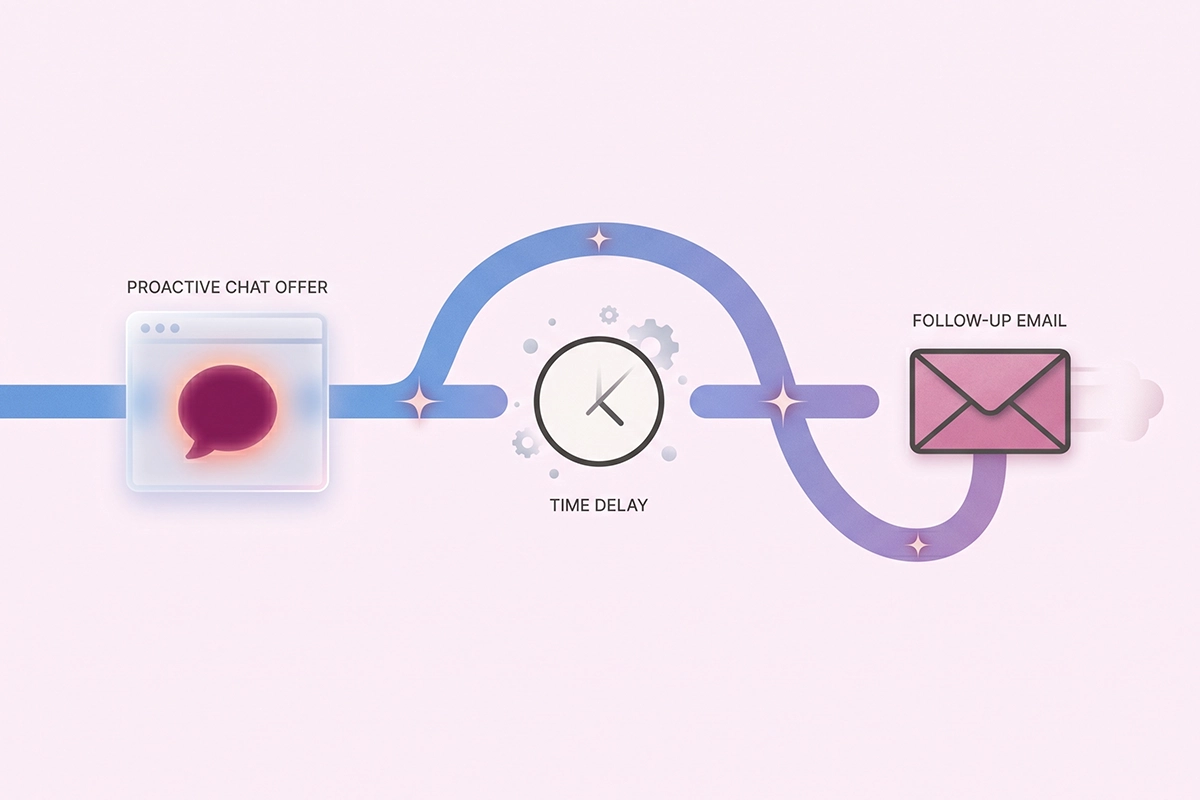
Here is the practical difference, side by side.
| What it does | Cart recovery email | Proactive chatbot |
|---|---|---|
| When it fires | After they leave, minutes to hours later | During the visit, in real time |
| Needs an email address | Yes | No |
| What it catches | Regret, the reminder to come back | The unanswered question, on the spot |
| Best at | Bringing back distracted buyers | Unblocking stuck buyers |
| Main risk | Ignored or sent to spam | Annoyance if mistimed |
Neither one wins. They cover different parts of the funnel, which is why the stores that recover the most carts tend to run both rather than pick a side.
The on-page moments worth a chatbot nudge
A proactive chatbot is only as good as its timing. Firing on every page in the first five seconds is how you train people to close the tab. The skill is picking the few moments where a question is forming and a short, optional offer of help actually fits.
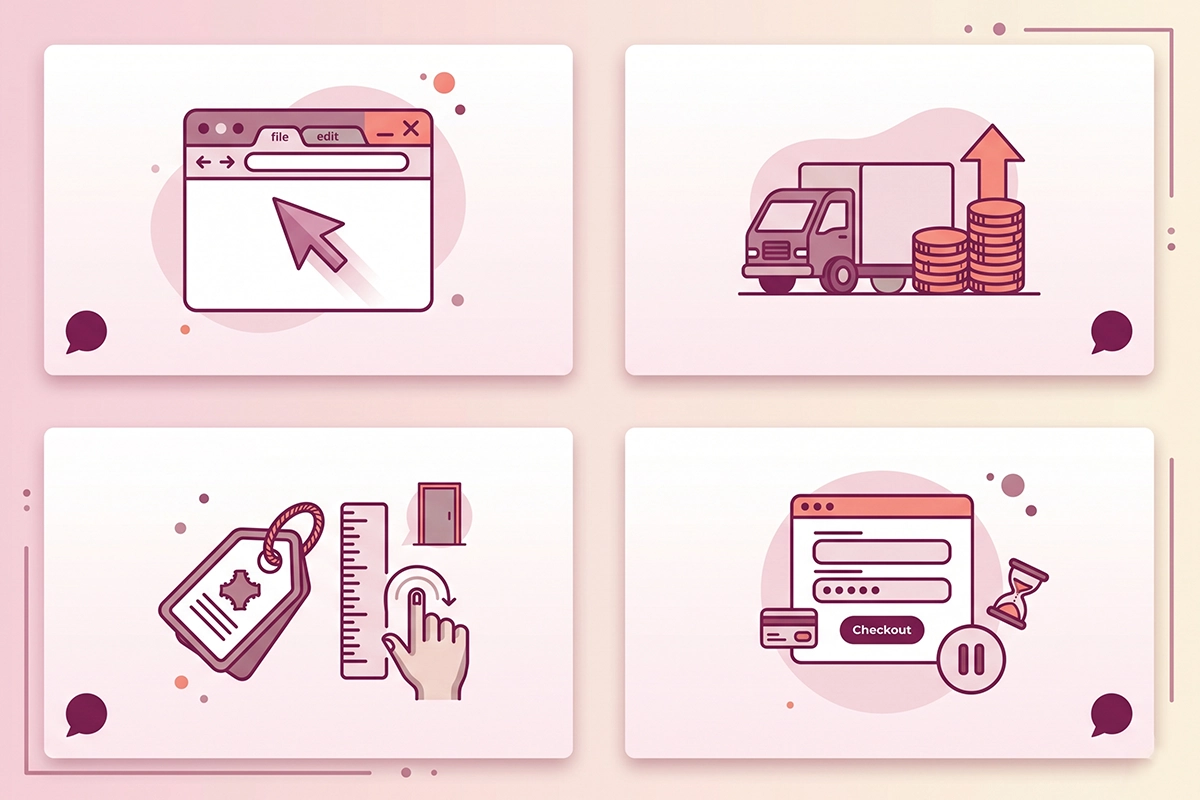
Exit intent
On desktop, the cursor moving fast toward the browser close or back button is a reliable signal that someone is about to leave. On mobile, a quick scroll back up to the top does similar work. One dismissible message here, offering to answer a question before they go, is reasonable. A second one is not.
Shipping-cost shock
Surprise costs are the number one fixable reason people abandon, so the moment the shipping line appears and the total jumps is a high-value trigger. A nudge that surfaces your free-shipping threshold ("you're $12 away from free shipping") or explains why the rate is what it is can hold a shopper who was about to bail on principle.
Size or fit hesitation
Long dwell time on a size chart, bouncing between variants, or adding and removing the same item often means a fit question the shopper cannot resolve alone. A bot that offers sizing guidance at that moment removes the doubt. Strong product reviews do the same job passively, so the two reinforce each other on a product page.
A stalled checkout
A checkout form that sits untouched for a while, or throws an error, is a shopper who is stuck rather than gone. A targeted offer of help with the specific step (a discount code that will not apply, a field that keeps failing) can rescue a sale that was seconds from being lost.
Where a helpful nudge turns into a pushy one
The difference between a proactive chatbot cart save and an annoyance is almost entirely about restraint. A few rules keep it on the right side of the line.
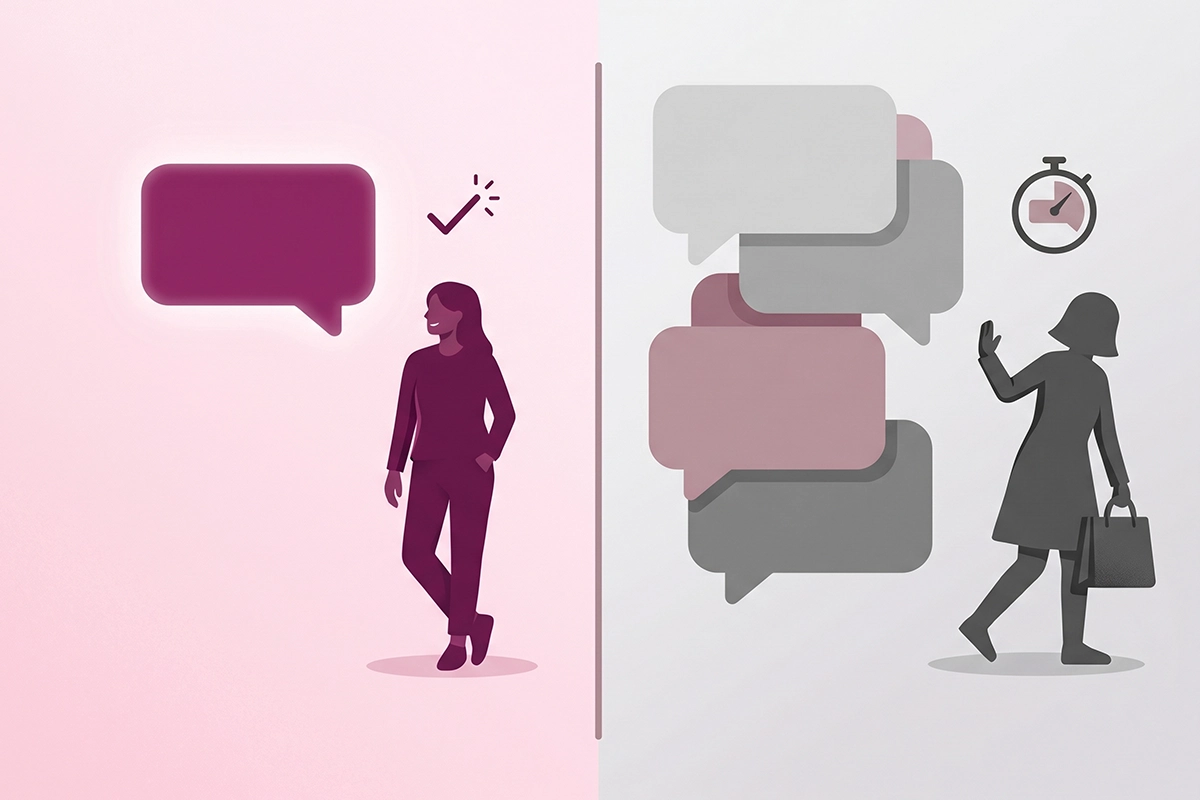
Wait for a real signal. Do not open on page load or in the first few seconds. Let the shopper show intent or hesitation first, then offer help once. Cap it to a single message per session, with a dismiss that actually stays dismissed.
Skip the fake urgency. Countdown timers and "3 people are viewing this" banners erode trust faster than they convert, and shoppers have learned to ignore them. Match the message to the moment instead: a fit question gets a fit answer, not a generic discount.
The first line the bot sends sets the tone for everything after it, which is worth getting right on its own. I covered that in detail in the Shopify chatbot welcome flow post.
What recovery numbers are realistic for a small store?
Start with what the proven channel does, because it sets the ceiling for expectations. Cart recovery emails are the workhorse, and Klaviyo's benchmark data puts the average abandoned cart flow at about a 50% open rate and a 3.3% placed-order rate, with revenue per recipient around $3.65. The top 10% of stores reach roughly $28.89 per recipient, but that is the ceiling, not the floor.
Now the part to be careful about. You will see chatbot vendors advertise 4x conversion lifts or 12% conversion rates. Those numbers come from case studies with deep integration and heavy selection bias, not from a typical store under $1M that bolted on a widget. Treat them as the best case, not the forecast.
The realistic frame is simpler. A proactive chatbot recovers a fraction of the hesitation carts that the email flow never reaches, because many of those shoppers leave before handing over an email. So it is incremental: a second net placed earlier in the funnel, catching a slice the first net misses. For a small store, a low single-digit recovery on top of your email flow is a real win, not a disappointment.
Put rough numbers on it. Say you get 1,000 abandoned carts a month at a $60 average order value. Your email flow recovering 3% is 30 orders, about $1,800. If a well-timed chatbot adds even one extra recovered order per hundred carts, that is another 10 orders, roughly $600 a month, mostly from shoppers the email never reached. Modest, but it compounds, and it costs you nothing in shopper goodwill when the timing is right.
If you want a fuller, honest read on the ROI question for stores your size, I went deeper in whether chatbots are worth it for small Shopify stores. The short version: it depends on your traffic and margin, and anyone who quotes you a guaranteed number is guessing.
How to set this up without annoying anyone
First, know what Shopify already does. The built-in abandoned checkout recovery feature is email-only. It does not send on-site nudges, SMS, or push messages on its own. The proactive on-page layer is something you add, which is exactly the gap a chatbot fills.
Start with one trigger, not five. Exit intent on the cart and checkout pages is the highest-value place to begin. Run it for a few weeks, watch how shoppers respond, then expand to a second trigger only if the first one earns it. This is cart recovery automation done with a scalpel, not a firehose.
The bot has to know your store. A chatbot that guesses at shipping rates or stock levels makes hesitation worse, not better. To recover an abandoned cart, a Shopify chatbot needs to read your real products, inventory, and shipping rules, which is the difference between a useful answer and a confident wrong one. That is the case for a chatbot trained on your real products rather than a generic script.
Keep a human exit. For anything the bot cannot resolve, hand the conversation to you or a support inbox cleanly. And resist leading every trigger with a discount. If shoppers learn that hovering near the exit produces a coupon, you have taught your best customers to abandon on purpose.
One more practical note: Shopify does not give you a clean built-in recovery-rate metric, so track chat-attributed orders deliberately. Otherwise you will not know whether the channel is earning its keep.
Wrapping up
Chatbot abandoned cart recovery is real, but it is a scalpel, not a magnet. It works on the hesitation slice, the buyers who wanted to finish and got stuck, and it leaves the just-browsing majority alone because nothing reaches them anyway.
The channel earns its place by covering a moment your email flow cannot: the question forming on the page, before the shopper leaves and before you ever capture an email. Keep the email flow, add a small number of well-timed on-page triggers, and measure the orders the chat actually drives.
Expect modest, incremental numbers. Time the nudges so they help instead of hover. Do that, and a proactive chatbot becomes a quiet second net under the carts your other tools were always going to miss.
Want a chatbot that actually knows your store?
Studio Niza builds AI chatbots trained on your real products and integrated with Shopify, so a proactive nudge answers the right question instead of annoying shoppers. Setup from $599, then $99/month all-in.
See how the chatbot service works →Or email contact@studioniza.com if you have a specific question about your store. I read every one.
Frequently asked questions
If you're still unsure after reading these, just send the question.
Can a chatbot recover abandoned carts on Shopify? +
Yes, but only part of them. A chatbot helps the shoppers who wanted to buy and stalled on one question, like shipping cost or sizing, by answering it while they are still on the page. It will not recover the large share of shoppers who were only browsing and never had real purchase intent.
Is a chatbot or an abandoned cart email better for recovery? +
They do different jobs, so it is not either-or. An abandoned cart email fires after the shopper leaves and needs their email address. A proactive chatbot fires during the visit, before they leave, and needs no email. Most stores get the best result running both.
Do I still need cart recovery emails if I have a chatbot? +
Yes. The email flow is still the workhorse for bringing back shoppers who already left and gave you an email. The chatbot covers a different moment, catching hesitation in real time on the page. Running both is how cart recovery automation reaches the most carts.
How many abandoned carts can a chatbot realistically recover? +
Expect modest, incremental numbers, not the 4x lifts some vendors advertise. Cart recovery email flows typically convert a low single-digit percentage of carts, and a proactive chatbot adds a slice on top by reaching hesitating shoppers the email never gets to. For a small store, any steady single-digit recovery is a real win.
Does Shopify recover abandoned carts on its own? +
Shopify includes a built-in abandoned checkout recovery feature, but it is email-only. It does not send on-site nudges, SMS, or push messages by itself. A proactive chatbot is a separate on-page layer you add to catch shoppers before they leave.
Will a proactive chatbot annoy my shoppers? +
It can, if it fires too early, too often, or on every page. A well-set chatbot waits for a real signal, like exit intent or a stalled checkout, sends one dismissible message, and then leaves the shopper alone. Timing is the whole difference between helpful and pushy.