
Ask most boutique owners what's on their blog and the answer is "new arrivals". That is an announcement. Nobody types "new arrivals" into Google hoping to find a shop they've never heard of, which is why those posts sit at zero visits.
If you're hunting for blog post ideas for a clothing store or a homewares shop, you're in the biggest crowd on the platform. Apparel makes up 27.0% of all Shopify stores and Home & Garden makes up 12.4%, the top two categories, according to Store Leads' September 2026 count. That is roughly 838,000 apparel stores and 384,000 home stores asking the same question.
The lists that rank for this search were written for fashion bloggers, not shop owners: outfit-of-the-day posts, celebrity style, giveaways. None of them says which product a post should sell or which month it should go live.
I know the broad version underperforms because I wrote one. My own list of 30 blog topics for any Shopify store sits at position 17.7 in search, because "any store" is too wide to win a niche question.
So this post is narrow on purpose: 40 topics for stores that sell clothes, home goods, or both, each with the question behind it and the product it should link to. Then a 12-month map, and the ten to write before Black Friday.
What should a clothing or homewares store blog about?
Write about the questions people ask right before they buy something you sell. For a clothing store that means fit, fabric, care, and what to wear it with. For a homewares store it means size, material, care, and how it looks in a room.
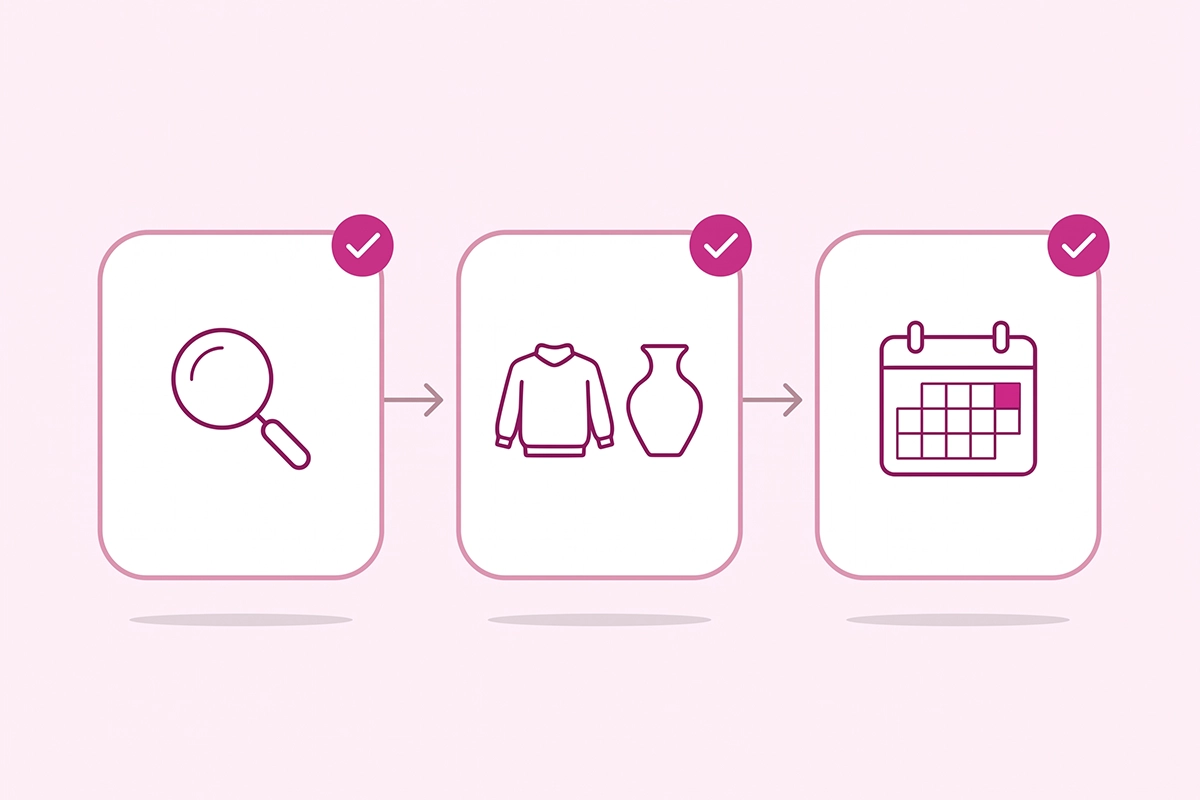
Every topic in this post passed a three-part test. If an idea of your own fails one part, park it.
- A question someone types. "How to wash linen sheets" is a search. "Our spring mood board" is not.
- A product it links to. If you can't name the product or collection the post points at, it may bring readers but it won't bring orders.
- A month it peaks. Some questions are asked all year, and most swell in one season. Knowing which tells you when to publish.
The format matters less than the test. I covered the eight blog post formats separately if you want the word counts for each.
What to skip
Three kinds of posts fill the big lists and do little for a small store.
- New arrivals and restock posts. That is email and Instagram content, and it is stale in three weeks.
- Trend reports and celebrity style. You'd be competing with magazines that have whole teams, for readers who aren't shopping.
- Lifestyle posts with no product in them. This is what most stores do at this stage: a lovely post about cozy autumn evenings that never mentions a single thing you sell.
The 40 blog post ideas for clothing and homewares stores, in five groups
Jump to a group: fit and care, styling and room guides, seasonal and gifting, behind the product, or comparisons and buying guides.
In each group, the first four topics are for clothing and the homewares blog ideas are the four that follow. Swap the bracketed words for your own products. If your store sells both, you have all 40.
Group 1: Fit and care guides (topics 1 to 8)
Start here. These are the questions that stop a sale or cause a return. An estimated 19.3% of online sales were returned in 2025, and Shopify's returns guide notes that apparel runs higher because fit is hard to judge online. A post that answers "how does this run" before checkout earns its keep.
| # | Topic | What the searcher wants | Link it to |
|---|---|---|---|
| 1 | How [your brand] sizing runs, with real measurements | To know which size to order before buying | Your best seller and the size chart page |
| 2 | How to wash [linen, wool, or denim] without shrinking it | To avoid ruining it | That fabric's collection |
| 3 | How to measure yourself for [jeans or a dress] at home | A two-minute method and a tape measure | Every product with a size chart |
| 4 | How to stop knitwear pilling, and how to store it over summer | A fix for a sweater they already own | Knitwear and fabric combs |
| 5 | How to wash linen sheets, and how often | Temperature, detergent, and drying | Linen bedding |
| 6 | How to care for [stoneware, wooden boards, or cast iron] | Whether it can go in the dishwasher | That product, plus care oil or cloths |
| 7 | What size rug for a [living room or queen bed] | Dimensions, with furniture placement | Rugs, filtered by size |
| 8 | What size insert for a cushion cover or duvet cover | One number, quickly | Covers and inserts together |
Group 2: Styling and room guides (topics 9 to 16)
These catch the shopper who has the item in mind and can't picture it. Use your own photos. A styling post built on stock images tells the reader nothing about your product.
| # | Topic | What the searcher wants | Link it to |
|---|---|---|---|
| 9 | How to style a [linen shirt] five ways | Outfit ideas for one piece | The shirt and the pieces paired with it |
| 10 | What to wear to an [autumn wedding or garden party] | A dress code decoded, with options | Occasion dresses and accessories |
| 11 | A capsule wardrobe from [eight pieces] | A short list that works together | The eight products |
| 12 | What to wear with [wide-leg trousers] | Shoes, tops, and proportions | The trousers and matching tops |
| 13 | How to style a coffee table or open shelf | A formula they can repeat | Vases, trays, candles, and books |
| 14 | How to layer a bed | Which layer goes where | Sheets, quilt, throw, and cushions |
| 15 | How to mix cushion patterns, and how many a sofa needs | Rules they can follow while shopping | Cushion covers by color |
| 16 | Rental-friendly updates for a small space | Changes that need no drilling or paint | Lamps, rugs, textiles, and removable hooks |
Group 3: Seasonal and gifting (topics 17 to 24)
These are the dated ones. In NRF's 2025 holiday survey, clothing or accessories was the second most-wanted gift at 46%, behind only gift cards, and 42% of shoppers planned to start before November. A gift guide published in December has already missed the early 42%.
For the wider schedule around the sale itself, see the month-by-month BFCM content plan.
| # | Topic | What the searcher wants | Link it to |
|---|---|---|---|
| 17 | Gifts for [her, him, or a teen] under [$50 or $100] | A short list at a fixed budget | 8 to 12 products at that price |
| 18 | A transitional wardrobe for when it's [warm at noon and cold by six] | Layering pieces for between seasons | Light knits, jackets, and scarves |
| 19 | What to pack for [a week in Europe or a beach holiday] | A packing list that fits a carry-on | Travel-friendly pieces |
| 20 | Party season outfits for [the office party, Christmas Day, and New Year] | One outfit per occasion | Dresses, tops, and jewelry |
| 21 | Housewarming gifts under [$50] | Something useful that isn't wine | Candles, boards, linen, and mugs |
| 22 | How to set a holiday table | Place settings, a runner, and a centerpiece | Dinnerware, napkins, and candle holders |
| 23 | The five-item room refresh for [autumn or spring] | A low-cost seasonal change | Throws, cushion covers, and candles |
| 24 | A guest room checklist before visitors arrive | What a guest needs | Towels, bedding, and bedside pieces |
Group 4: Behind the product (topics 25 to 32)
This group is not "our story". These posts answer the doubt behind a price or a quality claim, and only you know the answer. They carry the least search volume, so write them after the first three groups and link to them from your product pages.
| # | Topic | What the searcher wants | Link it to |
|---|---|---|---|
| 25 | Where and how [this piece] is made | Proof of where it comes from | The product, with workshop photos |
| 26 | Why we chose [this fabric] | How it feels and how it wears | Everything in that fabric |
| 27 | What goes into the price of [our $68 tee] | Whether it is worth the money | The product |
| 28 | How we fit-test, and who our sizes are cut for | Whether it will fit their body | The size chart and your best sellers |
| 29 | How [a mug] is thrown, glazed, and fired | Why handmade costs more | The ceramics collection |
| 30 | Why no two [glazed pieces] look the same | Reassurance before ordering | Ceramics, with photos of the range |
| 31 | What [OEKO-TEX, stonewashed, or GSM] means on our labels | A plain definition | Bedding and towels |
| 32 | How we pack fragile orders | Whether it will arrive in one piece | Breakables, plus your shipping page |
Group 5: Comparisons and buying guides (topics 33 to 40)
This is the highest-intent group. Someone comparing two fabrics has already decided to buy one of them. Be honest about when the option you don't stock is the better choice, and build the post the way I describe in how to write a buying guide.
| # | Topic | What the searcher wants | Link it to |
|---|---|---|---|
| 33 | Linen vs cotton for summer | Which is cooler and which creases | Both collections |
| 34 | Wool coat vs puffer: how to choose a winter coat | Warmth, weight, and rain | Coats |
| 35 | Best fabrics for hot, humid weather | A ranked list with reasons | Your lightest pieces |
| 36 | Merino vs cashmere: which is worth the money | Durability and price per wear | Knitwear |
| 37 | Percale vs sateen sheets | Crisp or smooth, cool or warm | Sheet sets in each weave |
| 38 | Stoneware vs porcelain dinnerware | Chip resistance, weight, and dishwasher use | Dinner sets |
| 39 | Soy vs beeswax vs paraffin candles | Burn time, scent, and soot | Candles |
| 40 | Wool vs jute vs synthetic rugs, with pets and kids in mind | What survives daily life | Rugs by material |
When should each blog post go live? The 12-month map
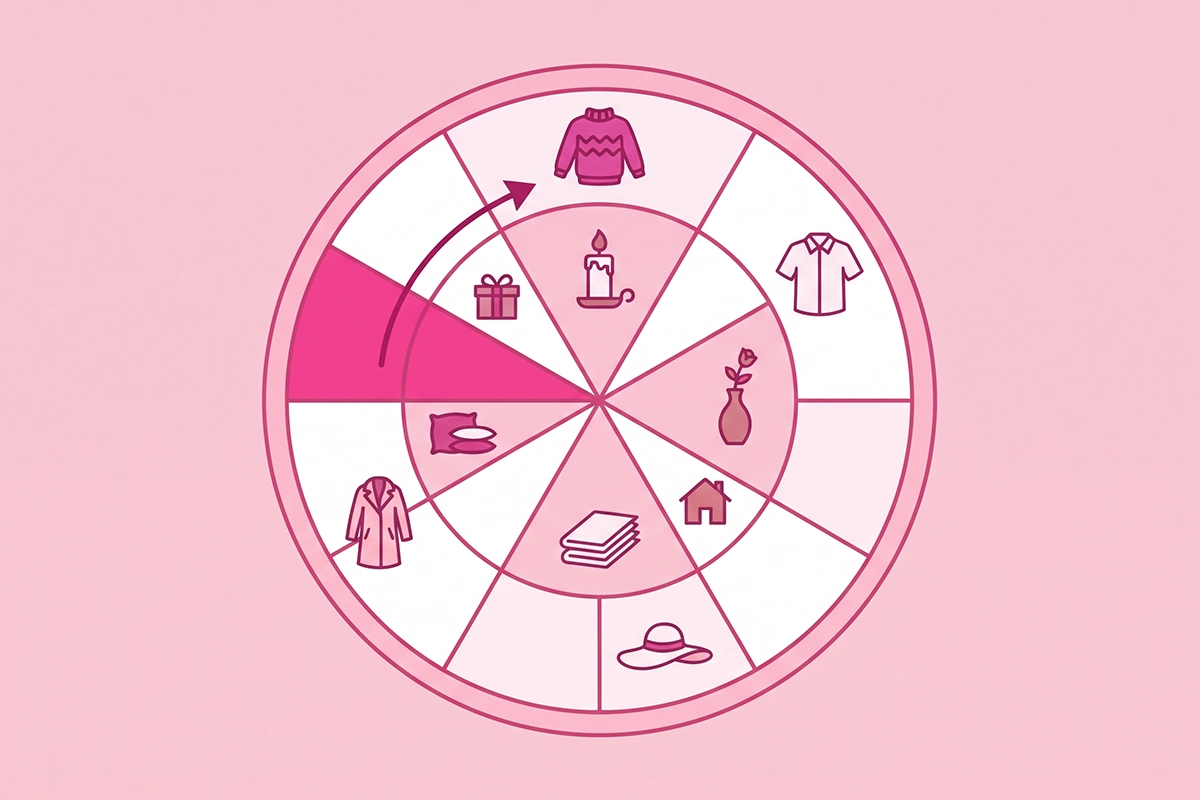
Publish a seasonal post before the season, not during it. Search Engine Land's guide to SEO seasonality puts planning at three to six months before the peak, and notes that content needs roughly 8 to 12 weeks to show up in search. For a small store, I'd treat two months ahead as the minimum.
The map below is written for the Northern Hemisphere. "Publish in" is the month the post goes live. The season it serves arrives about two months later.
| Publish in | Clothing topic | Homewares topic | What it feeds |
|---|---|---|---|
| January | Transitional wardrobe (18) | Five-item spring refresh (23) | Spring arrivals in March |
| February | What to wear to a spring wedding (10) | Rental-friendly updates (16) | Wedding season and spring moves |
| March | Linen vs cotton (33) | How to wash linen sheets (5) | The summer range in May |
| April | What to pack for a beach holiday (19) | Percale vs sateen sheets (37) | Summer travel and warm-weather bedding |
| May | Best fabrics for hot, humid weather (35) | How to style a coffee table (13) | Mid-year sales in June and July |
| June | A capsule wardrobe (11) | What size rug (7) | Late-summer moves and new leases |
| July | Transitional wardrobe, autumn version (18) | Five-item autumn refresh (23) | Autumn arrivals in September |
| August | Wool coat vs puffer (34) | How to layer a bed (14) | The winter range in October |
| September | Gift guide by price (17) | Housewarming gifts (21) and the holiday table (22) | Black Friday and holiday gifting |
| October | Party season outfits (20) | Guest room checklist (24) | December hosting and parties |
| November | Knitwear care (4) | Candle comparison (39) | December gifts and care after purchase |
| December | How to measure yourself (3) | What size insert (8) | January sales, exchanges, and home resets |
If your store is in Australia or New Zealand, shift the weather-led rows by six months and keep the gifting rows where they are. Christmas is still in December. It just needs linen instead of wool.
Topics that aren't on the map, which is most of the fit, care, and behind-the-product posts, are asked all year. To check any topic's real peak, look it up in Google Trends over five years.
Which ten should you write first before BFCM?
Black Friday 2026 is November 27. As I publish this, that is seven weeks away, which is tight. A post published now can be indexed within days, but it won't have months to climb.
So pick topics that pay off even with modest rankings, because you can link them from product pages, order emails, and your sale page. In this order:
- How your sizing runs (1). Link it from every product page. It answers the question that blocks the most orders during a sale.
- What size rug, or what size insert (7 or 8). The same job for homewares.
- A gift guide at a fixed price (17). Sale shoppers are buying gifts. Have it live by late October.
- Housewarming and host gifts (21). December is full of visits.
- Your strongest comparison (33 or 37). On my own site, comparison posts are the ones AI assistants cite most.
- How we pack fragile orders (32). Gift buyers worry about breakage more than price.
- A care guide for your best-selling material (2, 5, or 6). Link it in your order confirmation email.
- Party season outfits (20). Publish by early November.
- How to set a holiday table (22). It sells dinnerware as a set.
- Why we chose this fabric, or what goes into the price (26 or 27). When everything around you is 40% off, this is the post that explains why yours isn't.
Ten posts in seven weeks is one or two a week, which is the right pace. Two to three solid posts a week is the ceiling I'd recommend for any small store. If you're starting from an empty blog, the first ten posts for any new store covers the general order.
Schedule them instead of publishing in a burst. Shopify lets you set a future visibility date on a blog post, so you can write three in a weekend and release one a week.
Everything else on the seasonal map is an investment in next year. A summer linen post published in March 2027 has time to rank. One published in June doesn't.
Wrapping up
The honest answer to "what does a clothing store blog about" is: the same things your customers email you about. Fit, fabric, care, and what goes with what. A homewares store gets the same questions with different nouns.
Three things to take with you:
- Run every idea through the test: a question someone types, a product it links to, and a month it peaks.
- Write fit, care, and comparison posts before styling and story posts. They sit closest to the sale.
- Publish seasonal posts two months early, and accept that this year's late ones are for next year.
The blog post ideas for a clothing store or homewares shop in this list aren't clever, and that's the point. What makes them work is your detail: your measurements, your photos, your maker, your own washing instructions. That part can't be copied from a list, mine included, and it takes real time. Budget three to four hours for a good post.
Pick one topic from Group 1 this week, write it, and link it from the product page it supports.
Want these topics written for your store?
The Studio Niza Blog Content service picks the topics, maps each one to a product and a month, and writes the posts. Pricing starts at $299/month.
See how Blog Content works →Or email contact@studioniza.com if you have a specific question about your store. I read every one.
Frequently asked questions
If you're still unsure after reading these, just send the question.
How often should a clothing store post on its blog? +
Once a week is enough for most small clothing stores, and two to three posts a week is the most I'd recommend. Consistency matters more than volume, because one useful fit or care guide does more than five thin posts. If you can only manage two posts a month, make them the two questions customers email you about most.
Do blog posts help a clothing store sell, or do they only help SEO? +
They sell when each post links to a specific product and answers a question that was blocking the purchase. A sizing guide linked from a product page can help close orders even if it never ranks in Google. Posts with no product in them tend to bring readers who leave without buying.
Should a size guide be a blog post or a page? +
Use a page for the size chart itself, because it is permanent reference content that every product links to. Use a blog post for the longer explanation of how your sizing runs, with real measurements and photos. Then link the two to each other.
Can I use AI to write blog posts for my boutique? +
AI is fine for outlines and first drafts, but the details that make these posts useful have to come from you: your measurements, your fabric, your photos, and your care instructions. A generic AI post about linen says the same thing as a thousand others. Blog post ideas for a clothing store only work when the answer is specific to what you sell.
How long should a homewares blog post be? +
Most homewares posts work at 1,200 to 1,800 words. A single sizing answer, such as what size rug fits under a queen bed, can be shorter at around 800 words, as long as the number appears in the first paragraph. Comparisons and buying guides usually need the longer end of the range.
My store sells both clothing and homewares. Should I have one blog or two? +
One blog. Splitting it halves the number of posts in each and gives you two places to maintain. Use tags such as Clothing and Home so readers can filter, and let gift guides and seasonal posts cover both categories in the same post.