
Black Friday 2026 falls on November 27. Cyber Monday is November 30. From the day this post goes up, that is about fifteen weeks away, and fifteen weeks is roughly the minimum a new blog post needs to get indexed, gain a little trust, and start pulling search traffic.
Which means the BFCM content plan you execute in November is not the one that earns you traffic in November. The one that earns you traffic in November is the one you start now.
This is the part most holiday checklists skip. They tell you to set up discount codes, test your checkout, and schedule your emails, all of which matter. Almost none of them tell you that the gift guide you publish on November 20 will be invisible on November 27, because Google has barely finished crawling it.
The stakes are real for small stores. Shopify merchants moved a record 14.6 billion dollars over BFCM weekend in 2025, up 27 percent year over year, with more than 81 million customers buying from Shopify-powered brands. Peak sales hit 5.1 million dollars per minute at noon on Black Friday. You do not need a slice of that to be large. You need it to exist.
So here is the plan in reverse. What to publish in August, what to publish in September, what to publish in October, and what is honestly not worth writing in November. Each slot names the post type, the search intent behind it, and a realistic word count, because a 600-word gift guide and a 2,000-word buying guide are not the same job.
Why August is the real deadline for BFCM content
Two clocks are running. The first is how long Google takes to rank a new page. The second is when shoppers actually start looking. August is where those two clocks meet.
How long does a new blog post actually take to rank?
Longer than most people plan for. In Ahrefs research on ranking timelines, only 1.74 percent of newly published pages reached the top 10 within a year. Filtering to pages with real English content raised that to about 6 percent, which is still a small number. The average page sitting at position one is around five years old.
There is a more useful finding buried in that same data. Of the pages that did reach the top 10, about 41 percent got there within the first month, and the odds drop sharply after roughly six months without movement. Early momentum matters, and you cannot have early momentum on a page that does not exist yet.
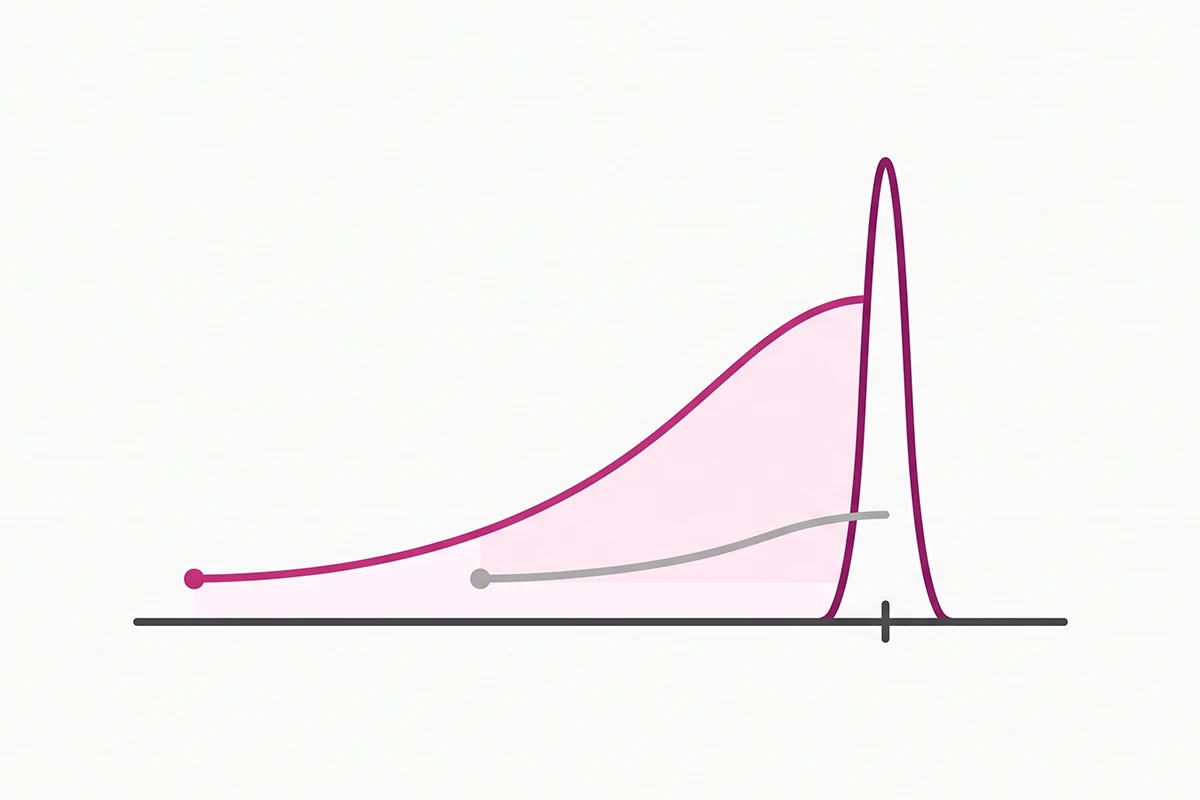
For a small Shopify store this cuts both ways. You are unlikely to outrank a major publisher on a broad holiday term no matter when you publish. You have a real shot at narrow, specific queries, and those tend to settle faster. I wrote a longer breakdown of how long blog content takes to drive traffic if you want the month-by-month version.
The shopper timeline moved before the retailer timeline did
Holiday shopping is no longer a four-day weekend. According to the National Retail Federation, roughly two in five holiday shoppers have started browsing and buying before November for several years running, mostly to spread out their budget and avoid the last-minute rush.
At the same time, 63 percent still plan to do the bulk of their shopping over Thanksgiving weekend, and 60 percent expect to finish in December. So the season has not shifted so much as stretched. Research is happening in September and October. Buying is still concentrated in late November.
That gap is the whole argument for publishing early. The person reading your gift guide in October is not buying yet. They are building a shortlist. If you are not on the shortlist, the Black Friday discount does not matter.
The reverse timeline, at a glance
Here is the full BFCM content plan in one table. Publish month on the left, post type next, then what the person searching actually wants and how long the post realistically needs to be.
| Publish | Post type | What the searcher wants | Length | How many |
|---|---|---|---|---|
| August | Gift guides by recipient and price band | Ideas, not deals | 1,500 to 2,200 words | 2 to 3 |
| August | Buying guides for your best sellers | Help choosing between options | 1,800 to 2,500 words | 1 to 2 |
| September | Best [product] for [person or use] | A shortlist with reasons | 1,200 to 1,800 words | 2 to 3 |
| September | Honest comparisons | Which of these two, and why | 1,500 to 2,000 words | 1 to 2 |
| October | Deal preview and early access | What is on sale and when | 600 to 1,000 words | 1 |
| October | Shipping deadlines and returns | Will it arrive in time | 600 to 900 words | 1 |
| October | Holiday FAQ | Fast, specific answers | 800 to 1,200 words | 1 |

That is nine posts at the low end and thirteen at the high end, spread across roughly fifteen weeks. Call it one post a week with a couple of doubled-up weeks in August.
If nine posts sounds thin next to the services promising thirty a month, it is deliberate. Nine complete posts that each answer a real question will do more for you than thirty thin ones, and a solo founder can actually finish nine. If you want the full cadence argument, it lives in the 90-day content calendar post.
August: the posts that need the most ranking runway
August is for the two post types with the highest competition and the longest payoff: gift guides and buying guides. Both are broad, both attract established publishers, and both need every week of lead time you can give them.
Gift guides by recipient and price band
Not holiday gift guide. That term belongs to publishers with a decade of authority. What a small store can win is the intersection of your niche, a specific recipient, and a price ceiling. Gifts for a new pottery hobbyist under 50 dollars. Gifts for someone who works from home under 100 dollars.
Write two or three of these, each aimed at a different recipient you genuinely serve. Include products you do not sell where it is honest to do so, because a guide with only your own products reads like a catalog and performs like one.
Buying guides for your top products
A buying guide is different from a gift guide. It helps someone who already knows what category they want and needs to choose within it. Sizing, materials, care, what to avoid, what a fair price looks like. These are the posts that get quoted back to shoppers by AI assistants, so they are worth the extra length. I covered the structure in detail in how to write a buying guide that both Google and ChatGPT recommend.
Do gift guides work if you only sell 12 products?
Yes, and arguably better. A store with 12 products can write with actual knowledge of each one, which is what separates a useful guide from a scraped list. Fill out the guide with complementary items from other brands, name them honestly, and let your own products sit inside a real recommendation rather than a lineup.
September: comparison and best-for content
By September the shopper has moved from ideas to shortlists. The queries get more specific, the competition thins slightly, and the content that wins is content that helps someone choose.
Best [product] for [person or use]
This is the highest-value format for a small store because it is endlessly specific. Best ceramic mug for a coffee snob. Best weighted blanket for a hot sleeper. Two to three of these, each 1,200 to 1,800 words, each linking back to the August gift guides.
Keep them shorter than the August posts. The searcher wants a shortlist with reasons, not an essay. Lead with the recommendation, then explain the reasoning underneath it.
Honest comparisons, including things you do not sell
Comparison posts are the ones most small stores avoid, because naming an alternative feels like handing over the sale. It usually does the opposite. A store that explains when a competitor's product is the better fit reads as trustworthy, and trust is what closes the second visit.
Why September is also for fixing last year's posts
If you published holiday content last year, September is when you update it rather than replace it. Refresh the products, update the year in the title and copy, add anything you learned, and republish at the same URL. An existing page with a year of history behind it will outperform a brand-new one almost every time.
October: the content that can still rank fast
October gets a different kind of post. These are short, transactional, and face very little competition, which is exactly why they can go live six weeks out and still work.
The deal preview page
One post, 600 to 1,000 words, explaining what you are running, roughly when, and how someone can find out first. It does not need final discount percentages. It needs to exist early enough to be indexed, so that when someone searches your brand plus Black Friday in late November, there is a page to find.
Publish it at an evergreen URL. More on that in a moment.
Shipping deadlines and returns
The single most searched holiday question for small stores is some version of will this arrive in time. Publish your carrier cutoff dates, your processing time, and your holiday return window on one page, in plain language, with the dates stated as dates.
Google's own holiday season guidance for merchants puts accurate shipping and returns information near the top of the list, and for good reason. It is the last objection before checkout.
The holiday FAQ, and why it earns the most per hour
A holiday FAQ page returns the most for the time it takes, because it does two jobs at once. It answers the questions your inbox is already getting, and it gives AI search engines clean question-and-answer pairs to pull from.
This matters more each year. Adobe found that traffic from AI sources to retail sites rose 693 percent over the 2025 holiday season compared to the year before, and those visitors converted at a higher rate than traffic from other sources. Mark the page up with FAQ schema and write the answers to stand alone, the same way you would for a post written to get cited in AI Overviews.
What should you publish in November?
For SEO purposes, almost nothing new. This is the part of the plan that saves you the most time, so it is worth being blunt about it.
A blog post published on November 10 has about two weeks to be crawled, indexed, and ranked against pages that have been live since August. It will not get there. Writing it costs you four hours you could spend on the things that actually move November revenue.
November is for distribution, not production. Email your list about the guides you published in August. Put the buying guide link in your product page copy. Add the deal preview to your navigation. Post the gift guide sections to social. The content already exists, and almost nobody squeezes the full value out of what they have already written.
The one URL rule that pays off next year
Do not put the year in your holiday URLs. A page at /pages/black-friday/ keeps its links, its age, and its ranking history year after year. A page at /pages/black-friday-2026/ starts from zero next August and leaves a dead URL behind it.
Same rule for the blog posts. Put 2026 in the title and the copy where it helps a reader trust the page is current, and keep it out of the address. Then next September, update in place instead of starting over. Two seasons of this and your holiday pages start the race with a real head start.
Wrapping up
Three things worth carrying out of this. First, the BFCM content plan that earns November traffic is executed in August, September, and October, because ranking takes longer than most holiday checklists admit. Second, the post types are not interchangeable: gift guides and buying guides need the runway, while shipping deadlines and FAQ pages can go live in October and still land. Third, November is for distributing what you already published, not writing more.
An honest caveat. If your store is new and your domain has almost no history, publishing your first holiday post in August may not get you ranking this season. That is a real possibility and I would rather say so than sell you the opposite. The post still earns its place, because it becomes the page you refresh next September with a year of age behind it. Almost every holiday page that ranks well today was published years ago and updated since.
Start with two gift guides this month. Pick the two recipients you actually understand best, write them properly, and get them indexed. If you get nothing else done before September, those two posts are the ones worth having.
Want this written for you before September?
The Studio Niza Blog Content service covers keyword research, the full post, schema, internal links, and image direction, at two to three posts a week instead of daily filler. Holiday planning slots run through August.
See pricing and scope →Or email contact@studioniza.com if you have a specific question about your store. I read every one.
Frequently asked questions
If you're still unsure after reading these, just send the question.
When should I start publishing Black Friday content for my Shopify store? +
August for anything that has to compete, meaning gift guides and buying guides. Those posts need two to three months of indexing and ranking time before shoppers start searching in earnest. October is the floor for fast-intent posts like shipping deadlines and holiday FAQ pages, because those face far less competition and can rank within weeks.
Is it too late to start a BFCM content plan in October? +
Not for the right posts. A shipping deadline page, a returns policy explainer, and a holiday FAQ can all be published in October and still earn traffic, because the queries are specific and the competition is thin. What you cannot do in October is publish a broad gift guide and expect it to rank against pages that went live in August.
How many blog posts do I need for a BFCM content plan? +
Nine at the low end, thirteen if you have the time. That is two to three gift guides, one or two buying guides, two to three best-for posts, one or two comparisons, and three short October posts. Publishing thirty thin posts across the same window performs worse than publishing nine that are actually complete.
Should I put the year in my Black Friday page URL? +
No. Use an evergreen URL like /pages/black-friday/ and update the content each year. A URL with 2026 in it starts from zero next August, while an evergreen URL keeps the links, the age, and the ranking history it built this season. The year belongs in the page title and the on-page copy, not the address.
Do I need a separate Black Friday landing page and a blog post? +
Yes, because they answer different questions. The landing page is for people who already know your brand and want to see the offer. The blog posts are for people searching for gift ideas who have never heard of you. The posts do the discovery work and link into the landing page, which does the converting.
What kind of BFCM content actually ranks for a brand-new Shopify store? +
Long-tail and specific. A new domain will not outrank a large publisher for a broad term like best holiday gifts, but it can rank for your niche plus a recipient plus a price band. The narrower and more particular the query, the better a small store's odds, especially when the post reflects real product knowledge.