
You installed a free review app. It works. Then a small locked badge appeared next to four features you cannot click, and now every time you open the dashboard there is a prompt asking whether you are ready to grow.
The question you are trying to answer is not which review app to use. You already picked one. It is whether paying beats free, and when.
Here is the short version. Free review plans on Shopify cover more than the upgrade prompts suggest, and most stores under roughly $15,000 a month in revenue are fine staying on them. Three specific things sit behind the paywall that can actually move revenue: syndicating star ratings to Google Shopping and Meta, collecting the review format that sells your particular product, and pooling reviews across listings that are really the same item. Everything else on the paid feature list is nice to have. Nice to have and worth paying for are different categories.
This post covers what the leading free plans include in 2026, the three upgrade triggers that pay for themselves, the paid features that rarely earn their fee on a small store, and a revenue threshold you can use to decide in about two minutes. If the answer turns out to be yes, the last section covers which paid plan to pick.
Nobody selling you a review app is going to volunteer that the free plan is enough. That is what this post is for.
What the free review plans actually cover in 2026
The free tier landscape narrowed over the last two years, and the survivors are not equivalent. Two apps still offer something genuinely usable, and one that used to is now gone.
Judge.me Forever Free
This is the outlier. Judge.me's published pricing puts unlimited product and store reviews, unlimited photo and video reviews, Google rich snippets, the core review widget, the star rating badge, carousels, and 24/7 support on the free plan. Nothing meters against your order volume. A store doing 60 orders a month and a store doing 6,000 pay the same $0.
The paid tier, Awesome, is a flat $15 a month. That is the ceiling, not a starting point.
Loox Beginner
Loox's free Beginner plan includes photo reviews, review request emails, the discount-for-photo incentive, the display widgets, SEO rich snippets, and the reviews importer. The catch is a hard cap: Loox caps Beginner at 500 total orders, lifetime, not monthly. Video reviews, Google Shopping, Meta Shops, referrals, and branding removal all sit on the paid Convert tier at $49.99 a month, which then adds charges as your order volume climbs.
Practically, Beginner is a long trial rather than a permanent home. Useful, but plan for it to end.
The tier that quietly disappeared
Stamped retired its free Lite plan in 2025. New stores start at the paid Reviews tier, which begins around $23 a month for a low order allowance and climbs with volume. If you read a comparison post recommending "Stamped's free plan," the post is out of date.
| Free plan | Order cap | Photo reviews | Video reviews | Google rich snippets | Google Shopping stars |
|---|---|---|---|---|---|
| Judge.me Forever Free | None | Yes | Yes | Yes | No, paid only |
| Loox Beginner | 500 total orders | Yes | No, paid only | Yes | No, paid only |
| Stamped | No free plan since 2025 | Paid | Paid, higher tier | Paid | Paid, higher tier |
Read the last column carefully, because it is the same answer on every app, and it is the first real trigger.
Trigger 1: you are paying for traffic that could carry stars
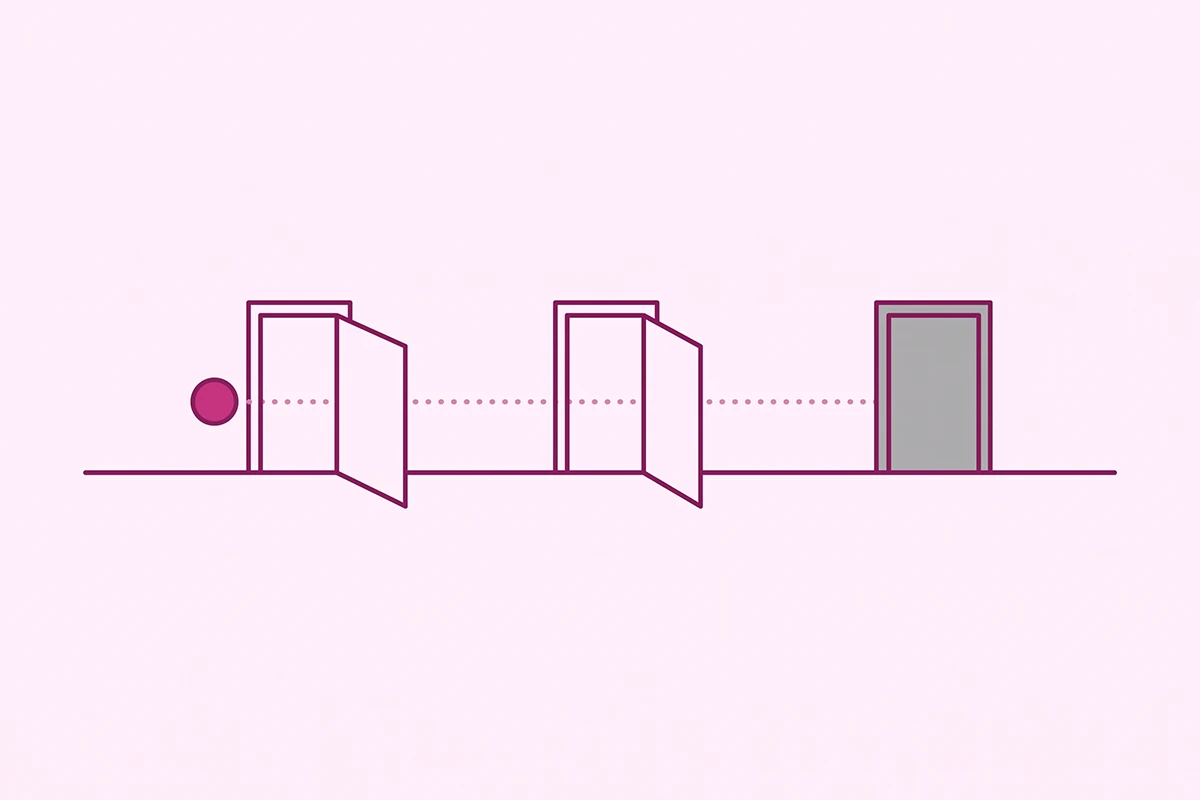
Every major review app puts Google Shopping syndication behind its paid tier. Judge.me, Loox, and Stamped all do this. It is the single most consistent paywall in the category, and it is consistent because it is the feature most directly tied to revenue.
Here is the distinction that trips people up. The star ratings that appear under your organic product listings in Google search come from Product schema on your own page, and those work on the free plans. The star ratings that appear on Google Shopping listings and Shopping ads come from Merchant Center's Product Ratings program, and those need a review feed that only paid tiers generate. We covered the organic side in more detail in the post on star ratings in Google search results.
Two requirements gate Product Ratings even after you pay. Google requires a minimum of 50 reviews across your whole catalog before ratings display, and it matches reviews to products using identifiers like GTINs, so a catalog with missing or inconsistent identifiers can clear the review count and still show nothing. Google's Product Ratings policies spell out the feed and identifier rules.
The payoff, when it lands, is a click-through improvement on traffic you are already buying. Industry estimates for Shopping listings carrying star ratings cluster in the 10 to 20 percent range against equivalent listings without them. That is not a promise, and results vary by category and rating quality. But it is real money in one specific case: when you have paid traffic running.
The trigger fires when you are spending meaningful money on Google Shopping or Meta and you already have 50 or more reviews. If you are not running paid traffic yet, this feature does nothing for you no matter how prominently the upgrade prompt features it.
Trigger 2: your app gates the review format that sells your product
This trigger is app-specific, and being honest about that matters more than being tidy.
On Judge.me, photo and video reviews are both on the free plan. If you are on Judge.me, this trigger does not exist for you. Skip it.
On Loox, photo reviews are free and video sits on Convert at $49.99 a month. On Stamped, both formats are gated, with video on a higher tier than photo. If you are on either app and your product is one people need to see in use, you are looking at a real limitation rather than a cosmetic one.
The honest test is whether the format changes the buying decision for your category. Apparel, furniture, skincare, anything where fit, scale, or texture is the objection: customer photos answer a question your product shots cannot. Digital goods, replacement parts, consumables people already know: text reviews carry the same weight and cost nothing.
The trigger fires when your product has a visual objection, your app gates the format that resolves it, and you have enough order volume that customers will actually submit media. That last part matters. Media submission rates run well below text submission rates, so a store doing 30 orders a month will not generate a visual review library worth $50 a month regardless of which plan it is on. Our post on photo reviews compared with text reviews goes deeper on where the difference shows up.
Trigger 3: one product is split across several listings
This is the trigger nobody pitches, and it is usually the one with the clearest math.
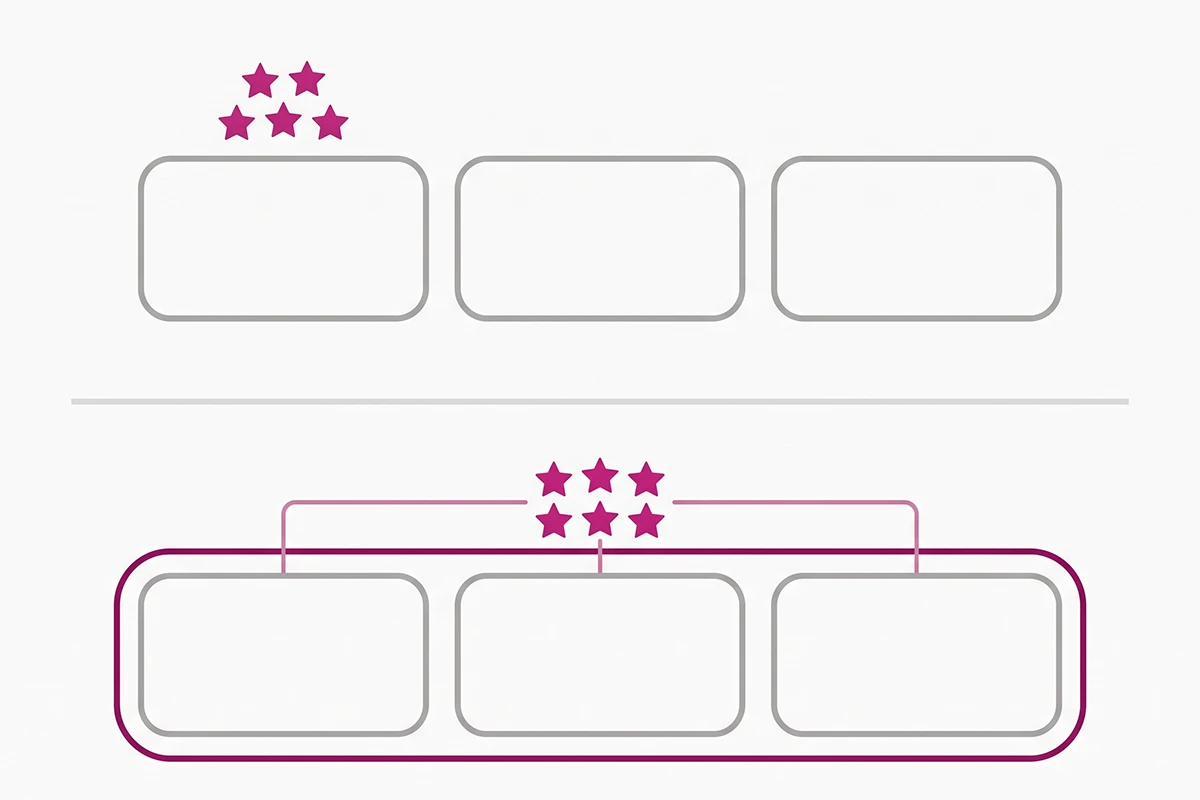
Say you sell one hoodie in three colorways, and Shopify treats each colorway as a separate product rather than a variant. A customer buys navy and leaves a five-star review. That review lives on the navy page only. Burgundy launches at zero reviews, converts badly, and stays that way until it accumulates its own history from scratch.
Product grouping pools reviews across related listings so all three show the same count and rating. On Judge.me this is an Awesome feature. On Loox it is on the paid tiers. It is the one paid feature I have seen change conversion on a small catalog quickly, because it takes trust you already earned and puts it where shoppers are looking.
The same mechanism matters when you retire a listing. Merging or migrating reviews to the replacement listing is what keeps years of accumulated trust from vanishing, which is why Judge.me is our default recommendation for stores under $200K a year: native product merging makes review migration on discontinued products straightforward rather than a CSV exercise. It also feeds into getting your reviews onto every surface that shows them.
The trigger fires when your catalog splits one real product across multiple listings, or when you retire and replace listings regularly. If every product in your store is genuinely distinct and nothing gets sunset, this feature is worth nothing to you.
The paid features that rarely earn their fee on a small store
These show up prominently in upgrade prompts. They are not scams. They are just not revenue features for a store in its first year.
Branding removal. There is no credible public data showing a small third-party badge under a review widget changes conversion rate. Some merchants dislike it, which is a fair brand preference. It is not a business case.
AI reply drafts and AI summaries. Useful once you have hundreds of reviews and no time to respond. At 40 reviews you can write replies yourself in twenty minutes a month, and replying in your own voice reads better than a generated draft.
The extended widget count. Paid tiers advertise a dozen or more widgets. Most stores use two: the review block on the product page and a star badge near the title. Adding six more display surfaces to a page that gets 300 sessions a month does not produce six times the social proof.
Product Q&A. Genuinely good, and genuinely dependent on traffic. An empty Q&A section on a product page is worse than no Q&A section. Wait until you are getting presale questions by email regularly.
Full CSS control. Worth it if your theme fights the default widget styling badly enough to hurt the page. Worth nothing if the default looks acceptable and you are upgrading to adjust a border radius.
A revenue threshold you can actually use

Here is the framing that resolves this faster than any feature comparison. A review app upgrade has to pay for itself out of additional orders, so work backwards from the fee.
At $15 a month with a $60 average order value and a 40 percent margin, the upgrade needs to produce roughly one extra order a month to break even. That is a low bar, and at almost any order volume above a trickle it clears.
At $49.99 a month with the same numbers, you need about two extra orders. Still reasonable, but the plan also scales with your order count, so run the number at your actual volume rather than the sticker price.
Now apply the triggers. If none of the three fire, the upgrade is not producing extra orders at all, and the honest answer is stay free regardless of your revenue. If one fires, and it is trigger one or trigger three, a $15 flat upgrade is almost always worth it once you clear about $5,000 a month in revenue. Below that, order volume is usually too low for the mechanism to matter.
The rough line I use with clients: under $5,000 a month, stay free unless a trigger clearly fires. Between $5,000 and $15,000 a month, a $15 flat plan is defensible if one trigger fires. Above $15,000 a month with paid traffic running, the upgrade stops being a question.
One caveat worth stating plainly. If your app charges by order volume rather than a flat rate, recalculate every quarter. A plan advertised at $49.99 can quietly bill several times that once per-order blocks stack up, and merchants regularly report being surprised by it. Flat pricing removes that whole category of problem, which is a reason to weigh pricing structure alongside features.
If the answer is yes, which paid plan to pick
Assume a trigger fired and you are upgrading. The choice narrows fast when you sort by pricing structure rather than feature count.
| App | Entry paid price | Scales with orders? | Best fit |
|---|---|---|---|
| Judge.me Awesome | $15 flat | No | Most stores under $500K a year, especially split catalogs |
| Loox Convert | $49.99 plus per-order blocks | Yes | Visual-first brands where widget polish drives conversion |
| Stamped Reviews | From about $23 | Yes, by tier | Stores that want reviews bundled with loyalty later |
| Yotpo | Free entry, scales steeply | Yes | $500K a year and up, or Shopify Plus |
For a fuller breakdown of any pairing, we have Judge.me and Stamped side by side, Judge.me against Yotpo, Loox against Yotpo, and the four-way comparison covering all of them at once.
One practical note on switching. Every major app exports reviews to CSV and imports from competitors, so migrating is less painful than merchants expect. But your review count and the age of your review history are trust signals, and a sloppy migration loses both. If you are switching apps and upgrading in the same week, do them separately.
Wrapping up
Free vs paid review apps is not really a features question. Free plans on Shopify cover the work that matters most in your first year: collecting reviews without a cap, displaying them on product pages, and earning star ratings in organic search results. The upgrade prompt does not mention that part.
Three things behind the paywall genuinely move revenue. Google Shopping and Meta star syndication, once you are paying for traffic and have 50 or more reviews. The visual review format your product needs, if your specific app gates it. And review pooling across listings, if your catalog splits one product into several. If none of those describe your store, the upgrade is a subscription for features you will not use.
Work the threshold rather than the feature list. Under $5,000 a month, staying free is usually the right call. Between $5,000 and $15,000, a flat $15 plan is defensible when one trigger fires. Above that with ads running, it stops being a real question.
The work that is still yours either way: actually asking for reviews, consistently, on a schedule that catches customers when the product is fresh. No plan tier fixes an empty review widget. A store on a paid plan with 12 reviews converts worse than a store on a free plan with 200.
Not sure which side of the line you're on?
Reviews Management from Studio Niza covers app setup, request automation, response handling, and review migration when listings change. Pricing is flat and the scope is written down. If your free plan is already doing the job, I'll tell you that instead.
See pricing & services →Or email contact@studioniza.com if you have a specific question about your store. I read every one.
Frequently asked questions
If you're still unsure after reading these, just send the question.
Is the Judge.me free plan good enough for a store doing $10K a month? +
For most stores at that level, yes. The Forever Free plan carries unlimited product reviews, unlimited photo and video reviews, Google rich snippets, and the core display widgets, with no order cap attached. The gaps that matter at $10K a month are Google Shopping syndication and product grouping, and neither one applies unless you run paid shopping traffic or split one product across several listings.
Do free review apps still show star ratings in Google search results? +
Yes, on the major apps. Google rich snippets, which are the star ratings that appear under your organic product listings, come from Product schema on your own page and are included on Judge.me's free plan and Loox's Beginner plan. That is separate from Google Shopping star ratings, which run through Merchant Center and do sit behind a paid tier.
How many reviews do I need before Google Shopping will show star ratings? +
Google requires a minimum of 50 reviews across your whole catalog before Product Ratings will display, and individual products generally need a few reviews of their own. Google also matches reviews to products using identifiers like GTINs, so a catalog with missing or inconsistent product identifiers can clear the 50-review bar and still show nothing.
Do I lose my reviews if I downgrade from a paid review plan back to free? +
On Judge.me and Loox the reviews themselves stay in your account and stay on your product pages. What you lose is access to the paid features, so grouped reviews may separate back out and Google Shopping syndication stops. Order caps are the real risk: Loox's free Beginner plan is limited to 500 total orders, so a store past that point cannot go back to it.
Does removing the review app's branding actually increase conversions? +
There is no credible public data showing that a small third-party badge under a review widget changes conversion rate. It is a brand preference, and a reasonable one, but it is not a revenue argument. If branding removal is the only feature pulling you toward a paid plan, that is a sign the upgrade can wait.
Is there a free Shopify review app with no order limit in 2026? +
Judge.me's Forever Free plan is the main one. It has no order cap, no review cap, and no metering on review requests, which is unusual in this category. Loox offers a free Beginner tier but caps it at 500 total orders, and Stamped discontinued its free plan in 2025, so free vs paid review apps is now a narrower comparison than it was two years ago.