
You probably answer the angry reviews. A one-star lands, your stomach drops, and you write something careful within the hour. The five-star reviews? They sit there, glowing and unanswered, because they don't feel like they need anything from you.
That's the habit worth breaking. Learning to reply to positive reviews is one of the easiest trust wins a small Shopify store has, and almost nobody does it consistently. The happy reviews feel finished, so we leave them alone and move on to the next fire.
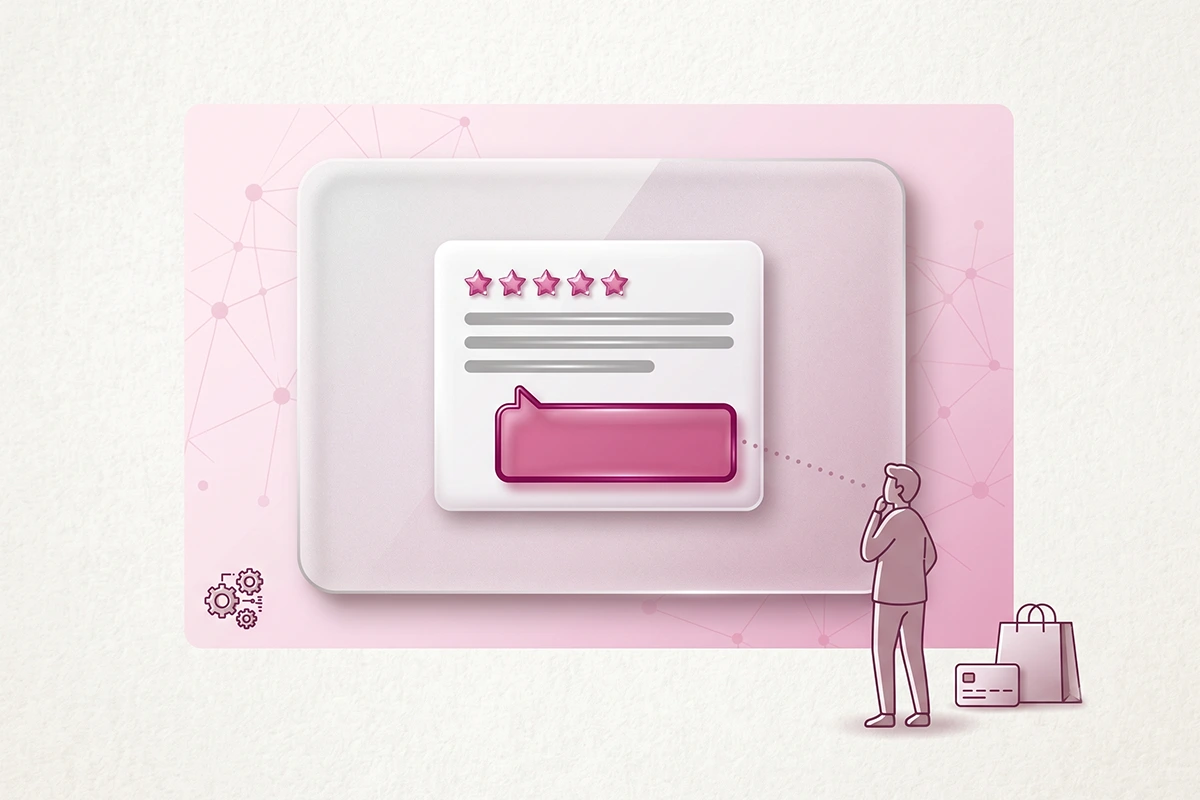
Here's the reframe: the reply isn't for the customer who already loves you. It's for the next shopper reading that product page, deciding whether to trust you with their card. They see the review. They also see whether you bothered to say anything back.
Across recent surveys, most shoppers now expect a response to reviews, and a store that answers only its critics can read as defensive rather than caring. This post covers why public replies to happy customers matter more than they look, a simple three-part reply that adds a little SEO and a lot of personality without sounding scripted, the FTC line you cannot cross, and five templates you can adapt to your own voice by Monday. None of this takes long. That's the point.
Why reply to positive reviews at all?
The short version: because the reply is public, and public replies move people who haven't bought yet.
Start with what shoppers expect. In BrightLocal's 2026 consumer survey, 89% of consumers said they expect a business to respond to reviews. That expectation used to be reserved for complaints. It isn't anymore.
The more useful number, for the habit we're breaking, is this one. BrightLocal found that only 53% of shoppers would buy from a business that responds only to positive reviews, and only 55% would buy from one that responds only to negative reviews. Answering just the angry reviews doesn't read as responsible. It reads as a store that only shows up when forced to.
There's conversion data too. One analysis of small-business reviews found that responding to all of your reviews, rather than none, was associated with a 16.4% higher conversion rate, and that most of the lift showed up by the time a business was answering about 75% of them. You don't need to answer every single one. You do need to be visibly present.
And presence compounds. An earlier BrightLocal survey found 88% of consumers would use a business that replies to all its reviews, versus 47% for a business that replies to none. Same store, same products. The difference is whether a stranger can see you paying attention.
If you're already good at the hard part, replying to unhappy customers, you've done the emotionally taxing work. If you want a refresher on that side, here's how to reply to negative reviews. The happy reviews are the easy half you're leaving on the table.
Who actually reads your reply?
Not the reviewer. Or not mainly.
When someone leaves a glowing review, they've already bought, already formed an opinion, and mostly moved on. Your reply might make their day. It won't change their mind, because their mind is made up.
The real audience is the shopper who lands on that product page next week, scrolls to the reviews, and reads three or four before deciding. On most Shopify review apps, your reply sits directly beneath the review it answers. Judge.me, for example, shows public replies right under the review in the widget, so potential buyers can see how you talk to customers. That undecided shopper is reading a small conversation, not a monologue.
Shopify's own guidance frames replies as a two-way conversation that other people read, and suggests keeping thank-you replies short so the review itself still gets to shine. That's the mental model. You're not writing to the reviewer. You're showing a room full of quiet observers what it's like to be your customer.
This is also why the reply is worth a sentence of substance, not just "Thanks!" A stranger learns nothing from "Thanks!" They learn a lot from a reply that confirms the product does the thing they're hoping it does. It's the same reason star ratings in Google search matter: the trust signal works on people who haven't met you yet.
The three-part reply that adds keywords and personality
Most review replies fail in one of two directions. They're either a bare "Thank you!" that says nothing, or a paragraph of corporate warmth that reads like a form letter. The fix is a simple structure you can run in under a minute.

Part one: thank them and name something specific. Not "Thanks for your review," but "Thanks for the kind words about the fit." Naming a detail proves a human read it. It takes five extra seconds, and it's the difference between a reply that feels real and one that feels automated.
Part two: echo a product detail or use case. This is where a natural keyword lands. If the reviewer loved your linen apron for pottery, your reply can mention the linen apron and the studio work without stuffing anything in. Public replies add indexable text to the product page, so a reply that naturally repeats the product name and its use gives that page a little more of the language real buyers search for. The keyword benefit is a bonus, not the goal. Write for the human first.
Part three: a light invitation forward. One low-pressure line that points at a next step. Something like "we just added a matching set if you ever want one," or "tag us if you post a photo, we love seeing them in use." No discount codes as a thank-you, since that can look like you're paying for sentiment, which we'll get to. Just a warm door left open.
Put together, a three-part reply reads like this: "Thanks for the note about the fit, Dana. The linen apron is cut a little longer on purpose for exactly that studio-to-sink situation. If you ever want the matching mitt, we finally restocked it this week." Specific, human, and it quietly feeds the product page the words buyers actually type. (That same trick works in your listings, by the way: here's how to use your reviews in product descriptions.)
The FTC line: reply freely, but don't edit or gate
Replying to reviews is completely fine. The rules that trip stores up are about a different thing: manipulating which reviews exist and what they say.
In October 2024, the FTC's Rule on the Use of Consumer Reviews and Testimonials took effect. Three lines from it draw the boundary around everything in this post.
First, you cannot edit or alter a customer's review to change its meaning. Replying underneath a review is encouraged. Rewriting the review itself is not. Leave their words alone and add yours below.
Second, you cannot gate reviews, meaning you cannot ask for feedback and then only publish the positive ones, or only invite happy customers to review in the first place. The FTC treats suppressing reviews based on their rating or sentiment as deceptive. If you collect reviews, collect them from everyone and show them honestly.
Third, you cannot buy sentiment. Offering a discount in exchange for a positive review, or conditioning any reward on the review being favorable, is exactly what the rule prohibits. This is why "leave us five stars for 10% off" is off the table, and why the light invitation in your reply shouldn't dangle a coupon as a reward.
This isn't theoretical anymore. The FTC began enforcing the rule in late 2025 with its first round of warning letters, and violations can carry civil penalties north of $50,000 each. The good news for the honest store: replying to positive reviews, warmly and publicly, is nowhere near the line. Just keep the review-getting itself clean. If you want the compliant way to ask for reviews in the first place, here's how to ask without breaking the FTC rules.
Five reply templates you can adapt
Templates are a starting point, not a script. Paste one, then change the specifics so it sounds like you and matches the actual review. The table below is the quick version: match the review type to the thing worth echoing back.
| The review | What to echo in your reply |
|---|---|
| Short and glowing, no detail | The product name and a small, caring offer of help |
| Praises a specific feature | That exact feature, and why you built it that way |
| Includes a photo | The photo, and how much it helps other shoppers |
| From a repeat customer | The fact that they came back |
| Praises shipping or service | The operational thing they noticed |
1. The short five-star with no detail
Reply: "Thank you, [name]. So glad the [product] found a good home. If a question ever comes up about caring for it, we're one email away." Personalize it by naming the exact product and swapping in a real detail about upkeep or use.
2. The detailed review praising a feature
Reply: "This made my week, [name]. The [specific feature] is the part we fussed over most, so it's good to hear it doing its job. Thanks for taking the time to write it all up." Personalize it by quoting back the exact feature they mentioned, not a generic one.
3. The photo review
Reply: "That photo is gorgeous, thank you for sharing it, [name]. Seeing the [product] actually in use tells other shoppers more than we ever could from a listing." Personalize it by reacting to something real in the photo, like the color or the setting.
4. The repeat customer
Reply: "Round two, [name], we noticed. Thank you for coming back. That means a lot coming from someone who already knows the [product line]." Personalize it by referencing what they bought last time if your app shows order history.
5. The review that praises shipping or service
Reply: "Thank you, [name]. Careful, on-time shipping is one of those things people only notice when it goes wrong, so it's nice to be noticed when it goes right. Enjoy the [product]." Personalize it by naming the specific thing they praised, whether that was speed, packaging, or a support reply.
How to reply without it eating your week
The objection is always time. Fair. Here's how to keep this to a few minutes a week instead of a daily chore.
Batch it. Pick one day, open your reviews dashboard, and answer everything that came in since last time. BrightLocal found that 81% of consumers expect a response within a week, so a weekly rhythm keeps you comfortably inside what shoppers want without living in the app.
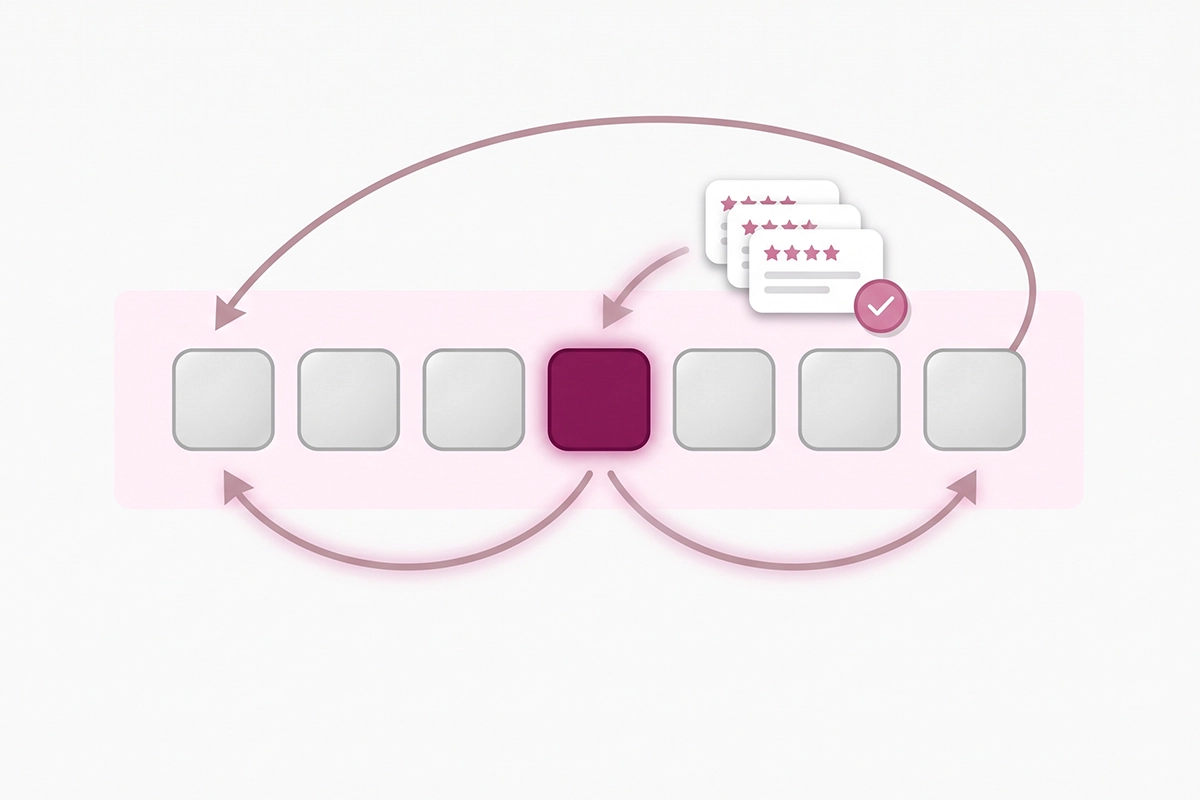
Don't chase 100%. Remember the conversion data: most of the lift arrives around a 75% response rate. Prioritize the reviews that do the most work for future buyers, meaning detailed ones, photo reviews, and anything that answers a common objection. A three-word "Great!" review can wait, or be skipped.
Use AI as a first draft, not the final word. Judge.me and similar apps now include AI reply generators that produce a starting draft you approve before it posts. That's a real time-saver. Just don't publish the raw output, because BrightLocal's testing found that generic, clearly-templated replies can read as less trustworthy once shoppers sense the automation. Add the one specific detail the AI doesn't know, and you're done.
For what it's worth, this is the kind of thing I run for Reviews Management clients: every review gets a reply in the store's own voice, positive and negative, on a steady schedule. The studio guarantees the systematic part, showing up and responding, because the volume of reviews depends on your customers, but the consistency of replies depends only on having a system. Ignoring them has its own quiet cost, which I've broken down in the real cost of ignoring reviews.
Wrapping up
Replying to positive reviews is the rare growth task that's cheap, fast, and almost nobody does well. A store that answers only its critics looks defensive. A store that answers its happy customers, briefly and specifically, looks like a place run by a person who's paying attention, and that impression lands on the exact people deciding whether to buy.
Three things to take with you. The reply is public, so write it for the next shopper, not the reviewer who already loves you. Use the three-part shape: thank them for something specific, echo the product in plain language, and leave a warm door open. And keep the review-getting itself honest, because the FTC rules are about manipulation, not conversation. You are free to reply all day.
You don't need a new app or an hour a day to start. You need one recurring calendar block and a few sentences that sound like you. Open your reviews dashboard, find the last five positive reviews sitting there unanswered, and reply to them before you close the tab. That's the whole habit. It gets faster every week, and future buyers start seeing a store that talks back.
Want every review answered, not just the angry ones?
Studio Niza's Reviews Management service replies to every review in your brand voice, positive and negative, sets up automated review requests, and migrates reviews when you retire a product so you keep the trust you built. Setup from $299, then $199/month.
See how Reviews Management works →Or email contact@studioniza.com if you have a specific question about your store. I read every one.
Frequently asked questions
If you're still unsure after reading these, just send the question.
Should I reply to every single positive review? +
No. Answering roughly three-quarters of your reviews captures most of the conversion benefit, so prioritize the detailed ones and the photo reviews and don't stress about the three-word ones. The goal is to reply to positive reviews consistently, not perfectly.
How long should a reply to a positive review be? +
Short. One to three sentences is plenty, and Shopify's own advice is to keep thank-you replies brief so the review itself still stands out. A long reply buries the customer's words under yours.
Is it against FTC rules to reply only to positive reviews? +
Replying selectively is not against the rules by itself. What the FTC prohibits is suppressing negative reviews, gating (only publishing or only soliciting positive ones), and paying for favorable sentiment. Reply to both positive and negative when you can, and keep your review collection open to everyone.
Do review replies help SEO on Shopify? +
A little, yes. Public replies add fresh, indexable text beneath each review, and when you naturally mention the product and its use, that page gains more of the language buyers search for. Treat the SEO as a side benefit and never keyword-stuff a reply.
Can I use AI to reply to positive reviews? +
Yes, as a first draft. Apps like Judge.me include AI reply generators that you approve before publishing. Always add one specific human detail, because shoppers tend to distrust replies that read as fully automated.
Should I offer a discount when I reply to a happy review? +
No. Conditioning a reward on a positive review, or handing out a coupon as a thank-you for one, can look like you are paying for sentiment, which the FTC rule prohibits. Keep your reply warm and leave discounts out of it.