
Two chatbot apps sit in your Shopify search results. One costs nothing. One costs sixty dollars a month and calls itself "AI." Both use the word "AI" in the listing. You install a demo, it answers a couple of questions, and you still cannot tell which kind you are looking at.
That confusion is the whole reason this post exists. The rule based vs AI chatbot question used to be easy, because the two looked nothing alike. In 2026 the line is blurry on purpose. Older scripted widgets are marketed under the same "AI chatbot" label as the newer systems, and the store owner in the middle cannot tell them apart from the App Store screenshots.
Here is the short version. A rule-based chatbot follows a script you build. An AI chatbot reads the question and writes an answer. They fail in completely different ways, they cost money in completely different ways, and one of them can say something wrong that your store is on the hook for.
This is written for Shopify owners who launched in the last year and are choosing their first support bot. You will get a plain definition of each type, an honest account of where each one breaks, the order volume and question variety that actually tip the decision, and a five-minute test you can run on any demo bot to see what it really is. By the end you should know which category your store needs, and, just as useful, when you do not need either one yet.
What a rule-based chatbot actually is
A rule-based chatbot follows a decision tree. You (or the app) map out the questions customers might ask, write the answers ahead of time, and connect them with buttons or keyword triggers. The customer taps "Track my order" or types "returns," and the bot fires the matching scripted reply. Nothing is generated in the moment. Every path was built in advance.
This is also called a scripted chatbot or a decision tree chatbot, and you have almost certainly used one. When a bot shows you three or four buttons to choose from instead of an open text box, that is the tell. It is guiding you down branches someone drew on purpose.
The most common example on Shopify is the one most new stores already have. Shopify Inbox, the free messaging tool built into your store, runs on saved Quick Replies and instant answers. It is rule-based. It is not a language model reading your customer's sentence and composing a reply. That is not a knock on it. For a store with a handful of predictable questions, a scripted bot is fast to set up, free or cheap, and it never makes anything up, because it can only say what you wrote.
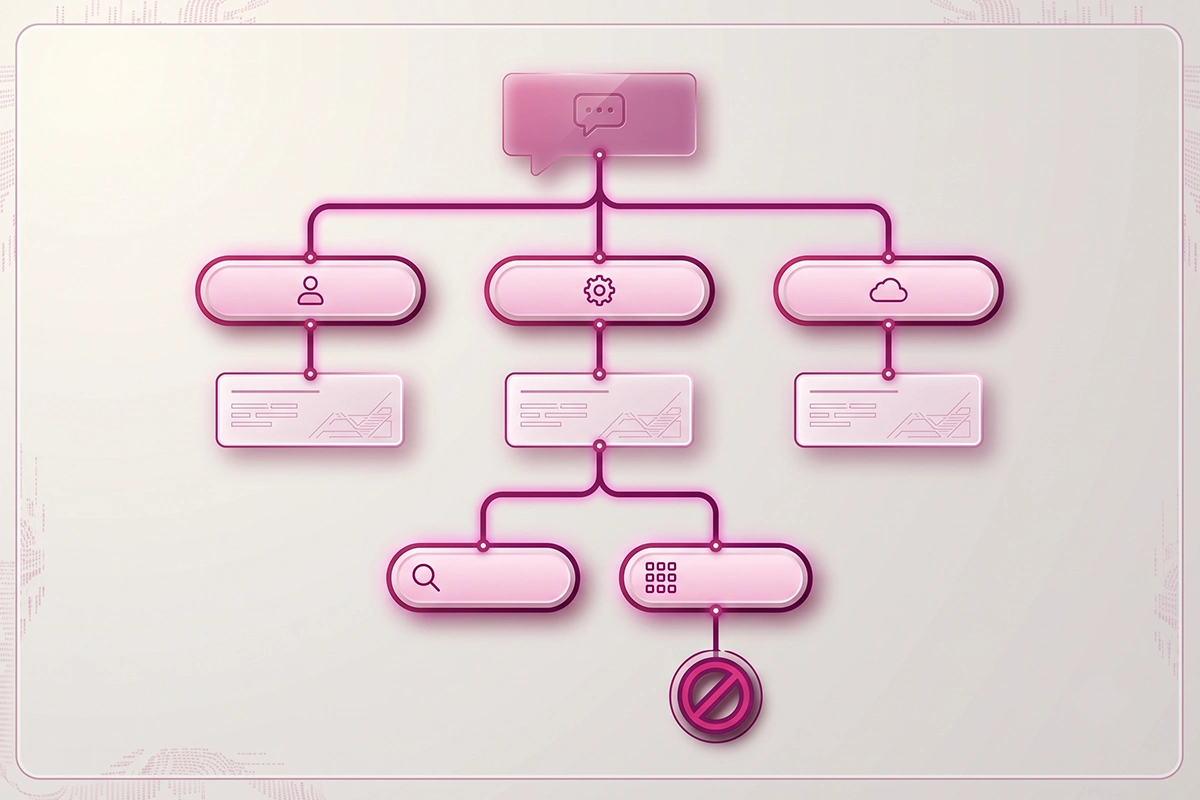
The strengths are real: predictable, controllable, cheap, and safe. The bot answers your shipping-time question the same way every time, and it will never invent a policy. For a narrow set of frequently asked questions, that reliability is worth a lot.
What an AI chatbot actually is
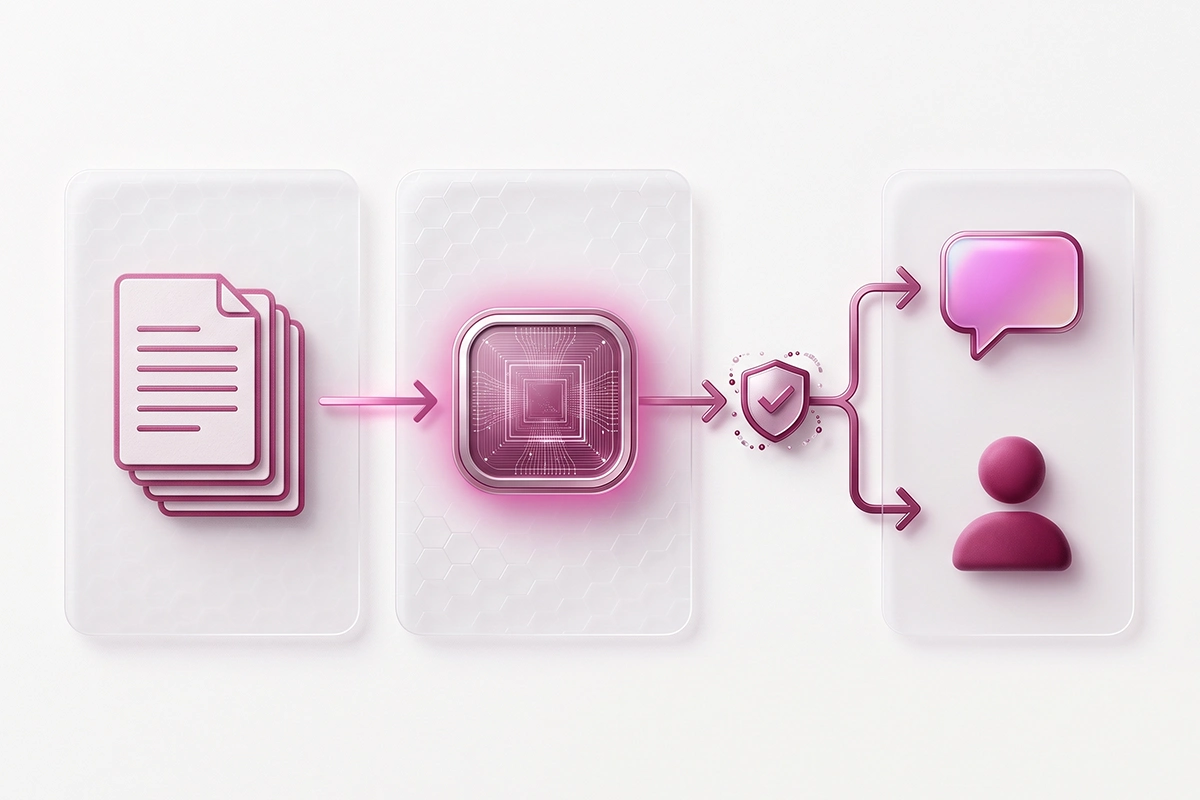
An AI chatbot works the other way around. Instead of matching your customer's message to a pre-written branch, it reads the message and generates an answer on the spot, using a large language model (the same kind of technology behind ChatGPT and Claude). It can handle a question phrased in a way nobody anticipated, follow up across several messages, and understand a typo or a half-sentence.
The important part is where it gets its facts. A good AI support bot does not answer from thin air. It is grounded in a knowledge base: your product details, shipping policy, returns window, and FAQ, fed in so the model answers from your real store data instead of guessing. That is the difference between an AI bot that helps and one that invents. If you want the longer version, here is how to train a Shopify chatbot on your own policies and product knowledge.
There are three flavors worth knowing, in plain terms. A retrieval bot looks up the closest answer in your knowledge base and returns it. A generative bot composes a fresh reply from that same material. An agentic bot goes one step further and takes an action, like looking up a specific order status or starting a return, not just talking about it. Most modern Shopify support bots blend the first two, and the more capable ones add the third.
That last distinction matters more than the marketing. Ask whether the bot only answers questions about your policies, or whether it can actually do something in Shopify (pull an order, check live stock). A bot that says "here is our return policy" is useful. A bot that can look up the customer's order and tell them where it is right now is a different tool. For the full picture of what these bots handle day to day, here is what a Shopify AI chatbot actually does.
Where each one breaks
Neither type is magic. Both fail, and knowing how each one fails is more useful than any feature list.
Where scripted bots fail
A rule-based bot breaks the moment a customer steps off the script. Ask something you did not anticipate, phrase it in an unusual way, or combine two questions in one message, and the bot either offers an unrelated button or a version of "sorry, I didn't understand that." It cannot reason. It only has the branches you built.
The more varied your customer questions get, the more often the bot dead-ends, and the more customers leave the chat annoyed. A buttons-only maze that never reaches the answer is worse than no bot at all.
Where AI bots fail
An AI bot fails in the opposite direction. Because it generates answers, it can generate a wrong one, stated with total confidence. This is called hallucination, and even with safeguards in place, AI chatbots have been found to produce incorrect answers between roughly 3 and 27 percent of the time. For a support bot representing your store, that is not a rounding error.
It is not a theoretical risk either. In a widely cited case, Air Canada was held liable after its chatbot described a refund policy that did not exist. A tribunal ruled the airline had to honor what the bot said. The lesson for a Shopify store is blunt: if your AI bot promises a discount, a refund window, or a delivery date, you may have to stand behind it, whether or not it matches your actual policy.
This is why an AI bot needs two things a scripted bot does not: a solid knowledge base and guardrails. Guardrails are the rules and limits that keep the bot inside safe territory, so it declines to answer what it does not know and hands off to a human instead of guessing. Getting that handoff right is its own small craft, which I cover in when a Shopify chatbot should hand off to a human. An AI bot without a knowledge base and guardrails is not a support tool. It is a liability with a chat window.
The numbers that tip the decision
Most "which chatbot" advice jumps straight to volume. Volume matters, but the real trigger is question variety. If ninety percent of your chats are the same five questions (where is my order, what is your return policy, do you ship to my country), a well-built scripted bot handles them cleanly. Once customers start asking things you cannot predict, in language you cannot script, the scripted bot's dead-end rate climbs and an AI bot starts to earn its price.
Volume still sets the frame. A store fielding a few support messages a week does not need to pay for AI. A store answering the same question fifteen times a day is losing hours a scripted bot could give back. And a store getting a high volume of varied questions is where AI pulls clearly ahead.
The resolution numbers back this up, with one honest caveat. Scripted bots tend to resolve a smaller share of conversations on their own, often in the range of 20 to 35 percent. Well-built AI bots grounded in a good knowledge base resolve more, commonly reported in the 40 to 70 percent range. Treat any vendor claiming 80 or 90 percent with healthy skepticism, and watch the metric they use. A high "deflection" rate can just mean customers gave up and closed the chat, which looks great on a dashboard and quietly costs you the sale. Resolution (the issue actually getting solved) is the number that matters, and I unpack the difference in resolution rate vs deflection rate.
Here is the rule based vs AI chatbot comparison in one place.
| What to weigh | Rule-based (scripted) | AI (LLM-based) |
|---|---|---|
| How it answers | Pre-written replies on a decision tree | Generates answers from your knowledge base |
| Off-script questions | Dead-ends | Handles them, within its guardrails |
| Typical self-resolution | Around 20 to 35% | Around 40 to 70% when well built |
| Setup effort | Low: map the branches | Higher: needs a knowledge base and guardrails |
| Ongoing cost | Free to low, usually flat | Monthly, sometimes billed per conversation or resolution |
| Main risk | Frustrates on anything unexpected | Can state a wrong answer with confidence |
| Best fit | Few, predictable questions | Varied questions at real volume |
One more note on cost, because it surprises people. AI chatbot pricing often is not flat. Some apps bill per conversation or per resolution, which means your bill can spike during a sale or a product launch, exactly when chat volume balloons. A scripted bot's cost is usually predictable. Read the pricing model, not just the headline monthly price.
How to test a demo bot in five minutes
You do not need to trust the label. Almost every chatbot app offers a live demo or a free trial, and five minutes of poking will tell you what it really is. Run these five probes.
Type a question with a typo or slang. A rule-based bot often misses it entirely. An AI bot usually understands it anyway.
Ask something clearly not in the menu, something specific to your niche. A scripted bot offers an unrelated button or gives up. An AI bot attempts a real answer.
Ask a follow-up that depends on the last message ("and how long does that take?"). Scripted bots lose the thread. AI bots hold the context.
Ask two things in one sentence. A scripted bot answers one or neither. An AI bot handles both.
Ask something off-topic or a little strange. Watch the guardrails. A good AI bot politely declines or redirects. A poorly guarded one will happily make something up, which is exactly the behavior you do not want on your store.
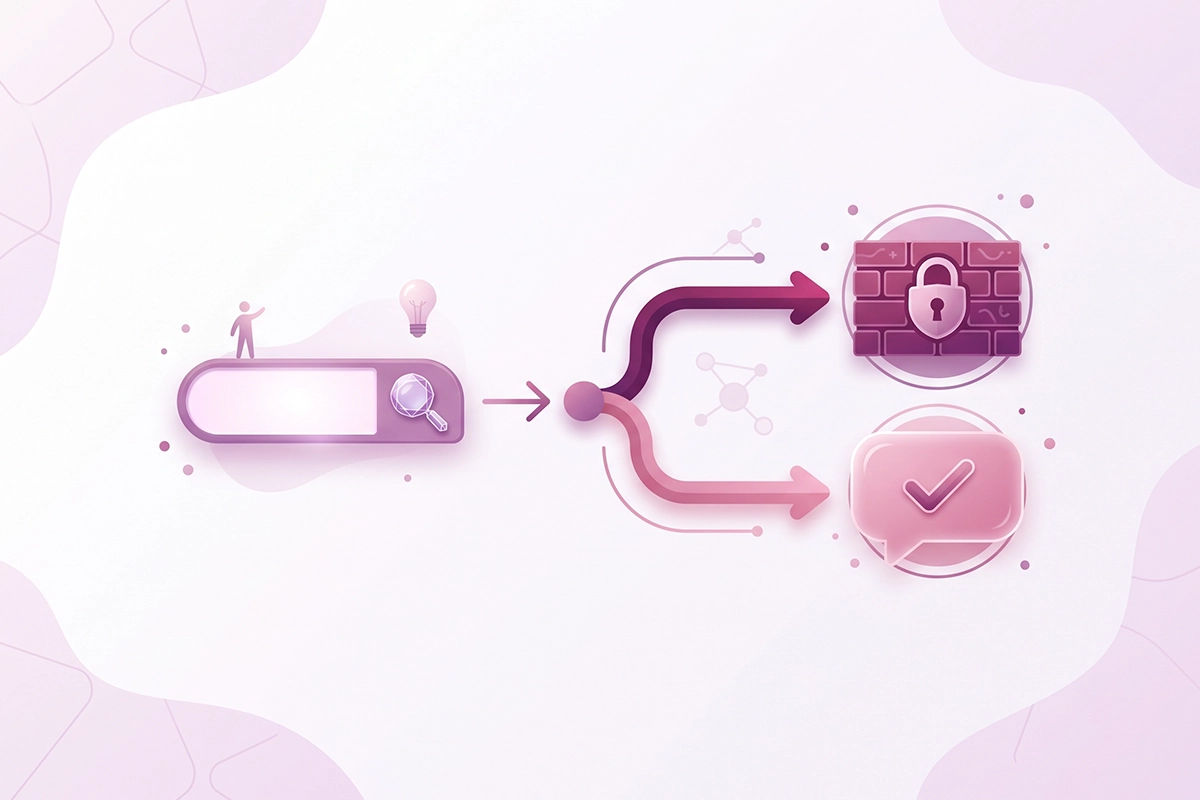
If the bot only ever shows buttons and never lets you type freely, you have your answer: it is rule-based, regardless of what the listing says. If it reads plain sentences, handles the messy ones, and knows when to stop, it is doing the AI work. That single session tells you more than any feature comparison.
So which one does your store need?
Here is the honest read, by stage.
If you are brand new, with low order volume and a short list of predictable questions, you probably do not need a paid AI bot yet. The free scripted tool already in your store, set up well, will cover most of it. Spend the money on getting orders, not on automating a trickle of chats. When a free tool fits your stage, use the free tool.
If your chat volume is climbing and the questions are getting varied, a scripted bot starts costing you in dead-ends and lost sales. That is the point where an AI bot, grounded in your product and policy data and wrapped in guardrails, pays for itself. The trigger is not a magic order count. It is the moment you notice you are answering unpredictable questions often enough that a button tree cannot keep up.
Then there is the build question: self-serve app or managed. A self-serve AI app is cheaper on paper and fine if you have the time to write the knowledge base, tune the answers, watch for wrong ones, and adjust the guardrails. A managed build costs more but includes that work and the ongoing monitoring. If you want to think it through by chat volume, I laid out self-serve vs managed for Shopify chatbots separately.
Whatever you choose, the failure mode to avoid is installing an AI bot, feeding it nothing, and hoping. An ungrounded, unguarded bot is the one that invents policies. The tool is only as good as the knowledge base and the guardrails behind it.
Wrapping up
Three things to carry out of this. First, rule based vs AI chatbot is a real category difference, not a marketing gradient: a scripted bot follows branches you built, an AI bot reads and writes answers from your store data. Second, they fail in opposite ways, so match the failure you can live with to your stage. A scripted bot frustrates on anything unexpected. An AI bot can state a wrong answer with confidence unless you ground it and guard it.
Third, when in doubt, run the five-minute test on a demo and let the bot show you what it is. For a lot of new stores, the answer is "the free scripted bot is fine for now," and that is a perfectly good answer. For stores fielding varied questions at real volume, an AI bot earns its keep, as long as someone builds the knowledge base and sets the guardrails. That last part is the work most stores underestimate, and it is where a wrong answer becomes your problem instead of the vendor's.
Want the AI bot built, grounded, and watched for you?
The Studio Niza AI Chatbots service trains the bot on your real products and policies, wraps it in guardrails and a human handoff, and monitors it weekly. Setup from $599, then $99/month all-in.
See how the chatbot service works →Or email contact@studioniza.com if you have a specific question about your store. I read every one.
Frequently asked questions
If you're still unsure after reading these, just send the question.
Is Shopify Inbox a rule-based or an AI chatbot? +
Shopify Inbox is rule-based. Its automated replies run on saved Quick Replies and instant answers you set up in advance, not a language model that reads and writes responses. It is free and fine for a short list of predictable questions, but it will not handle off-script questions the way an AI bot does.
Can a rule-based chatbot understand typos or reworded questions? +
Usually not. A rule-based (scripted) chatbot matches keywords or button taps to pre-written answers, so a typo or an unexpected phrasing often makes it miss. An AI chatbot reads the sentence and can handle misspellings and reworded questions, which is one of the clearest ways to tell the two apart.
What is a decision tree chatbot? +
A decision tree chatbot is another name for a rule-based bot. It guides customers down branches you built in advance, usually with buttons, and returns the scripted reply attached to each branch. It never generates new answers, so it is predictable and safe but breaks when a customer steps off the path.
Do AI chatbots need a knowledge base to work? +
For store support, yes. An AI chatbot generates answers, so without a knowledge base of your real products and policies it will guess, and guessing is how wrong answers happen. Feeding it your product details, shipping, and returns information is what turns it from a risk into a useful support tool.
Is an AI chatbot more expensive than a rule-based one for a small Shopify store? +
Almost always, yes. Rule-based tools are free to low cost, and Shopify Inbox is free. AI chatbots charge monthly, and some bill per conversation or per resolution, which can spike during a sale. For a very small store with predictable questions, the rule based vs AI chatbot math usually favors the cheaper scripted option until your volume and question variety grow.
Can my store be held responsible if the AI chatbot gives a wrong answer? +
It can. In a widely cited case, a company was held liable for a refund policy its chatbot described incorrectly and had to honor it. If your AI bot promises a discount, refund, or delivery date it should not have, you may be on the hook, which is why guardrails and a correct knowledge base matter.
How can I tell if a Shopify chatbot app is real AI or just scripted? +
Run the demo for five minutes. Type a typo, ask something off the menu, ask a follow-up, and ask two things at once. A scripted bot dead-ends or offers unrelated buttons, while an AI bot reads the messy questions and answers them. If it only ever shows buttons and never a text box, it is rule-based.
Should a brand-new Shopify store use a rule-based or an AI chatbot? +
Most brand-new stores are fine with the free scripted bot at first. If your questions are few and predictable, a rule-based tool covers them at no cost, and you can put your budget toward getting orders. Move to an AI bot once you are fielding varied questions often enough that a button tree keeps dead-ending.