Search "shopify blog examples" and you tend to get the same thing every time: a gallery of famous brands. Gymshark. Allbirds. A hair extensions brand pulling hundreds of thousands of visits a month. The posts tell you to get inspired, then show you a beautiful blog you have no realistic way to copy.
Here is the problem. Those blogs are the finish line, not the starting line. They were built over years, by teams, with budgets a new store does not have. Copying their magazine layout or their photography will not move your traffic, because the design was never the thing driving it.
What actually drives it is a handful of patterns underneath, and those patterns are copyable. A blog that pulls in buyers and a blog that just sits there usually differ in five specific ways, and none of them have much to do with how the page looks.
This post walks through those five patterns. Each one comes with a short before and after, drawn from the kind of posts you see every day and stripped of brand names so you can see the move itself. The point is not to admire someone else's blog. It is to give you five things you can check on your own next post before you publish it. If you launched your Shopify store in the last year and you are about to start a blog, read this first.
Why famous Shopify blog examples can mislead you
Organic search is worth taking seriously. It drives about 43% of all ecommerce traffic, which makes it the single largest way shoppers find online stores.
But most blogs never see any of it. Across the whole web, roughly 96% of pages get zero traffic from Google. A blog that just exists is not a neutral thing. It is the default outcome.
So when a roundup shows you a brand with hundreds of thousands of monthly readers, the visible design is the least useful part to study. You are looking at the survivor. What you cannot see in the screenshot is the topic research, the internal linking, and the years of published posts that got it there.
There is a second trap in these galleries: they make volume look like the answer. Big blogs have hundreds of posts, so the lesson feels like "publish more." For a solo founder, that backfires. Twelve strong posts beat thirty thin ones, and I have written before about why a slower cadence wins for new stores.
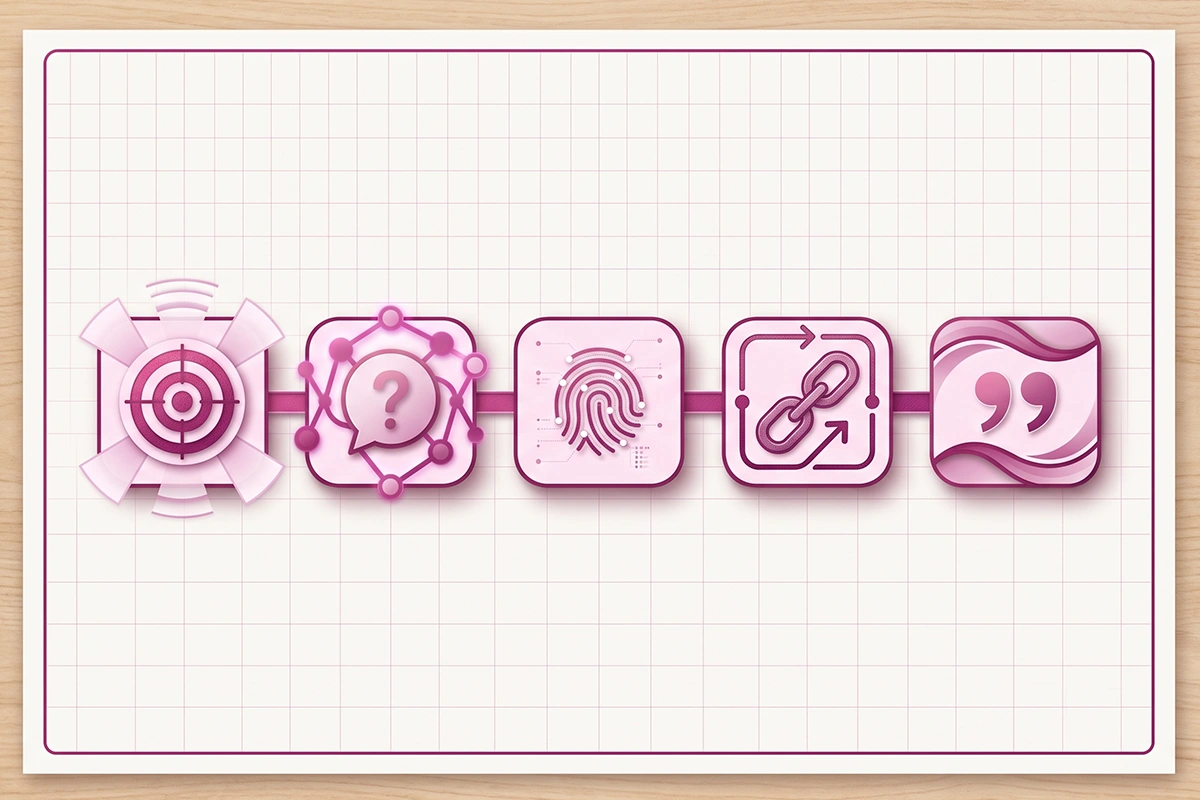
The useful examples are not the brands. They are the patterns. Here are the five that separate the two kinds of blog.
Pattern 1: Every post has one clear reader job
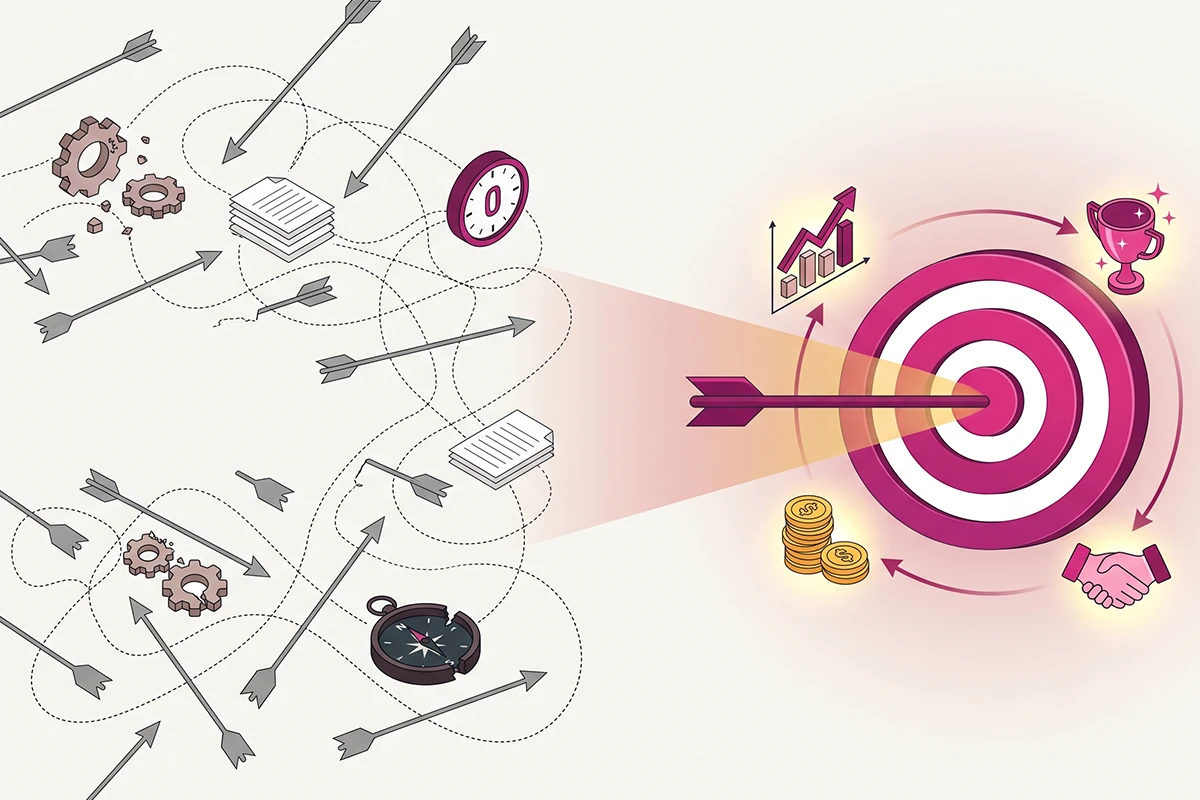
Good posts do one job for one reader. Before a word gets written, someone could say in a sentence what the reader wants and what they will be able to do after reading. Weak posts skip that step and try to cover everything, so they help no one in particular.
Before: a post titled "Everything About Coffee" that drifts from bean origins to brewing to company history to a sale announcement. It reads like a newsletter. A reader who wanted to fix bitter coffee bounces, because the answer is buried three scrolls down.
After: a post titled "Why your coffee tastes bitter, and four fixes" that names the problem in the title, answers it in the first paragraph, and stays on that one job all the way down. The reader gets what they came for, and the brand's grinder gets a natural mention where it actually belongs.
The job comes from the search, not from your product catalog. Pick the question first, then decide which product earns a mention inside the answer. If you want a running list of jobs worth writing for, I keep a list of post topics that drive buyers.
One job per post is also what makes the rest of these patterns possible. You cannot write a clean, question-shaped heading for a post that is secretly about five things.
Pattern 2: Headings shaped like the questions people actually search
Open a blog that drives traffic and read only its headings. They tend to read like things a person would type into Google or ask out loud. "How do I season a cast iron pan?" beats "Cast Iron Care 101," because the first one matches a real search and the second one matches a textbook.
This is not a style preference. Long-tail phrases, the specific multi-word questions people actually search, make up most searches and convert at roughly two and a half times the rate of broad head terms. Question-shaped headings are how you catch them.
Before: headings like "Introduction," "Benefits," "Features," "Conclusion." They tell Google nothing and the reader nothing. Someone scanning the page cannot find their question, so they leave.
After: headings like "Is a cast iron pan worth it for one person?" and "What do I do if my pan rusts?" Each one is a search someone runs. Each one can be pulled straight into a Google featured snippet or an AI answer, because it is a clean question with a clean answer sitting right beneath it.
A quick test before you publish: read your headings as a list, ignoring the body. If they sound like the table of contents in a manual, rewrite them as questions your reader would ask.
Pattern 3: Honest, first-hand detail a competitor can't copy
The blogs worth studying include detail only someone who has done the thing would know. The exact temperature. The mistake they made the first time. The reason the cheaper option is fine for most people. That specificity is what separates a real post from filler, and it is the one thing a competitor cannot lift from you.
It is also the thing generic AI content misses. A model can produce a fluent post about the benefits of merino wool, but it cannot tell you the seams itch after three washes unless a person who wore it says so. Google has spent years rewarding first-hand experience for exactly this reason, and readers feel the difference even when they cannot name it. Studio Niza's whole content approach is built on this: real research and real detail, not filler that reads like every other post on page one.
Before: "Merino wool is a great choice for travel because it is breathable, odor-resistant, and easy to pack." True, generic, and identical to a hundred other posts. Nothing anchors it to a real person or a real product.
After: "I wore the same merino tee for a four-day trip and it never smelled. The one thing to know: it pills a little under a backpack strap, so size up if you carry a heavy bag." Same topic, now it is yours. No one else can write that sentence.
You do not need to be a professional writer for this. You need to have used your own products and be willing to say something specific and true about them.
Pattern 4: Internal links that send readers to products
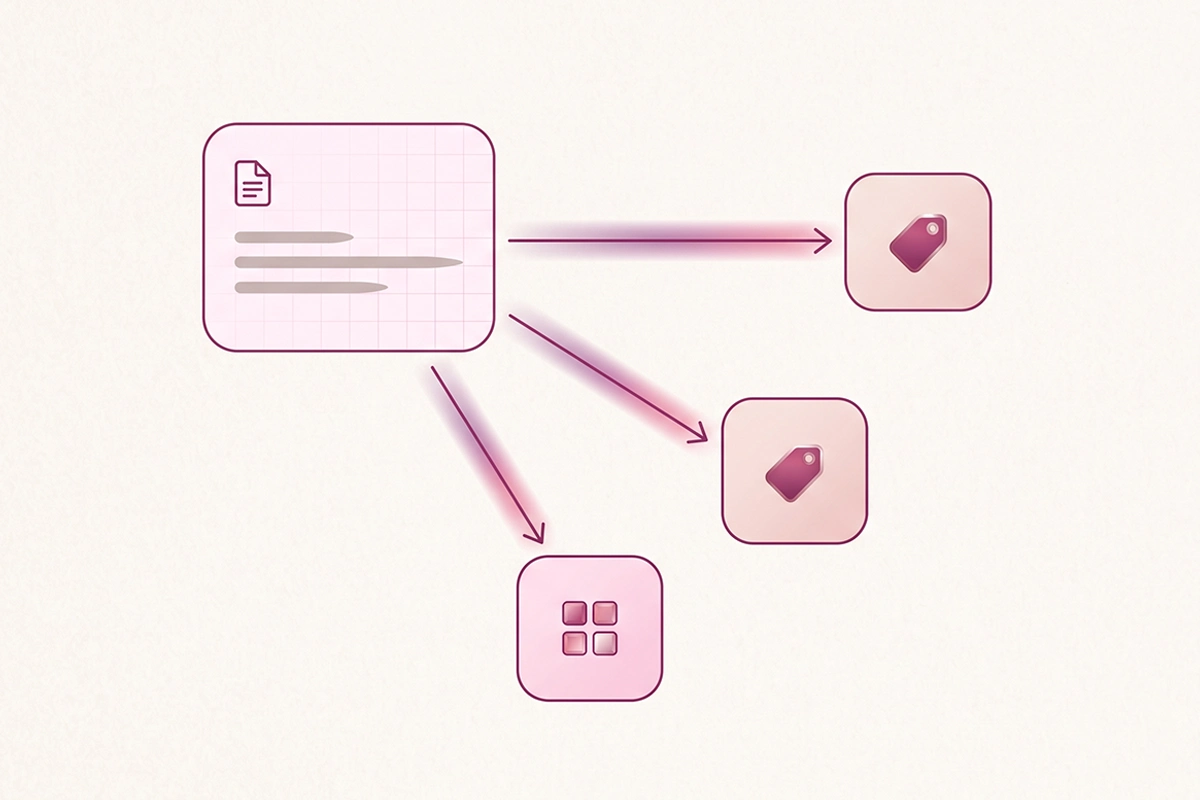
A blog is not a magazine. Its job is to move a reader from a question to a product they can buy. The posts that drive revenue, not just pageviews, link from the answer into the relevant product or collection page at the moment the reader is ready. Around 61% of shoppers say blog recommendations shape what they buy, but only if the path from post to product actually exists.
Before: a helpful post on "how to choose a running shoe" that never once links to a shoe. The reader finishes, nods, and leaves to buy elsewhere. The post did the work and a competitor got the sale.
After: the same post, with a link on "a neutral cushioned shoe" that lands on the exact collection, plus one link to the specific model used in the example. The reader clicks from the answer into the store without breaking stride.
Two rules keep this from feeling like a pitch. Link only where the product genuinely answers the sentence, and make the product page worth landing on. A great link into a thin product page wastes the click, which is why the descriptions matter as much as the links. If your posts are not wired together and into your products yet, a simple internal linking plan fixes most of it.
Pattern 5: A citable fact or definition in every post
Give every post one thing worth quoting. A clear definition, a specific number, a plainly stated rule. This does two jobs at once. It makes the post more useful to a reader, and it makes the post easier for Google and AI engines to cite.
That matters more in 2026 than it used to. AI answers now sit above the blue links for many searches, and the stores named inside those answers earn around 35% more clicks than the ones that get skipped. A cleanly stated fact or definition is the kind of sentence an AI engine lifts. I wrote a full guide on writing content that gets cited in AI answers.
Before: "There are a few different types of coffee grind, and the right one depends on your brew method." Vague. Nothing to quote, nothing to cite, nothing a reader remembers.
After: "A French press needs a coarse grind, about the texture of sea salt. A finer grind slips through the mesh and leaves grit in your cup." Now there is a definition and a specific comparison. A reader remembers it, and an AI answer can quote it and name you as the source.
You do not need a research budget for this. One true, specific, quotable sentence per post is enough.
How do you score your own blog against the five?
You do not need to audit famous brands. You need to audit your own next post. Before you hit publish, run it against the five patterns. If it fails two or more, it is closer to a blog that just exists than one that drives traffic.
| Pattern | The question to ask | A pass looks like |
|---|---|---|
| Clear reader job | Can I say in one sentence who this is for and what they can do after? | One reader, one job, named in the title |
| Question-shaped headings | Do my headings read like real searches? | Headings match how people actually ask |
| First-hand detail | Is there a specific, true detail only I could write? | At least one sentence a competitor can't copy |
| Links to products | Does the post link into a product or collection where it fits? | A clear path from answer to buy |
| A citable fact | Is there one quotable definition or number? | One sentence worth citing |
Run this on the last post you already published, too. Most stores find the same two gaps: no first-hand detail, and no link to a product. Those two are also the fastest to fix.
None of this requires a redesign. It requires five checks and the willingness to rewrite a heading before you publish.
Wrapping up
The best Shopify blog examples are not teaching you to copy a look. They are showing you five repeatable moves: one clear reader job per post, headings shaped like real searches, first-hand detail no one else can write, links that carry readers to products, and one citable fact worth quoting.
Notice what is missing from that list. Nothing about theme design, hero photography, or post count. Those are the parts the galleries show you, and the parts that matter least when you are starting out.
Start with your next post, not a redesign. Pick one job, write the headings as questions, add one detail only you know, link to the product that fits, and leave one quotable sentence behind. Do that five times and you will have five posts that outwork most of the pretty blogs you were told to admire.
The honest part: this is simple, but it is not fast. Traffic from a new blog builds over months, not weeks. These patterns are what make sure the posts you write now are still working for you a year from now.
Rather have posts built on these patterns?
The Studio Niza Blog Content service writes keyword-researched posts with a clear reader job, question-shaped headings, real first-hand detail, product links, and schema built in. Plans start at $449/month.
See how blog content works →Or email contact@studioniza.com if you have a specific question about your store. I read every one.
Frequently asked questions
If you're still unsure after reading these, just send the question.
What makes a good Shopify blog example to learn from? +
The transferable patterns, not the visible design. Study how a post picks one reader job, shapes its headings like real searches, adds first-hand detail, links to products, and states a citable fact. The famous blog's photography and post count are the least useful parts to copy.
Where can I find real Shopify blog examples that aren't just big brands? +
Look at any blog in your niche that ranks for a question you would actually search, then read it for the five patterns instead of the design. A smaller store that nails one clear reader job per post is a more useful model than a giant brand you cannot resource.
Should I copy the blog design of big Shopify brands? +
No. Design is the part of a successful blog that matters least to traffic, and a magazine layout will not rank on its own. Spend your time on the reader job, the headings, and the internal links, then use a clean, fast theme and move on.
Do Shopify blogs actually help SEO for a small store? +
Yes, when each post targets a real search and links into your products. Organic search is the largest traffic channel for ecommerce, but a blog takes months to build momentum, so treat it as a compounding asset, not a quick win.
How long should a Shopify blog post be to rank? +
Long enough to finish the reader's job and no longer. For most ecommerce topics that lands somewhere between 1,200 and 1,800 words, though the right length depends on the question. Padding a thin post to hit a word count hurts more than it helps.
Can AI-written posts work as good Shopify blog examples? +
AI can draft structure and speed the first pass up, but it cannot supply the first-hand detail that separates a real post from filler. The posts worth modeling include something only a person who used the product would know, which is the one thing a model cannot invent.