
You have read it a hundred times by now. Your Shopify store needs backlinks. Every SEO guide, every video, and every service that slides into your inbox says the same thing, and almost none of them tell you where a real one actually comes from.
So you end up in one of two places. Either you do nothing, because the whole thing feels like a club you were not invited to. Or you find a listing that promises fifty backlinks for five dollars, and some quiet part of you already knows that is too good to be true.
This is the honest version. Shopify link building is not a dark art, and it does not start with buying anything. It starts with a short list of people who already have a reason to link to you: your suppliers, a couple of directories that matter, a partner or two, and eventually a few blogs and AI engines that cite you because you were useful.
I will show you where your first safe links come from, why a handful of relevant ones beat a hundred cheap ones, the links you should never buy no matter how they are packaged, and how to track what you have without paying for a single tool. This is written for new stores, the ones with a few dozen orders and no marketing team. That is exactly the stage where a few good links go furthest.
What Shopify link building actually is
Shopify link building is the work of getting other websites to link to yours. That is the whole definition. Search engines treat each link as a small vote of trust, and Google's ranking systems still lean on those votes to decide who shows up first.
Here is the part most guides skip. The number of links matters less than the number of different sites linking to you. Ten links from ten sites do more than fifty links from one, because Google rewards a diverse set of endorsements rather than a pile from a single source. When people talk about a healthy backlink profile, this is what they mean.
There is also a reason ecommerce link building feels harder than it should. Nobody links to a product page. A reviewer might, and a “best of” roundup might, but in general no blogger wakes up wanting to link to a $40 product listing. Informational pages earn links. Product and collection pages usually do not.
So the model that works is indirect. You earn links to genuinely useful pages, your guides, your strongest blog posts, your About page, and then your internal linking passes that authority down to the product and collection pages you actually want to rank. Backlinks bring authority in the front door. Internal links walk it to the right room.
One more number worth knowing. When Backlinko analyzed 11.8 million search results, they found that roughly 95 percent of all pages have zero backlinks, and the top result tends to have far more than the pages below it. Most stores are not competing against a wall of links. They are competing against other stores that also have almost none.
Why a few relevant links beat a hundred cheap ones
If you take one idea from this post, take this one. In Shopify link building, quality and relevance beat volume almost every time.
Picture two stores. One has 200 links, but they come from 15 websites. The other has 80 links from 60 different websites. The second store wins in most cases, because Google counts unique linking domains as the real signal, not the raw link total. As Practical Ecommerce puts it, fifty sites with one link each are worth more than one site with fifty links.
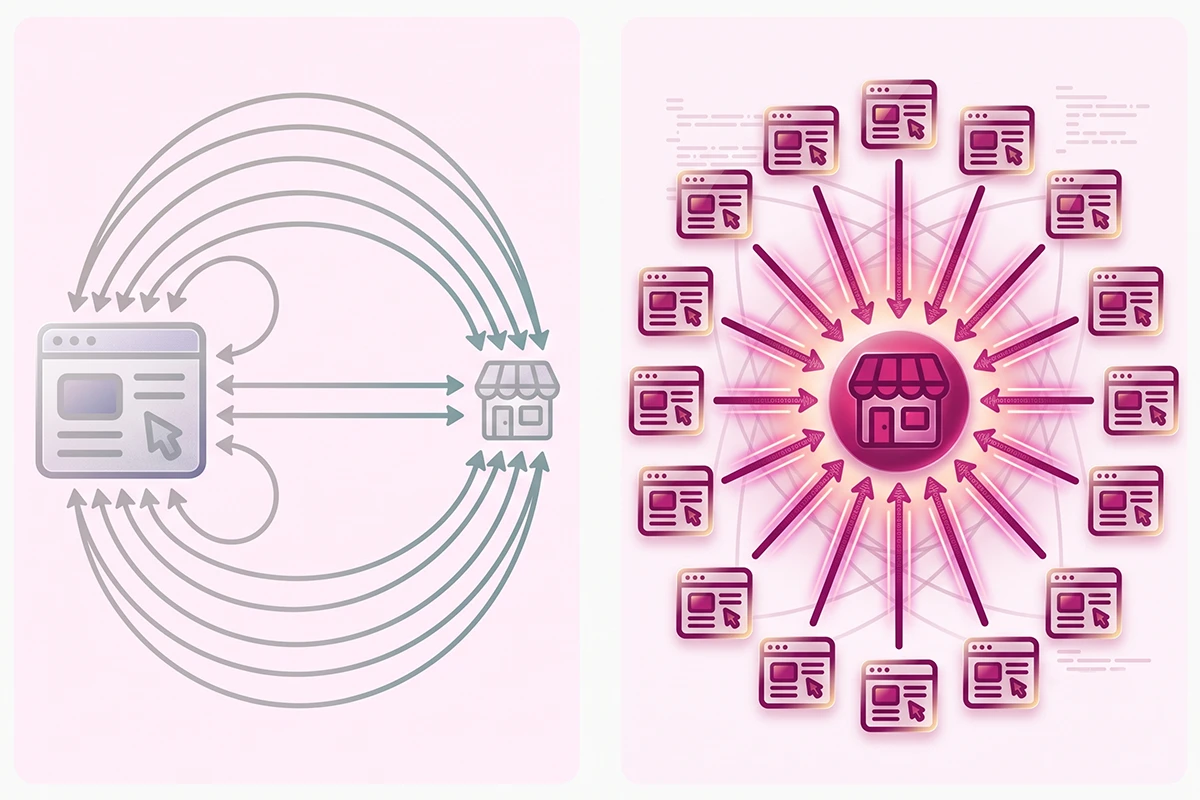
Relevance is the other half. A link from a site in your world, a supplier, a niche blog, an industry group, carries more weight than a link from a random directory that has nothing to do with what you sell. Google reads topical context now. A cookware store gets more from a kitchen blog than from a generic business-listings page.
This is also why the magic-number question (“how many backlinks do I need?”) is the wrong question. There is no fixed number. A small store in a quiet niche can rank with a couple dozen relevant links. The honest way to find your target is to look at the three sites already ranking for your keyword and see roughly what they have. You are matching a real bar, not chasing 780 links because a blog post named a figure.
For a new store doing under a few hundred orders, five to ten genuinely relevant links in your first few months is a strong start. Not a hundred. Not a thousand. A handful that actually belong to you.
Where your first safe backlinks come from
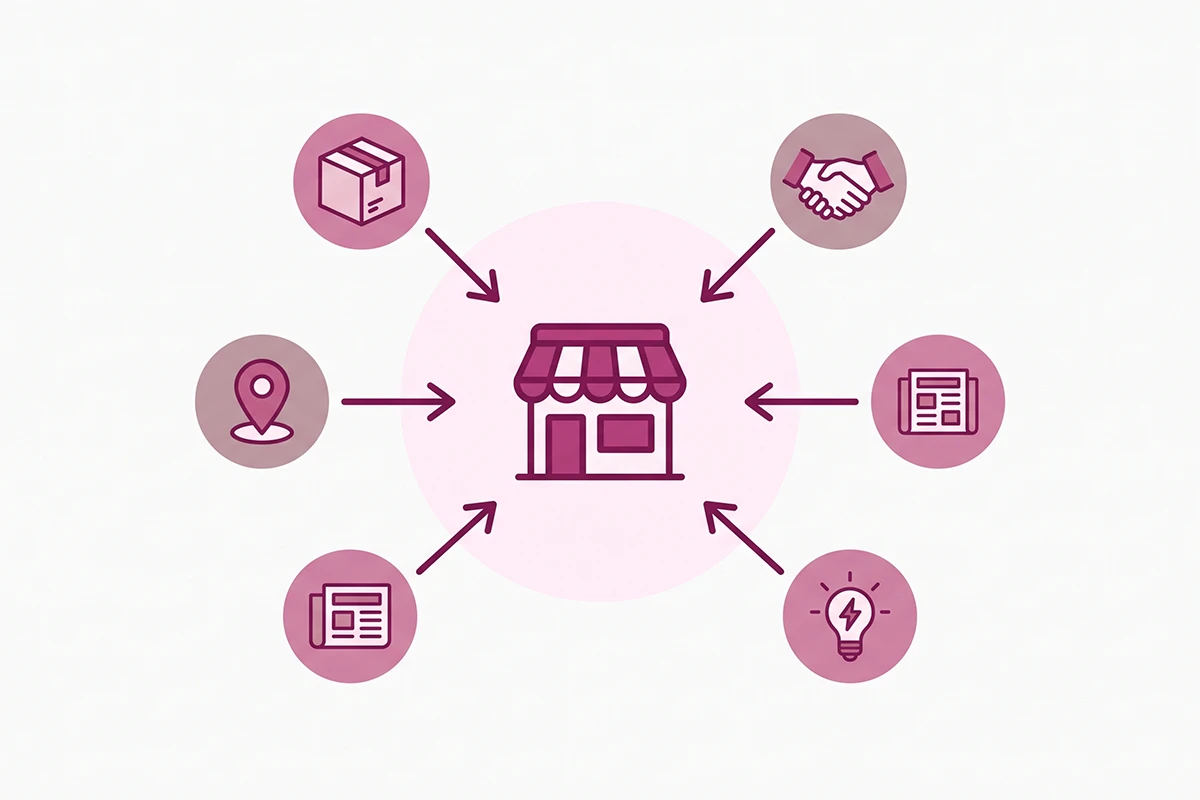
Here is the actual list. These are the sources a brand-new store can start with this week, in rough order of how easy and safe they are. None of them involve buying a link.
Your suppliers, manufacturers, and partners
This is the fastest first link most stores never think to ask for. Almost every supplier, manufacturer, distributor, and platform you work with has a website, and many keep a “stockists,” “where to buy,” or “authorized retailers” page. You email them, ask to be added, and you get a relevant link from a site already connected to your niche. No new content required.
Make a list of every brand you resell, every wholesaler, every delivery or tech partner. Visit each site, look for a partner or stockist page, and send a two-line request. If even a fraction say yes, you have your first links, and they are exactly the kind Google likes: real business relationships, not manufactured ones.
Local and niche directories worth your time
A few directories are genuinely worth claiming. Start with a Google Business Profile and Bing Places, then add your chamber of commerce and any industry association or trade group tied to what you sell. A sustainable clothing brand joining a sustainability coalition, or a pet store joining a pet-industry group, earns a relevant, trusted link and a small brand signal at the same time.
Skip the rest. The generic “submit your site to 500 directories” packages are noise. Most are low quality, some are outright spam, and stacking them makes your link profile look manufactured. One relevant niche directory beats fifty generic ones.
Genuine partnerships and collaborations
Find stores and creators who serve the same customer without selling the same thing. A candle maker and a ceramics studio. A running store and a local physio. You can co-write a guide, run a joint giveaway, feature each other's products, or add a genuine mention where it actually helps a reader.
The line to watch: the link should exist because the collaboration is real, not because you both agreed to link for ranking's sake. A natural mention between two related brands is fine. A pile of “link to me and I'll link to you” swaps is a pattern Google flags.
Digital PR and journalist requests
Journalists and bloggers need expert sources every day, and answering them is one of the few ways a small store earns a link from a real publication. You sign up as a source, watch for questions in your area, and send a short, genuinely useful reply. If a writer uses your input, you usually get a mention or a link.
The tools shifted recently, so ignore old advice pointing you to HARO. That platform (later renamed Connectively) shut down in December 2024. The live options now include Source of Sources, Featured, and Qwoted, all with free tiers. Pick one, fill out an honest profile, and answer three or four relevant queries a week. Specific beats generic every time.
Being useful enough to get cited
The most durable links are the ones you earn by being worth citing. A real buying guide, a piece of original data from your own orders, a genuinely helpful how-to: these get referenced by blogs, and increasingly by AI engines when they answer a shopper's question. It is the same muscle as getting cited by AI search engines.
This is slower than emailing a supplier, but it compounds. It also feeds a quieter win: when other sites mention your brand by name without linking, you can email and ask them to add the link. And every credible mention helps search engines and AI treat you as a real brand, not just another store.
| Link source | Effort | Relevance | Cost | Start here if |
|---|---|---|---|---|
| Supplier and stockist pages | Low | High | Free | You resell other brands |
| Niche and local directories | Low | Medium | Free | You have a location or a clear niche |
| Partnerships | Medium | High | Free | You know complementary stores or creators |
| Digital PR (source requests) | Medium | High | Free tier | You can speak to your niche with authority |
| Earned and cited content | High | High | Your time | You are ready to publish real, useful content |
The links you should never buy
Now the other side. Some links do not just fail to help. They can actively hurt you, and the cheap ones are usually the dangerous ones.
Google's spam policies are clear that buying or selling links to influence rankings is a link scheme. That covers the $5 bulk packages, private blog networks, link farms, paid niche edits slipped into old articles, monthly link rentals, and bulk link exchanges. It does not matter if the seller calls it “PR” or “outreach.” If money bought the ranking credit, it breaks the rule unless the link is marked with rel=“sponsored” or rel=“nofollow,” which also means it passes no ranking power.
The enforcement is not slow anymore either. Google's systems now flag unnatural link patterns close to real time, and the result can be a quiet loss of ranking power or a manual action that sinks your traffic. Recovering from that costs far more time and money than the links ever did.
Here is the plainer reason to skip them. Cheap bulk links are template work, the same spun placements sold to a thousand other stores. Real links come from real relationships and real content, which is also what real SEO actually costs. If a link is cheap enough to buy in bulk, it is cheap enough for Google to ignore.
How to track your first backlinks for free
You do not need a paid tool to see your links. Google gives you the most reliable source for free.
Inside Google Search Console, the Links report shows your top linking sites, your most-linked pages, and the anchor text other sites use. It is first-party data straight from Google, which no third-party tool can fully match. Open it once a month, scan the linking sites, and check that they make sense for your business.
A few honest limits. The report is a sample, not a complete list, and new links can take weeks to appear because Google has to crawl them first. It also groups links by root domain and does not tell you which are nofollow. For a new store, that is still plenty. Watch your count of unique linking domains climb over time, not the raw link total.
If you want more detail, free tiers cover it. Ahrefs has a free backlink checker, and Moz Link Explorer gives you a handful of free queries a month. Your analytics referral report shows which of those links actually send you visitors, which is the other half of why links matter. A link that brings the right shopper to your store is doing its job even before it moves a ranking.
Where to start this month
Shopify link building looks intimidating from the outside and turns out to be a short, sane list once you are in it. A handful of relevant links, earned honestly, beats a hundred cheap ones every time, and most of the good ones are free.
Before you chase a single link, get your on-page house in order, because links point back to pages, and thin pages waste the authority you send them. If you have not already, work through the Shopify SEO basics first so the pages you point links at deserve to rank.
Then, this month, keep it small. Email five suppliers or partners and ask to be added to their stockist or partner page. Claim your Google Business Profile and one niche directory that actually fits your store. Set up a free source profile on one PR platform and answer a couple of real questions. Open Google Search Console once and note your starting number of linking domains.
That is it. Four moves, no budget, no risk. Do that much and you are ahead of most new stores, who either buy junk links or freeze and do nothing.
The last stretch, the digital PR that lands real publications and the content that earns links while you sleep, is where it gets slower and more technical. That is the part most owners either learn the hard way or hand off. Either way, you will be building on links that actually count.
Want the off-page work handled too?
Studio Niza's SEO work covers the on-page foundation these links point back to: real schema, internal linking, and indexing follow-up, plus guidance on the first links worth your time. Pricing starts at $499 one-time.
See pricing & services →Or email contact@studioniza.com if you have a specific question about your store. I read every one.
Frequently asked questions
If you're still unsure after reading these, just send the question.
How many backlinks does a new Shopify store need to rank? +
There is no fixed number, and chasing one is a trap. Unique linking domains matter more than raw link count, so a small store in a quiet niche can rank with a couple dozen relevant links. The honest way to set a target is to look at the three sites already ranking for your keyword and roughly match what they have.
Are backlinks still important for Shopify SEO in 2026? +
Yes. Google still uses links as a core trust signal, and AI engines like ChatGPT and Perplexity lean on them too when deciding which stores to recommend. What has changed is that relevance and diversity now matter far more than volume.
Is buying backlinks on Fiverr safe for a Shopify store? +
No. Buying links to influence rankings violates Google's link spam policy, whether they are sold as backlinks, PR, or outreach. The risk is a quiet loss of ranking power or a manual action, and recovering from that costs far more than the links ever did.
How do I get backlinks to my Shopify product pages? +
Usually you do not link to them directly, because almost nobody links to a product page on its own. Instead, earn links to useful pages like guides and blog posts, then use internal links to pass that authority to your product and collection pages. The exception is supplier stockist pages, which can link straight to a product.
What is the fastest way to get my first backlink for a new store? +
Email a supplier, manufacturer, or partner and ask to be added to their stockist, where-to-buy, or partner page. It takes minutes, needs no new content, and gives you a relevant link from a site already tied to your niche. This is the most overlooked first link in Shopify link building.
How long does Shopify link building take to affect rankings? +
Usually two to six months of consistent effort, depending on your niche and how competitive your keywords are. Links amplify pages that already match what shoppers are searching for, so they work faster on pages that already deserve to rank. It is a steady channel, not an overnight one.
Do nofollow links help my Shopify store at all? +
They do not pass ranking credit the traditional way, but they still earn their place. Nofollow links drive referral traffic, build brand awareness, and keep your overall link profile looking natural. Google also treats the nofollow attribute as a hint now rather than a strict rule.
Can I track my Shopify backlinks without paying for Ahrefs or Semrush? +
Yes. Google Search Console's Links report is free, first-party data straight from Google, and it shows your top linking sites, linked pages, and anchor text. You can supplement it with free tiers from Ahrefs or Moz, but for a new store the free Search Console report is enough.