You have published fifteen blog posts. Maybe more. You researched each one, wrote it carefully, added it to your store, and waited. Months later almost none of them rank, and the few that do bring a trickle of traffic that never converts.
The instinct is to blame the writing. Usually that is not the problem. The problem is that every post is an island. Each one targets a different keyword, sits in its own corner of your blog, and links to nothing. Google has no way to see that you know a subject deeply, because your content never adds up to a subject. It adds up to a list.
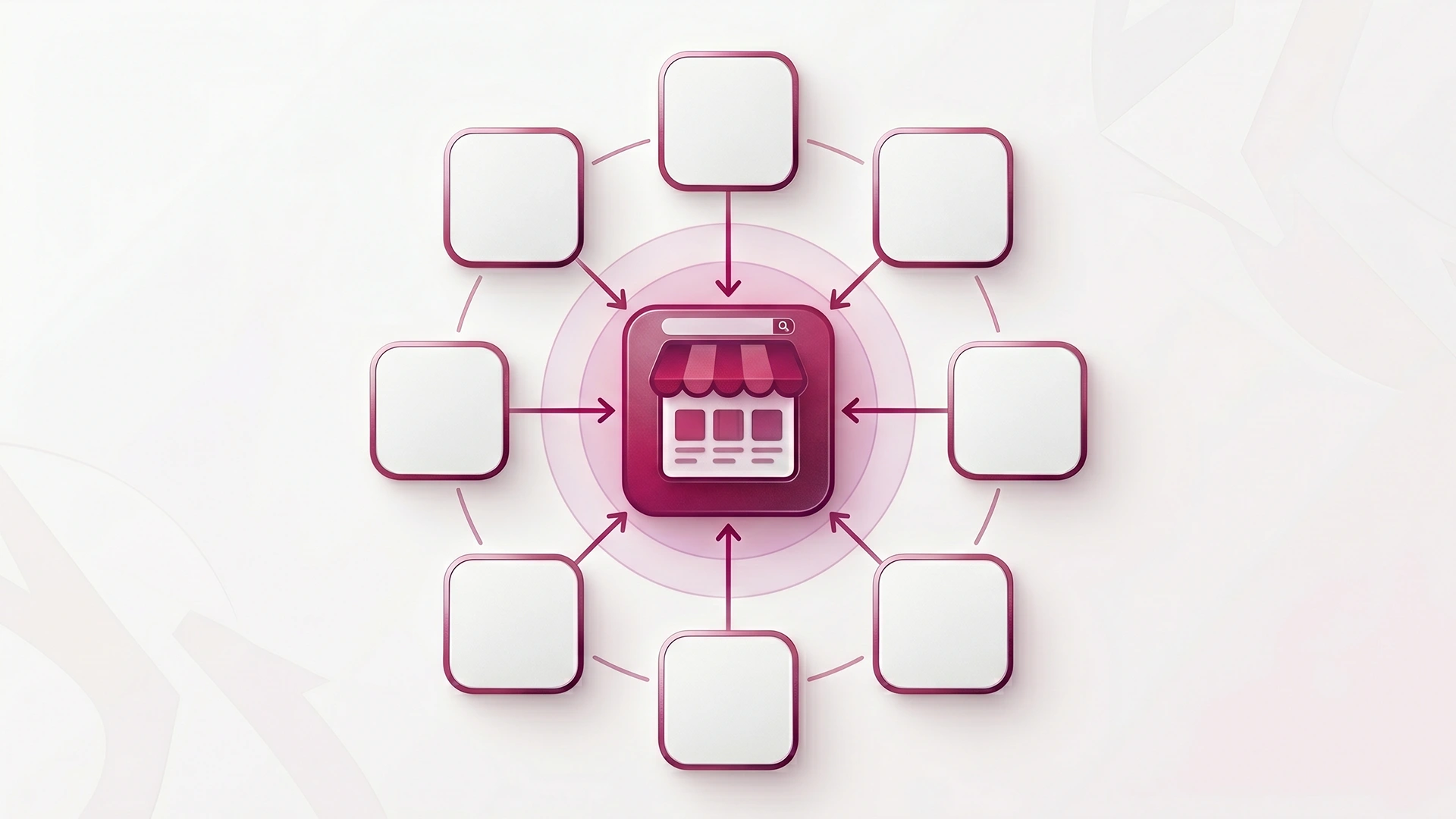
A Shopify topic cluster is the fix. Instead of publishing scattered one-off posts, you build a small group of related pages that point at each other and at one central page. That structure is what tells search engines, and increasingly AI search engines, that your store is a real authority on a topic and not a blog that posts about whatever.
This post explains the pillar-and-cluster model for a product catalog, how to map one cluster to one collection, how to wire the internal links that actually pass authority, and a worked example that turns a single collection into a one-pillar, six-spoke cluster you can copy. None of it requires new software. Most of it you can start this week with the posts you already have.
What is a Shopify topic cluster?
A topic cluster is a group of pages built around one subject, organized so search engines can see how they relate. It has three parts: a pillar page, several cluster pages, and the internal links that connect them.
The pillar page (the hub) covers a broad topic at a high level. The cluster pages (the spokes) each go deep on one narrow piece of that topic. Every spoke links up to the pillar, the pillar links down to every spoke, and related spokes link to each other where it makes sense. People call this the hub-and-spoke model, and it is the foundation of pillar content on Shopify or anywhere else.
HubSpot popularized this structure in a 2017 report, and the core idea has held up. As Practical Ecommerce summarized it, the linking action signals to search engines that the pillar is an authority on the topic, so over time the page can rank higher and higher for the terms it covers.
The reason it works is boring and mechanical. Search engines follow internal links to discover pages and to understand how those pages relate. Ten posts that link to nothing look like ten unrelated articles. The same ten posts wired into a cluster look like one deep content hub with nine supporting pieces. For a Shopify store, this model maps cleanly onto something you already have: your collections. More on that shortly.
Why scattered one-off posts never rank
Scattered posts fail because ranking in 2026 rewards depth on a subject, not isolated articles on random keywords. The industry term for that depth is topical authority.
Topical authority is the idea that a site which covers a subject thoroughly, with connected and consistent content, earns more trust for that subject than a site that mentions it once. It lines up with how Google's helpful content and E-E-A-T systems already work: reward pages that show real, comprehensive expertise.
One honest caveat. There is no topical authority dial inside Google Search Console that you can watch climb. As Shopify's own team notes, Google did not coin the phrase, and the company has only formally described a "topic authority" system in the narrow context of news. Treat topical authority as a useful model, not a metric. The behaviors it points to, covering a subject fully and connecting the pieces, are exactly what Google rewards even though the label is ours and not theirs.
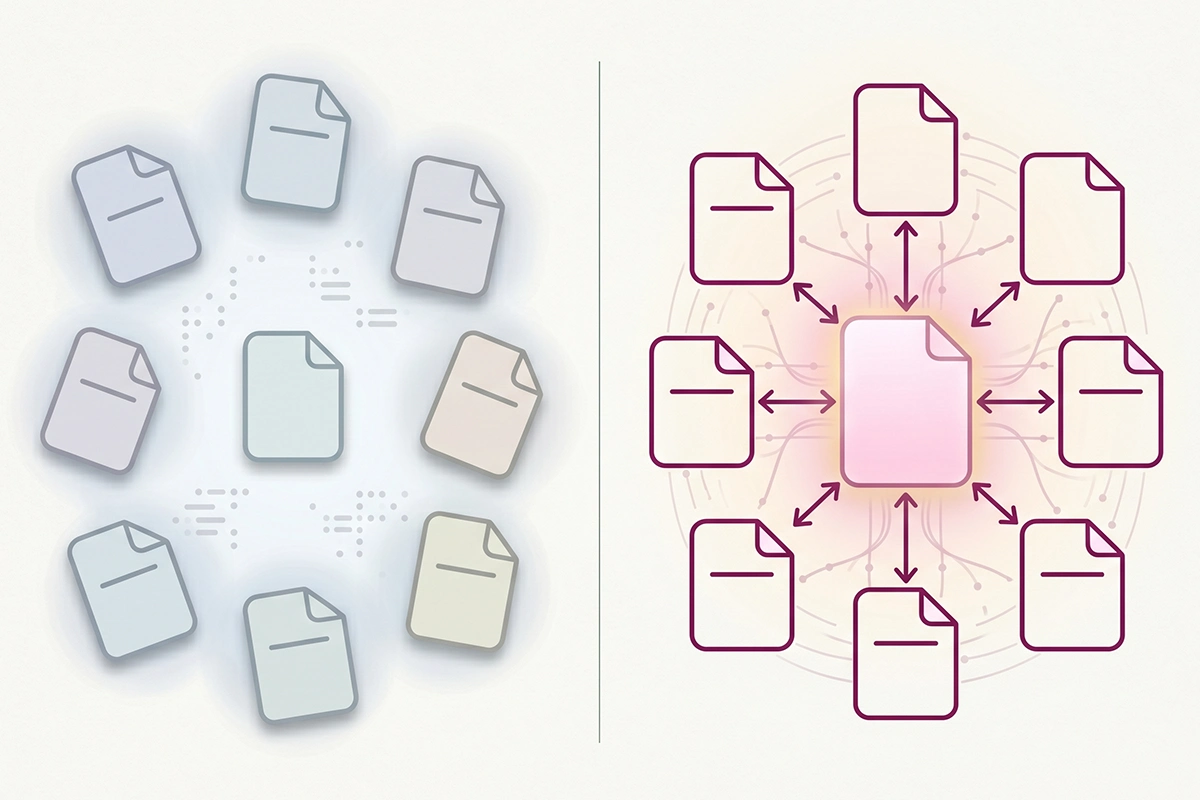
Scattered blogs break this in three ways. Nothing accumulates. Authority that could build up around a subject gets spread across unrelated posts and never reaches a threshold, so a lone post on a competitive term loses to a competitor who covered every angle.
Your posts compete with each other. When three posts each half-target the same keyword, Google is not sure which to rank, so it often ranks none of them well. This is keyword cannibalization, and it is common on blogs that grew without a plan.
Authority gets trapped. Without internal links, the little authority your homepage and best pages hold never flows to the posts that need it, and those pages stay buried.
This is also why publishing more, faster, rarely helps. Thirty thin posts spread your effort thinner. The studio's view, which we get into in our note on posting 2 to 3 deep posts a week instead of daily, is that depth compounds and raw volume does not.
How to map one cluster per collection
The cleanest way to plan clusters for a Shopify store is to build one cluster per collection. Your collections already group products by a shared subject, which is exactly what a cluster needs at its center. This is what topic cluster SEO for ecommerce looks like in practice.
Your collection is the pillar
In ecommerce, the natural hub is not always a blog post. It is often the collection page itself. A collection page for soy candles already targets the broad commercial term and links to every product in that group. Treated as a pillar, it becomes the page your supporting posts point back to.
That has a side benefit most stores miss. Collection pages are usually the most underoptimized pages on a Shopify store. We covered why in collection page SEO, and a cluster gives you a real reason to fix them. If your collection page is thin, add a few hundred words of genuinely useful overview at the top or bottom so it can serve as a hub, not just a grid of products.
Sometimes the better pillar is a standalone guide, something like "The complete guide to soy candles," that links to both the collection and the spokes. Use a guide when the topic needs more explaining than a collection page should carry. Use the collection page itself when the topic is mostly about choosing and buying.
Find the spokes from real buyer questions
The spokes are the questions a buyer asks before and after purchase. Not random keywords. The actual things people type when they are deciding.
For a soy candle collection, that is how soy compares to paraffin, how to make candles last longer, which scents suit which rooms, and whether the wax is safe around pets. Each of those is one spoke, one post, one narrow search intent.
Pull these from your own customer emails, your support inbox, and the "People also ask" box on Google. If you want a head start, our list of 30 Shopify blog content ideas is organized the same way, by buyer intent rather than by keyword volume.
One rule keeps you out of trouble: one primary intent per post. If two planned spokes would answer the same question, merge them. That is how you avoid the cannibalization problem from the last section before it starts.
Wiring the internal links that pass authority
A cluster is only a cluster once the links are in place. The content does the explaining. The links do the signaling.
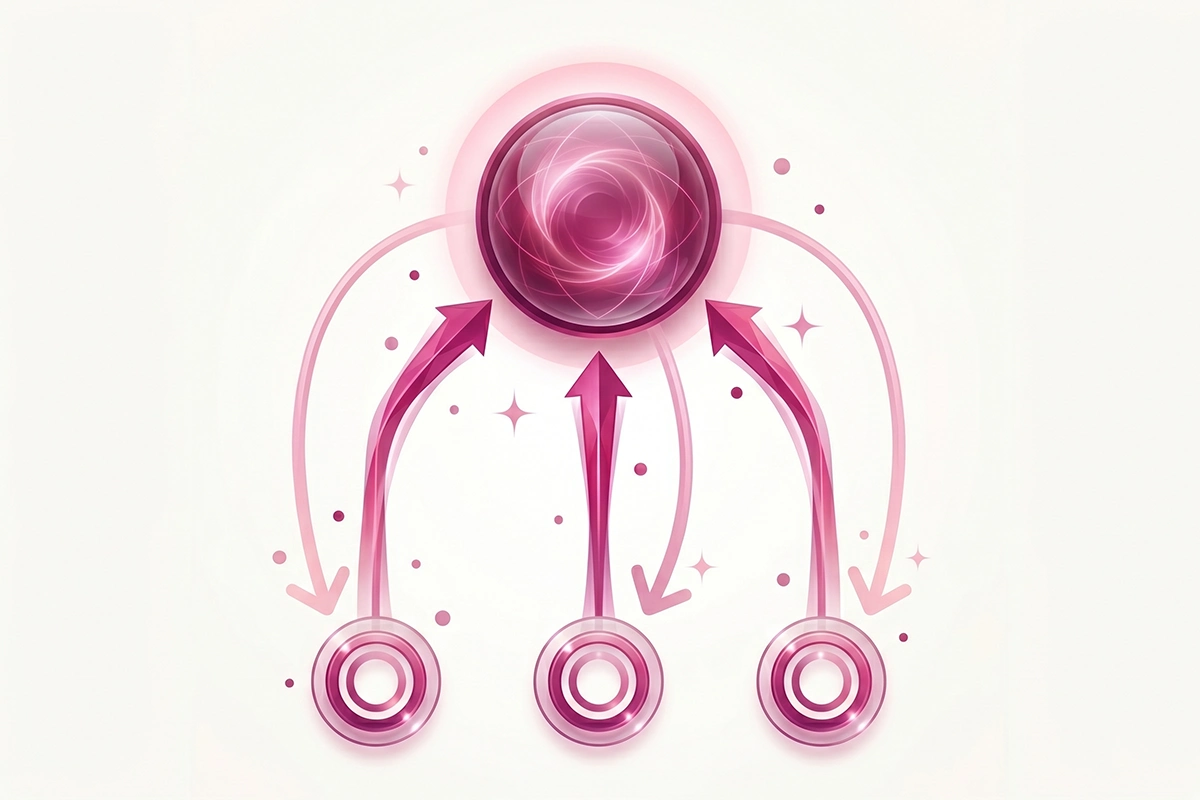
Every spoke links up to the pillar. Each supporting post links back to the collection or guide at the center, using clear anchor text that describes the destination. "Soy candle collection" is a good anchor. "Click here" is not.
The pillar links down to every spoke. The hub should point out to each supporting post so a reader, and a crawler, can reach the whole cluster from one page. On a collection page, this can be a short "read more" section linking to the guides.
Related spokes link to each other. Where two posts genuinely connect, like a scent guide and room-by-room advice, link them. Do not force links between posts that have nothing to do with each other.
Why this matters comes down to how search engines read links. Search Engine Land describes internal links as how Google discovers content, understands how topics relate, and distributes authority across a site. Weak or shallow linking tells Google those pages do not matter much, so the authority stays trapped on a few pages. Descriptive anchor text is part of that signal, so write anchors that say what the linked page is about.
| Signal | Scattered posts | Wired cluster |
|---|---|---|
| Anchor text | "click here," "read more" | Descriptive ("soy candle care guide") |
| Link direction | Random or none | Spokes to pillar, pillar to spokes |
| Orphan pages | Common | None |
| What Google sees | Unrelated articles | One deep resource |
Two habits keep a cluster healthy. Watch for orphan pages, posts with no internal links pointing at them, because they are invisible to this system. And add the links when you publish, not "later," because later usually never comes. If you want the full mechanics, we wrote a dedicated piece on internal linking strategy.
A worked example: one pillar, six spokes
Here is the whole thing in one example. Say you run a store that sells soy candles, and "soy candles" is one of your collections. That collection is your pillar. Around it you build six spokes, each answering one buyer question.
| Page | Role | Who it is for |
|---|---|---|
| Soy candles (collection) | Pillar / hub | The broad "soy candles" search, links to all six spokes |
| Soy vs paraffin candles: which is better? | Spoke | Comparison searchers |
| How to make soy candles last longer | Spoke | Care and how-to searchers |
| Best soy candle scents for every room | Spoke | Scent and room searchers |
| Are soy candles safe for pets? | Spoke | Safety searchers |
| How long do soy candles burn? | Spoke | Burn-time searchers |
| Soy candle gift guide | Spoke | Gift buyers |
Now the links. Each of the six spokes links up to the soy candles collection with an anchor like "our soy candle collection." The collection page carries a short section linking down to all six guides. The pet-safety post and the scent post link to each other, because a buyer reading one often wants the other. That is the full cluster: one pillar, six spokes, links running up, down, and sideways.
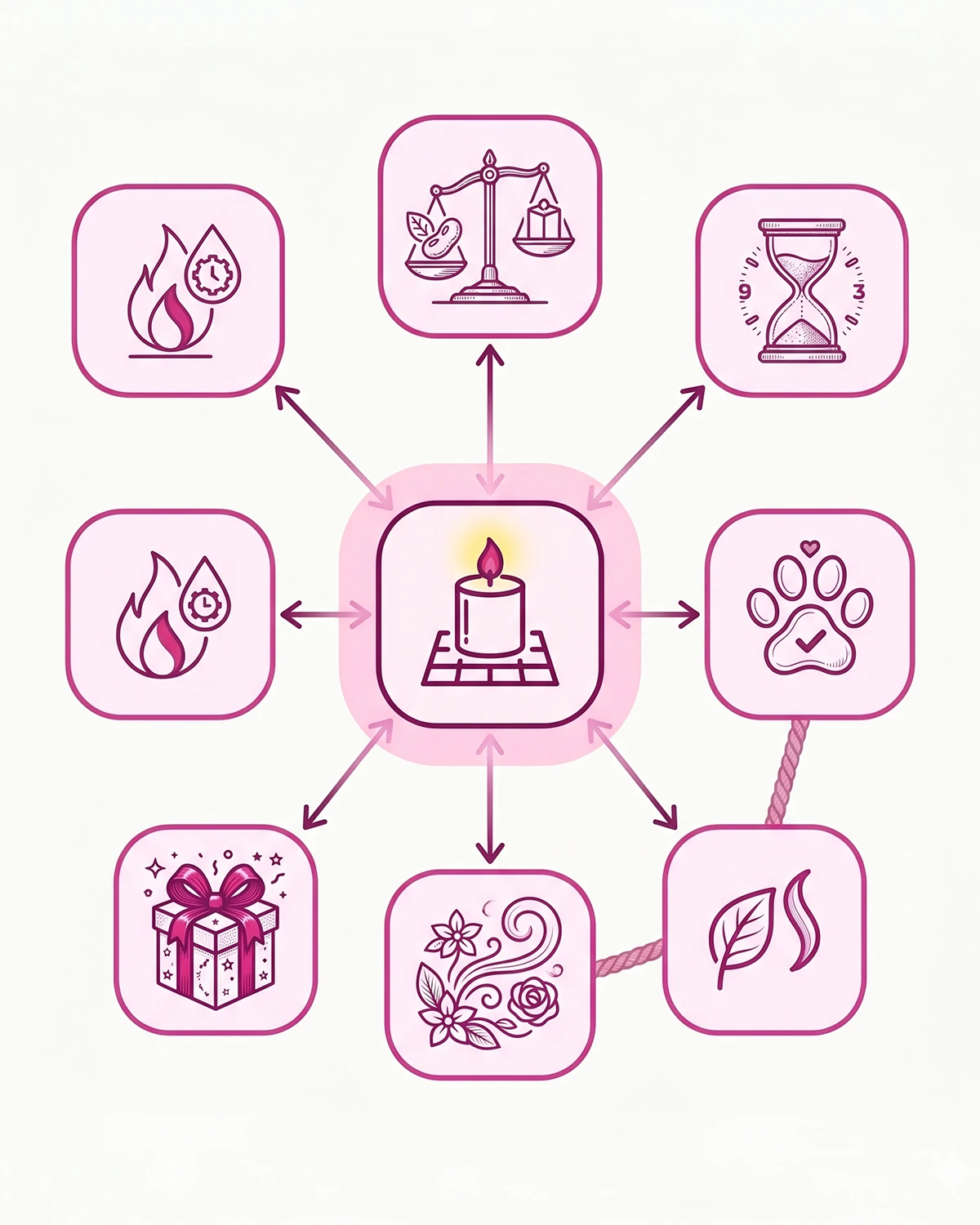
The payoff is that the collection page now has six relevant pages feeding it context and internal links, while each spoke can rank for its own long-tail question and point buyers toward the products. Six focused posts wired this way will almost always out-perform sixteen scattered ones.
You do not have to launch all of it at once. Start with the pillar and two or three spokes, then add the rest over the following weeks.
How to start without rebuilding your blog
You do not need to delete anything or start over. You need to pick one collection and turn its loose posts into a cluster.
Pick one collection that matters. Your best-selling or highest-margin group is the right place to start. One cluster done well beats five started and abandoned.
Audit the posts you already have. Some existing posts are probably already spokes in disguise. List them against the collection and see what fits.
Find the gaps. Compare your existing posts to the buyer questions for that collection. The missing questions are your next posts. Two or three new spokes is usually enough to make a cluster feel complete.
Wire the links. Add the up, down, and sideways links to every page in the cluster. This step alone, done on posts you already published, often produces movement within a few weeks, because you are finally letting authority flow.
Then plan the cadence. A cluster fills in over time, not in a weekend. Map the remaining spokes onto a simple schedule. Our 90-day content calendar is built for exactly this, one solo founder filling a cluster without burning out.
Be honest with yourself about timing. The internal-link wins can show up in weeks. The bigger lift, the pillar climbing for its competitive term, usually takes a few months, once the cluster has enough connected depth. Anyone promising faster is selling something.
This is also the honest version of the work. You will see services advertise "one cluster" while quietly meaning ten thin clusters of three posts each. Honest scope beats impressive scope: one real cluster, fully wired, is worth more than a blog full of half-built ones. If you would rather hand off the planning and writing, that is what our blog content service does, and the same approach underpins the broader SEO and GEO work.
Wrapping up
A topic cluster is not a trick. It is just structure: one pillar, a handful of spokes, and the internal links that turn a pile of posts into a subject you visibly own.
If your blog is not ranking, the writing is probably fine. What is missing is the architecture that lets the writing add up. Start by mapping one collection to one cluster. Treat the collection page as the pillar, build spokes from the questions your buyers actually ask, and wire the links the day you publish.
Do that for your most important collection first. Watch the internal-link wins arrive in a few weeks, then give the pillar a few months to climb. When that first cluster is working, build the next one the same way.
The stores that win at organic search in 2026 are not the ones publishing the most. They are the ones whose content connects. A clear Shopify topic cluster is the simplest way to get there, and you can start with the posts already sitting on your store.
Want the cluster built for you?
The Studio Niza blog content service plans content this way by default: one pillar per collection, spokes mapped to real buyer questions, and internal links wired on the day each post goes live. Plans start at $449/month.
See blog content plans →Or email contact@studioniza.com if you have a specific question about your store. I read every one.
Frequently asked questions
If you're still unsure after reading these, just send the question.
What is the difference between a pillar page and a cluster page? +
A pillar page covers a broad topic at a high level and acts as the hub. A cluster page goes deep on one narrow part of that topic and links back to the pillar. In a Shopify topic cluster, the pillar is often the collection page and the cluster pages are the supporting blog posts around it.
How many blog posts do I need in a topic cluster? +
Start with a pillar plus five to eight spokes. There is no magic number, and a smaller, fully wired cluster beats a large one with weak links. You can launch with the pillar and two or three spokes, then add the rest over the following weeks.
Can a Shopify collection page be the pillar page? +
Yes, and for most stores it is the best choice. The collection already groups products around one subject and links to each of them, which is exactly what a pillar does. Add a few hundred words of useful overview to the collection so it reads as a hub, not just a product grid.
How long does it take for a topic cluster to start ranking? +
Internal-link improvements on posts you already published can show movement within a few weeks. The pillar climbing for its competitive term usually takes a few months, once the cluster has enough connected depth. Anyone promising faster results is overselling.
Do topic clusters help with AI search like ChatGPT and Perplexity? +
Yes. The same comprehensive, interlinked coverage that earns Google rankings is what AI search engines use to recognize a store as a credible source on a topic. A well-built topic cluster is one of the cleaner ways to become citable in both places at once.
Will building a topic cluster cause keyword cannibalization? +
Only if two pages target the same search intent. The rule that prevents it is one primary intent per post. If two planned spokes would answer the same question, merge them into one stronger page instead of competing with yourself.