
You already have photo reviews on your product pages, and they are doing their job. Then someone tells you the next move is video, that a store like yours is leaving money on the table without customer clips. Before you rebuild your whole review flow, it is worth asking a plainer question: what does a video review actually add over a photo, and is it worth the extra thing you are asking your customer to do?
This is a real cost, not a free upgrade. Every extra step in a review request lowers the number of people who finish it. So the question is not "do video reviews convert" in the abstract. It is whether the trust a video adds is worth more than the reviews you lose by making the ask harder.
The honest answer is that video reviews on Shopify are worth asking for, but only in specific cases, and only if you ask in a way that keeps video optional. For some products they close a gap no still image can. For others they barely move the needle, and chasing them is effort you could spend somewhere better.
This post covers where video earns more trust than a photo, which product types actually benefit, how to collect video without dropping your overall response rate, and how the clips you gather can pay off a second time as ad and email creative. If you have not sorted out the basics yet, photo reviews already beat text reviews on most product pages, so start there before you layer video on top.
What a video review adds over a photo
A photo answers one question well: does the product look like the listing. A video answers the questions a still cannot reach. How big is it in a real hand. How does the fabric move. What does the texture look like when light hits it. What actually comes out of the box.
Those four things (fit, scale, texture, and the honest unboxing) are where video earns its place. A shopper deciding on a jacket wants to see it on a body that moves, not folded flat. Someone buying a lamp wants to know if "medium" means desk-sized or floor-sized. A photo can hint at these. A ten-second clip settles them.
There is a trust layer on top of the information. A person talking to a camera in their own kitchen is hard to fake, and shoppers know it. Industry data consistently shows that shoppers who watch a product video are far more likely to buy, with one widely cited figure putting it around 85% more likely. Treat that number as directional, not a promise, but the direction is not in doubt.
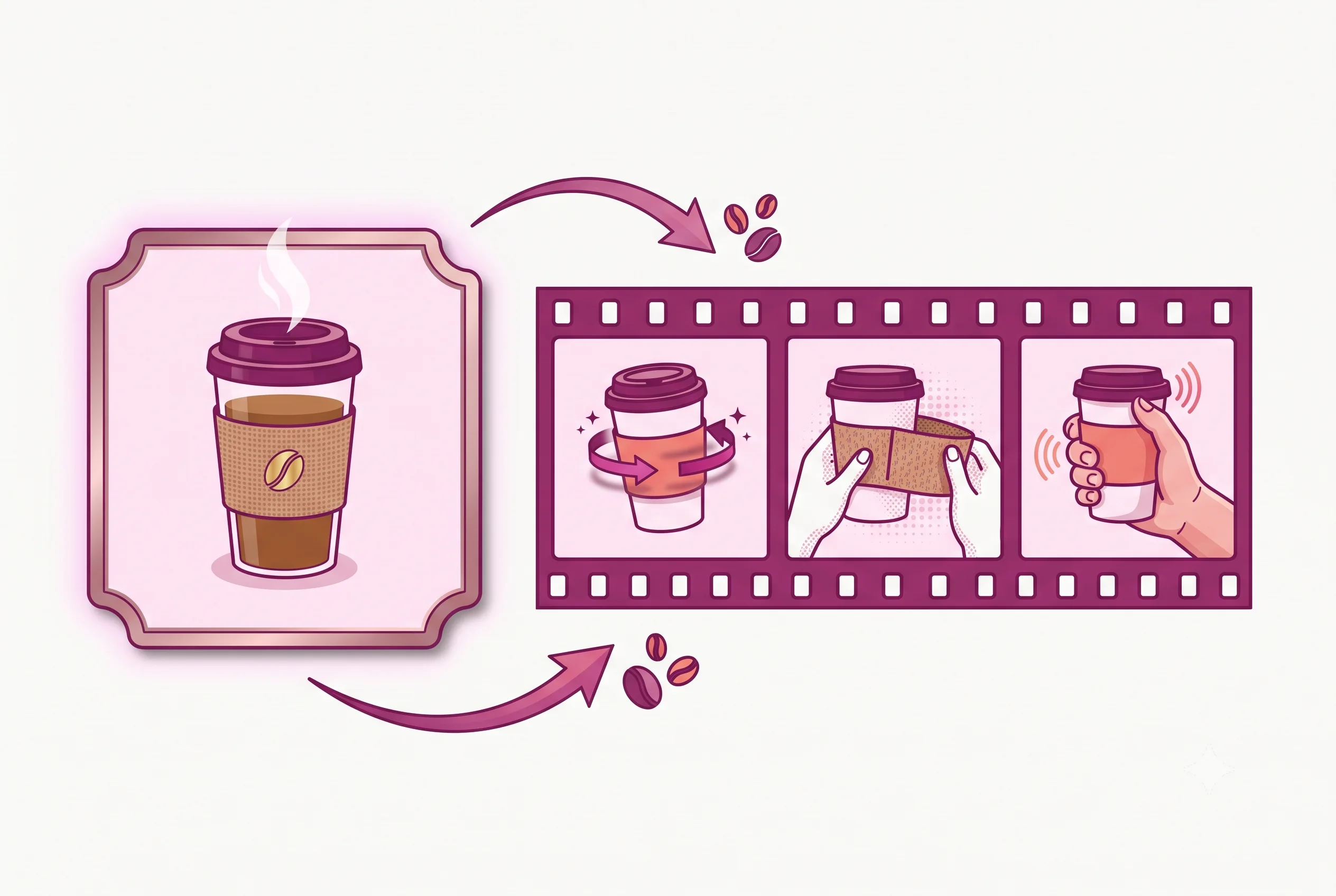
The catch is that video only adds trust when the buyer had a real question the photo left open. If your still images already answer everything a shopper needs, a video is a nicer version of information they already had. That is the whole reason the next section matters.
Do video reviews convert better than photos?
Usually yes, but the lift comes from interaction, not from the video sitting on the page. Analysis of more than 1,200 sites found that visitors who actually engage with reviews and customer content convert around 102% higher than average. A clip a shopper plays pulls them in more than a photo they scroll past, and that engagement is where the extra conversion comes from.
Here is the honest framing though. Video does not beat photos everywhere. It beats photos when the buyer's hesitation is something a photo cannot resolve. If a customer is unsure how a dress fits a real body, a video of a real body wearing it removes the doubt. If a customer just wants to confirm the color, the photo did that already and the video is redundant.
So "do video reviews convert" is the wrong question to lead with. The better one is: what is my shopper unsure about, and can a photo answer it? When the answer is no, video is worth the effort. When a photo already closes the gap, your energy is better spent getting more photo reviews than chasing a harder format.
Which products get the biggest lift from video
The pattern is simple once you look at it through the buyer's uncertainty. Video pays off when the product has to be seen in motion, at scale, or in real conditions. It barely helps when the important facts fit in a spec line.
Where video earns its place
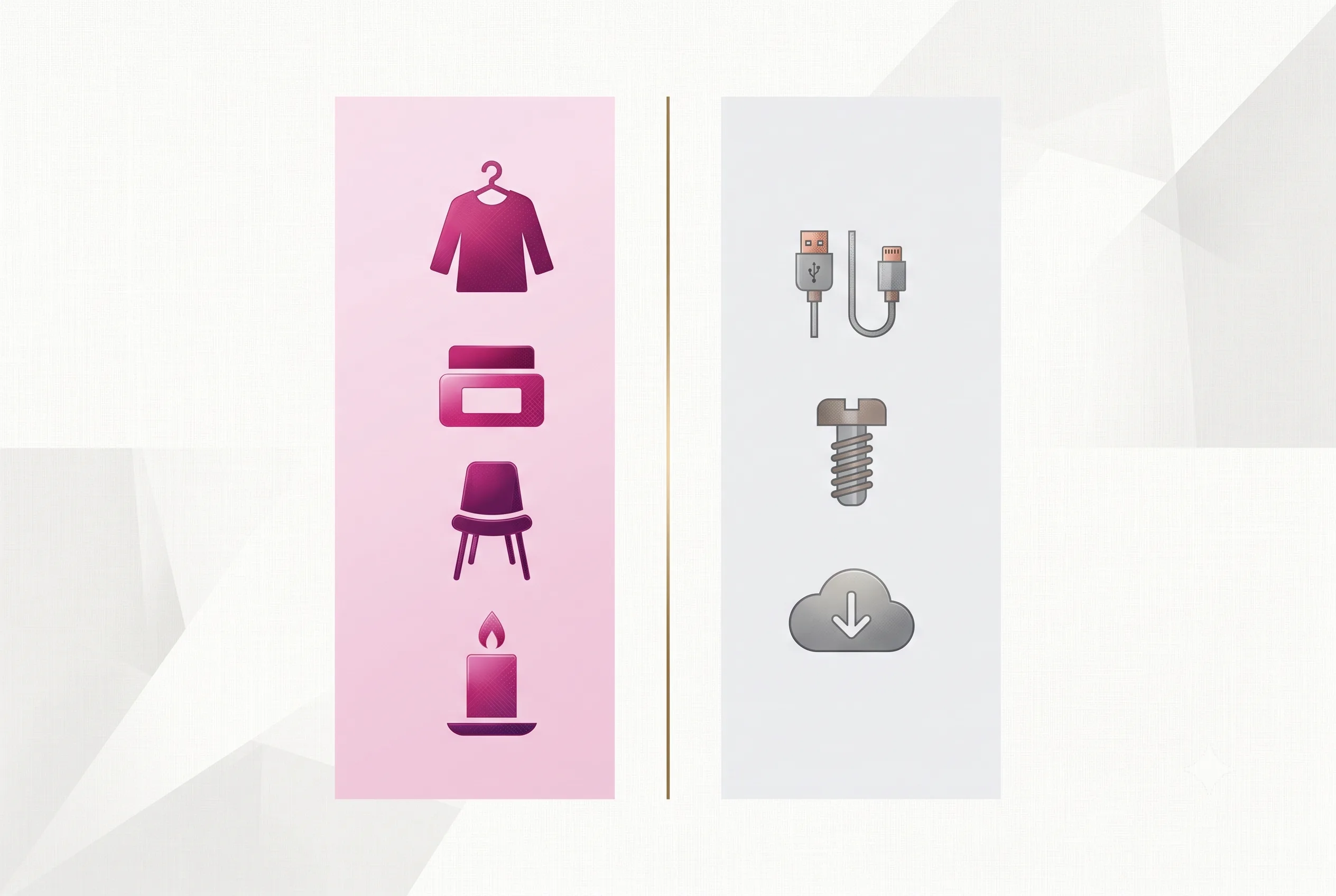
Apparel and anything worn is the clearest win. Fit, drape, and how a fabric moves are the top reasons clothing gets returned, and a clip answers all three at once. Beauty is close behind, where texture, finish, and how a shade reads on real skin matter more than any studio photo.
Home and furniture benefit because scale is hard to judge from a photo. A short clip of someone placing a rug or lifting a chair tells the shopper more about size and weight than a measurement line ever will. Food, candles, and gadgets gain from motion too. If your product has a satisfying reveal or a moment of use, video captures it in a way a still cannot.
Where video barely moves the needle
Commodity and functional items rarely need it. A phone cable, a set of screws, a replacement filter: the shopper wants to confirm the spec and the fit, and text plus one photo does that. Collecting video here is effort spent for almost no return.
Digital products and low-price items are the other group. If someone is buying a six-dollar sticker pack or a downloadable planner, they are not watching a testimonial first. And for technical products where the buyer trusts the spec sheet over a stranger's clip, written detail wins. The review-app world reflects this split: visual-first tools are pitched at fashion, beauty, and home, while functional catalogs do fine on text and photos.
| Product type | What the buyer is unsure about | Does video help? |
|---|---|---|
| Apparel, shoes, accessories | Fit, drape, how it moves | High. Answers what a flat photo cannot |
| Beauty and skincare | Texture, finish, shade on real skin | High. Motion and real lighting matter |
| Home, decor, furniture | Scale, weight, material feel | High. Hard to judge size from a photo |
| Food, candles, gadgets | The experience, the unboxing | Medium to high. Depends on the reveal |
| Electronics with clear specs | Compatibility, spec confirmation | Low. Text and one photo usually settle it |
| Commodity or functional items | Does it fit, does it work | Low. A photo is enough |
| Digital or low-price items | Little; a low-consideration buy | Low. Rarely worth the ask |
How to ask for video without lowering your response rate
This is the fear that stops most owners, and it is a fair one. Add a required video step and your completion rate drops. The fix is not to avoid video. It is to ask for it the right way.
Keep video optional, always. Your request should ask for a review, invite a photo or video as an easy add-on, and let people finish with text alone. A customer who would have left a written review still leaves one. A customer who is happy to film gets the chance. You lose nothing and gain the clips.
Make the upload one tap on a phone. Most reviews happen on mobile, where the camera roll lives. If uploading means logging in or leaving the email, people quit. Review requests that let customers submit media in one tap collect visual reviews at around 5 to 12%, versus 1 to 3% for plain text-only requests. Asked well, a visual ask can raise your response rate, not lower it.
Prompt for the specific thing. A blank "leave a review" gets less than a prompt that says "show us how it fits" or "film your unboxing." Smart prompts that ask for rich media make customers around four times more likely to include a photo or video. People do what you ask when you ask clearly.
Get the timing right and stay compliant. Send the request after the customer has actually used the product, usually 7 to 14 days after delivery for physical goods. There is more on the best time to send a review request if you want the full window by product type. If you offer a small incentive, keep it for all honest reviews, never only for positive ones, which is the line the FTC rules draw.
One reframe helps here: you control the ask, not the footage. You can run a clean, well-timed request every single time. Whether a given customer films anything is up to them and their day. Judge the system by whether the request goes out correctly, not by any one week's video count.
Which Shopify apps collect video reviews
You do not need a special video app. The major Shopify review tools collect video inside the same request flow you already use. What differs is which plan tier unlocks it and how visual the default experience is.
Judge.me is the value pick and supports photo and video in its review flow, with a genuinely capable free tier that suits most stores under $200K a year. Loox treats photo and video as the main event rather than an add-on, which is why visual brands in fashion, beauty, and home tend to like it, though the video-friendly plans run around $35 to $40 a month. Stamped and Yotpo both collect video on their paid tiers and add features like Q&A if you need them.
Two honest notes. First, plan details and what each tier includes change often, so check the current app listing before you pick, rather than trusting a comparison post (including this one) as gospel. Second, the app matters less than how hard you work it. A store on the free tier that asks well and shows clips near the buy button will beat a store on a premium plan that set it up once and forgot. If you want the side by side, the full review-app comparison breaks down pricing and tradeoffs by store stage.
Turning video reviews into ad and email creative
Here is the part that changes the math. A photo review lives on one product page. A video review can work in three places, which means the effort of collecting it pays off more than once.
The same clip a customer films for your product page can become a paid social ad and an email asset. Ads built from real customer video tend to look less like ads, and that shows up in the numbers: customer-style video ads often see around four times the click-through of polished studio creative, at a lower cost per click. Customer visuals in email lift click-through too. You are not making new content. You are reusing one honest clip across the places your shoppers already are.

Two rules keep this clean. Get permission before you run a customer's video in a paid ad, not just on your own site. The simplest path is a review app whose upload terms grant usage rights, plus a quick confirmation from the customer before anything goes into paid. And wherever the clip lands, keep it where it will be seen: near the buy button on the product page, not buried in a tab. There is more on where to place reviews for the most lift if that part is unclear.
This is the quiet argument for asking at all. Reviews you only display are worth something. Reviews you reuse are worth more, because the same collection effort now feeds your product page, your ads, and your email in one go.
The honest take
Video reviews are worth asking for when your product has a question a photo cannot answer: fit, scale, texture, or a real unboxing. If you sell apparel, beauty, home goods, or anything with a satisfying reveal, they earn the effort. If you sell commodity items, spec-driven electronics, or low-price digital goods, your energy is better spent getting more photo reviews.
However you decide, protect the reviews you already get. Keep video optional, make the upload one tap on a phone, prompt for the specific thing you want to see, and time the request for after the customer has used the product. Asked this way, adding video does not cost you responses. It can even lift them.
And when the clips come in, do not let them sit on one page. Use them where your shoppers are: the product page, your ads, your email. That is what turns a single review request into an asset that works in three places.
None of this is one afternoon of work. It is a system you set up once and run every week, and the payoff builds as your review library grows. If you would rather have that system built and run for you, that is what the next part is about.
Want your review requests handled for you?
The Reviews Management service sets up the request flow, asks for photo and video the right way, and replies to every review that comes in. You approve the setup once, then I run it.
See how Reviews Management works →Or email contact@studioniza.com if you have a specific question about your store. I read every one.
Frequently asked questions
If you're still unsure after reading these, just send the question.
Do I need a separate app to collect video reviews on Shopify? +
No. The major review apps (Judge.me, Loox, Stamped, and Yotpo) collect video inside the same review request you already send. Some include it on the free tier and some gate it to a paid plan, so check the current app listing before you choose.
Will asking for video make fewer customers leave a review? +
Not if you keep video optional and let people finish with text alone. Response rates drop when video is required, not when it is offered as an easy add-on. A one-tap mobile upload can even raise your overall response rate.
How long should a customer video review be? +
Short and honest wins. Ten to thirty seconds of a real customer talking or showing the product beats a polished minute. Buyers trust rough and real over produced, so do not ask customers to make anything fancy.
Can I use a customer's video review in a Facebook or Instagram ad? +
Only with permission. Showing a review on your own store is usually covered by the app's upload terms, but a paid ad is a separate use. Use a review app whose terms grant ad rights, and get a quick confirmation from the customer before running the clip in paid.
Do video reviews help SEO or Google star ratings? +
The star rating and written text feed your rich snippets and product page content, which is the SEO part. The video itself is a conversion and trust asset, not a direct ranking factor. So collect video for buyers, and rely on the rating and text for search.
Should a brand-new store with no sales chase video reviews? +
No. Get any reviews first, in whatever form customers will give. Video is a layer you add once orders are steady and you know which products people hesitate on. Early on, a handful of honest text and photo reviews does far more than an empty video widget.