
If you set up Google Search Console, ticked it off the list, and never thought about search housekeeping again, there is a second index you are not looking at. Setting up Bing Webmaster Tools for Shopify is free, takes about fifteen minutes, and most store owners never open the account.
I will make the case for doing it, then show you my own Bing numbers, which are small, slow, and a little embarrassing. The honest version of this argument is more useful than the version most guides run.
Here is the short answer. Bing's classic search traffic for a new Shopify store is close to nothing, and anyone telling you otherwise is selling something. But Bing's index is what Microsoft Copilot reads, and Bing Webmaster Tools now ships the only free first-party report telling you when an AI engine used your pages as a source.
What most guides get wrong is the timing. They imply that setting up Bing Webmaster Tools makes you visible in Bing. It does not. It makes you eligible. I run two sites, and both waited about six weeks between submitting a sitemap and earning a single Bing impression: 42 days on this hand-coded site, 44 days on my Shopify store.
That gap is the real argument for doing this early. Historical data only starts building the day you verify, so if the lag is six weeks, waiting six months puts you eight months behind.
Why Bing matters more than its search share suggests
Bing is small. StatCounter put it at roughly 4.68 percent of global search referrals in June 2026, against Google's 91 percent, and its mobile share sits well under one percent. If classic search traffic were the whole case, the honest advice for a store doing under $200K a year would be to skip it.
Classic search traffic is no longer the whole case.
Copilot runs on Bing's index
Microsoft Copilot does not maintain a separate web index. It reads Bing's. When Copilot answers a shopping question and shows a source, that source came out of the same index Bingbot builds by crawling your store. If your product and blog pages are not in that index, they cannot be cited, no matter how well they rank on Google.
That is an eligibility problem rather than a ranking problem, and it has a fifteen-minute fix.
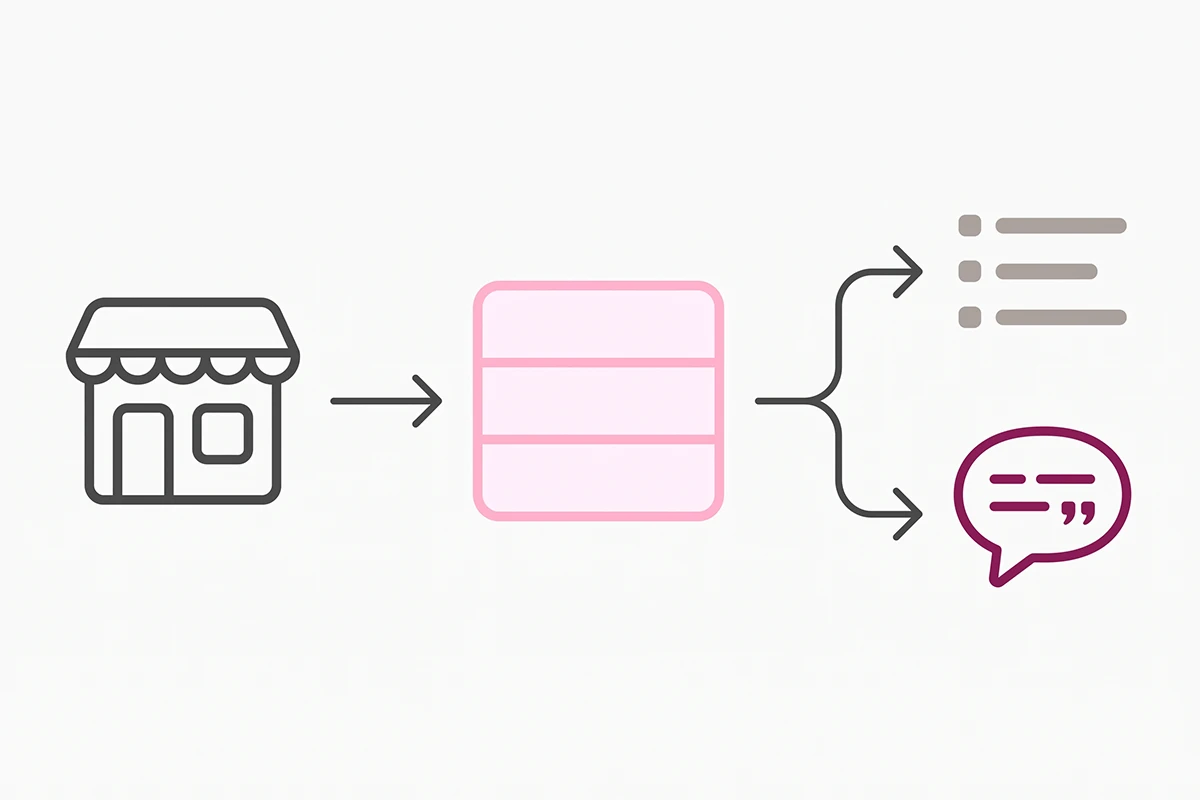
Microsoft made this measurable in February 2026 by shipping the AI Performance report inside Bing Webmaster Tools. It shows how often your content was cited in AI-generated answers across Copilot, Bing's AI summaries, and select partner integrations. Google Search Console still folds AI Overviews in with organic results, and OpenAI shares citation data only with licensed publishers. Bing is the first to give any of this away free.
The ChatGPT question is messier than most posts admit
Nearly every Bing SEO guide tells you ChatGPT runs on Bing's index, so getting into Bing gets you into ChatGPT. That was cleanly true when ChatGPT Search launched. In 2026 it is contested.
OpenAI's documentation still names Bing as a data source. But independent testing through 2025 and 2026 found ChatGPT's paid and logged-in tiers returning results closer to Google's index than Bing's, while the logged-out free tier matched neither. OpenAI has never publicly confirmed a Google arrangement.
So here is the position I would take with a client. Copilot on Bing is confirmed and first-party. ChatGPT's is partial and moving. Set up Bing for the thing that is certain and treat ChatGPT visibility as upside. If AI citations are the goal, the broader work in getting your store cited in ChatGPT, Perplexity, and Claude matters more than any single index.
What Bing did with two of my own sites
I have Bing data for two sites, which turns out to be far more useful than data for one. Studio Niza is this site, hand-coded and not on Shopify. Sweeties Pawprints is an actual Shopify store selling digital goods. Both are new, both are small, and both went into Bing Webmaster Tools within days of launching.
The wait was the same on both
Studio Niza launched May 8, 2026 and I submitted the sitemap on May 23. First impression: July 4. Forty-two days of nothing.
Sweeties Pawprints launched June 1 and I connected it to Bing on June 3. First impression: July 17. Forty-four days of nothing.
Two days apart, on completely different platforms. Whatever Shopify's IndexNow integration is doing, it did not shorten the wait. Google, meanwhile, was serving the studio site 4,303 impressions during the same stretch of Bing silence.
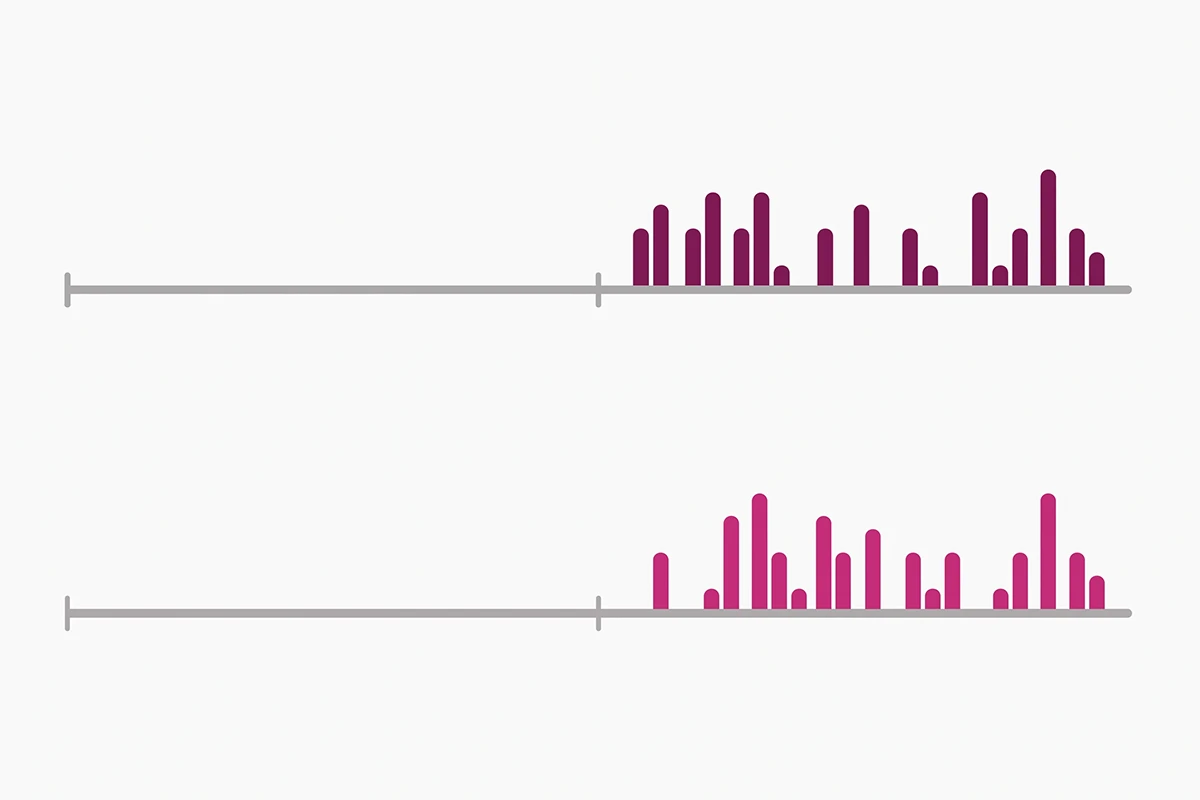
Nothing was broken on either site. Sitemaps accepted, clean status codes, robots.txt blocking nothing. Bing simply had not gotten to them. If you are stuck the same way, the diagnostic order in the walkthrough for pages Google will not index applies almost identically to Bing.
What the impressions were worth
| Through early August 2026 | Studio Niza (hand-coded) | Sweeties Pawprints (Shopify) |
|---|---|---|
| Days tracked | 71 | 63 |
| Impressions | 43 | 13 |
| Clicks | 1 | 1 |
| Desktop share of impressions | 34 of 43 | 13 of 13 |
| Average desktop position | 13.5 | 8.3 |
For scale: Google served the studio site 8,103 impressions across those same 71 days. Bing served 43.
Mobile is the number to sit with. On the Shopify store, Bing served zero mobile impressions in 63 days. Not few. None. Most Shopify traffic is mobile, which tells you most of what you need to know about Bing as a classic traffic source.
Both sites earned exactly one click, each from a position-one result. The studio site's came from "how much does shopify chatbot charge" and landed on the breakdown of what a Shopify chatbot costs. The store's came from a long question about limerence and landed on a blog post.
On the Shopify store, only the blog ranked
This is the finding I did not expect, and it is the one worth your attention. Every single one of Sweeties Pawprints' 13 impressions went to a blog post. Six blog URLs, thirteen impressions, one click. Zero product pages. Zero collection pages. Nothing for the homepage.
Before you spend a weekend rewriting product descriptions for Bing, know that in its first two months Bing found this store's editorial content and nothing else. Whether that reverses with age and links, I cannot tell you yet, and I would not trust anyone who claims to.
The queries were not what I expected
On both sites, my Bing queries do not look like search queries. They look like prompts.
"If i delete a product on shopify but i have reviews attached do i lose the reviews judge.me." "Is infp male intensity due to infp anxious attachment or limerence." Full sentences, typos left in, conversational phrasing. On Google, the same pages get short keyword strings like "shopify seo checklist" and "yotpo vs loox."
Positions ran better than Google too, averaging 13.5 on the studio site and 8.3 on the store, against the low twenties on Google. Treat that gently. Fifty-six impressions across two sites is a tiny sample and position averages get noisy fast at that size. Seven of the studio site's 31 queries were also plainly automated, an identical pattern with a random noun swapped in each time.
The 15-minute Bing Webmaster Tools setup for Shopify
Three steps. Do them in this order and you will not need to come back.
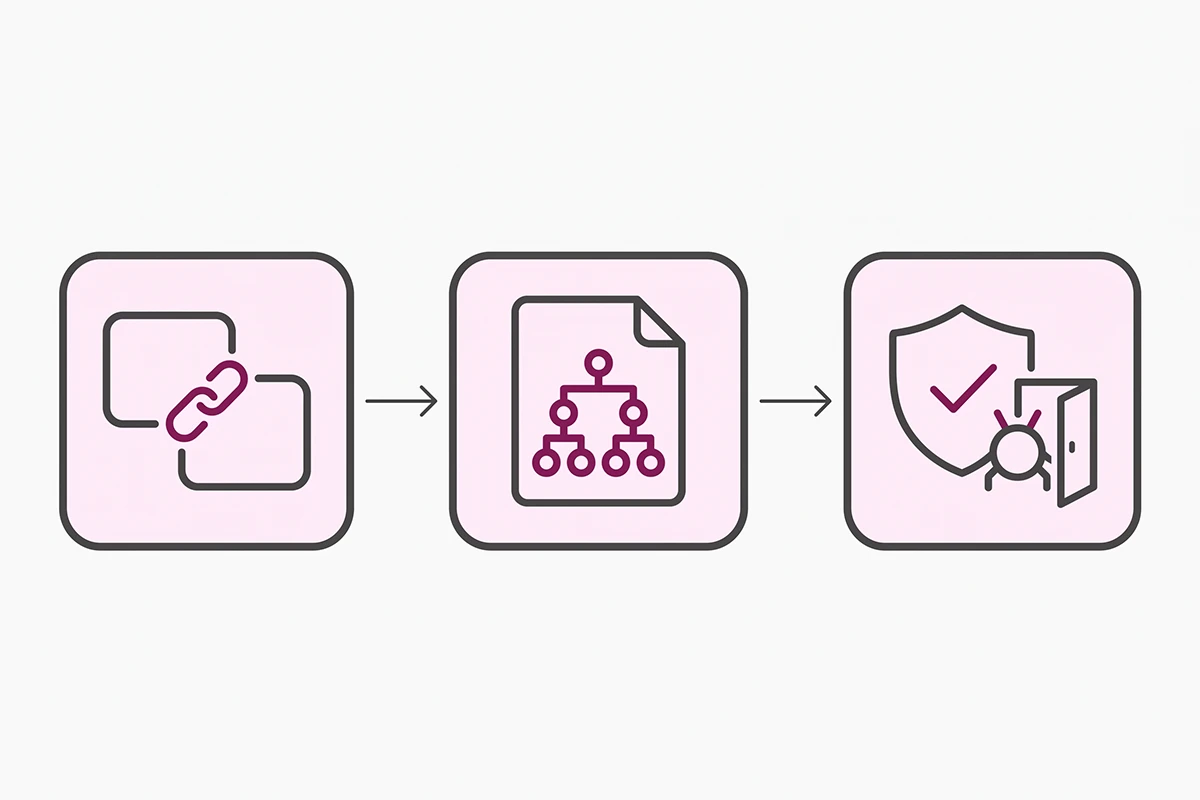
Step 1: Import your site from Google Search Console
Go to bing.com/webmasters and sign in with a Microsoft, Google, or Facebook account. Choose the import from Google Search Console option, sign in with the Google account that owns your Search Console property, and pick your store.
Imported sites are verified automatically. No meta tag, no DNS record, no file upload, which matters on Shopify where you cannot drop files into the root directory. If you have not done the Google side yet, start with setting up and reading Google Search Console for your Shopify store and come back. The import is the entire reason this takes fifteen minutes.
Step 2: Submit your Shopify sitemap
The import usually pulls your sitemaps across, but check rather than assume. Under Sitemaps, confirm that yourstore.com/sitemap.xml is listed and submit it if it is not. Shopify generates and maintains this file for you, and it links out to child sitemaps for products, collections, blogs, and pages.
Bing processes submitted sitemaps at least once every 24 hours, and Microsoft has been explicit that sitemaps with accurate lastmod values remain a foundational discovery signal for AI-powered search, not a legacy formality.
Step 3: Confirm Bingbot is not blocked
Open the robots.txt tester and confirm Bingbot can reach your product, collection, and blog URLs. Shopify ships a sensible default robots.txt, so if you have never touched robots.txt.liquid you are almost certainly fine. If a previous developer or an app did edit it, this is the moment you find out. The rules in what to block and what to never touch in a Shopify robots.txt apply to Bingbot exactly as they do to Googlebot.
That is the whole setup. Close the tab. Come back in six weeks.
The three Bing reports actually worth checking
Bing Webmaster Tools has a lot of screens. Three of them earn your time.
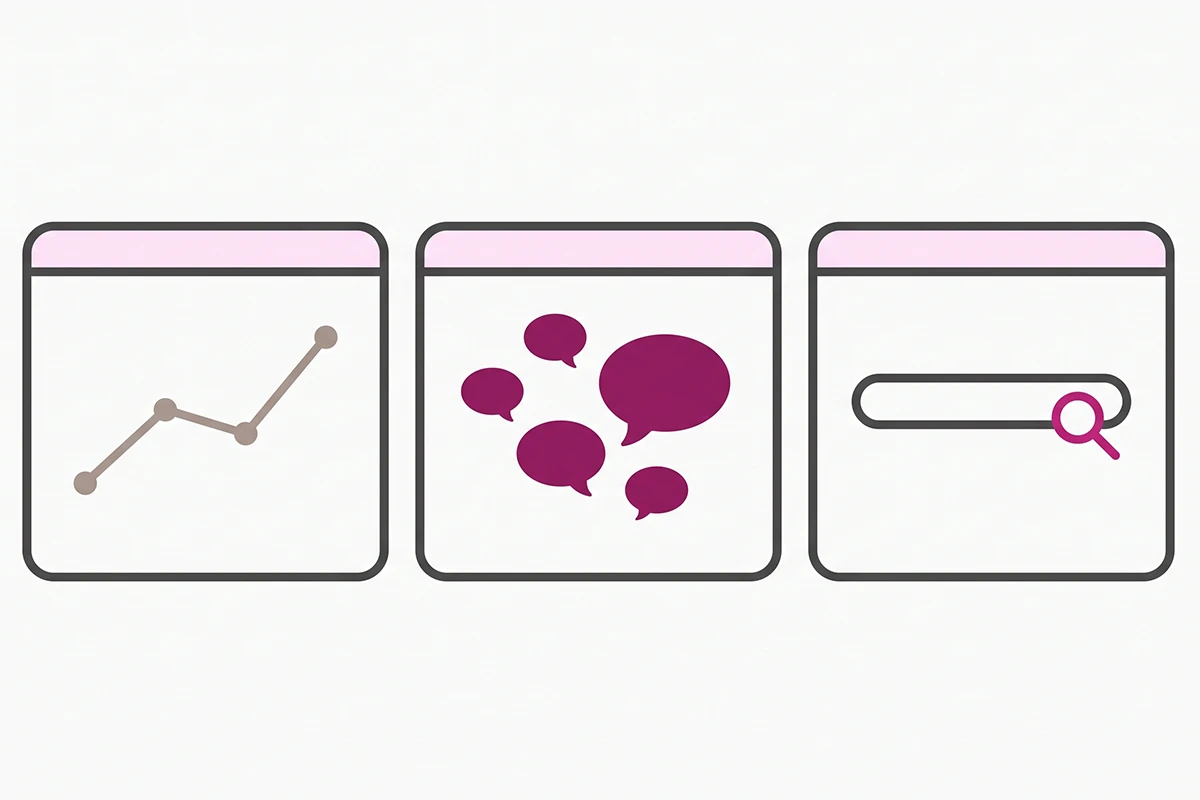
| Report | What it answers | How often to look |
|---|---|---|
| Search Performance | Is Bing showing my pages at all, and for what? | Monthly |
| AI Performance | Did Copilot use my pages as a source? | Monthly |
| URL Inspection | Why is this one page missing? | Only when something looks wrong |
Search Performance
Clicks, impressions, click-through rate, and average position, sliced by query, page, country, and device. Bing retains 16 months of history, the same as Google. For a new store, expect it to show almost nothing for the first month or two.
AI Performance, the one nobody set up for
This is the report worth having an account for. Microsoft's dashboard gives you total citations, average cited pages per day, page-level citation counts, a visibility trend line, and grounding queries: the key phrases the AI used when it retrieved your content.
Grounding queries are the genuinely new thing. They are not what your customer typed. They are the sub-queries the model generated on the way to an answer, which shows how AI search breaks your topic apart. Microsoft's guidance on content inclusion in AI answers points at clear headings, tables, and FAQ sections as what makes content easy to reference accurately.
Two limits to know. The data is sampled, and you cannot filter by individual AI surface, so a Copilot citation and a Bing summary citation look the same. Pair it with tracking whether AI search is actually sending shoppers to your store if you want the other half of the picture.
URL Inspection
A diagnostic, not a dashboard. Paste one URL and see whether Bing has it indexed, what Bingbot saw, and whether markup or crawl errors are in the way. Use it when a page is missing, not as a weekly ritual.
Does your Shopify store already have IndexNow?
Probably, and it is worth confirming rather than paying for.
IndexNow is an open protocol that flips indexing from pull to push. Instead of waiting for a crawler to notice a change, your site tells participating engines the moment a page is added, updated, or removed. Bing, Yandex, Naver, Seznam, and Yep all participate. Google does not, so this does nothing for your Google indexing.
Microsoft's own setup guidance names Shopify among the supported CMS platforms that handle IndexNow at the platform level, alongside Wix and Duda. That means most stores are already submitting without having configured anything. The catch is that platform-level submission is invisible to you, so check the IndexNow section in Bing Webmaster Tools and confirm URLs are actually showing up there before you install an app that charges monthly for it.
Be clear-eyed about what it does. IndexNow speeds up discovery. It does not guarantee indexing, it does not improve rankings, and it will not rescue a page Bing has decided is thin. My Shopify store, which submits through IndexNow at the platform level, still waited 44 days for its first impression. Discovery is not inclusion.
So what is Bing actually worth for a Shopify store?
Three separate answers, because bundling them is how these posts get dishonest.
The classic search math
For a store under $200K a year, close to nothing in the first year. My Shopify store returned one click in 63 days. If someone quotes you Bing's billion monthly active users as a traffic argument, note that Bing's global referral share is still under 5 percent and its mobile share is under 1 percent. Most Shopify traffic is mobile. Do that multiplication yourself.
The one genuine upside is competition. Bing ranked my pages roughly ten positions higher than Google did for similar queries. Fewer people compete for Bing rankings, so the same content places better. It places better in front of a much smaller room.
The AI math
This is where the fifteen minutes earns out. Copilot reads Bing's index, and Bing Webmaster Tools is currently the only free first-party source telling you when an AI engine cited your content. That data does not exist anywhere else at any price for most store owners.
What this setup will not do
It will not fix thin content, help your Google rankings, or produce meaningful traffic in your first quarter. If your product pages are not converting, Bing is not your problem. Fix the store first.
Wrapping up
Three things to carry out of this.
First, setting up Bing Webmaster Tools for Shopify takes fifteen minutes if you already have Google Search Console, because the import skips verification entirely. There is no ongoing work. It is genuinely a do-it-once task.
Second, do not expect it to do anything quickly. Both of my sites waited roughly six weeks for a single impression, and on my Shopify store every impression that eventually arrived went to a blog post rather than a product page. That lag is normal, and it is the argument for verifying now rather than waiting until you want the data.
Third, the reason to bother in 2026 is not Bing's search traffic. It is that Copilot reads Bing's index, and the AI Performance report is the only free window any search company offers into whether an AI engine used your pages as a source. That window is worth having open before you need it.
You still have to do the actual work. Getting indexed is not the same as being worth citing, and a store with thin product pages will be equally invisible in both indexes. Bing just makes the invisibility easier to see.
Want the whole indexing setup handled?
The Studio Niza SEO service covers Google Search Console and Bing Webmaster Tools setup, sitemap and robots checks, real schema markup, and indexing follow-up until your pages are actually in both indexes. Starts at $499 one-time.
See pricing & services →Or email contact@studioniza.com if you have a specific question about your store. I read every one.
Frequently asked questions
If you're still unsure after reading these, just send the question.
Is Bing Webmaster Tools free for Shopify stores? +
Yes, completely free, with no paid tier and no usage limits. That includes tools that cost money elsewhere, like keyword research with real Bing search volume, backlink data, and a site scanner. Setting up Bing Webmaster Tools for Shopify costs you nothing beyond the fifteen minutes it takes to verify and submit your sitemap.
Do I still need Bing Webmaster Tools if I already use Google Search Console? +
Yes. Bing and Google run separate indexes with separate crawlers, and no data passes between them. Verifying in Google Search Console does nothing for your Bing visibility. The only overlap is that Search Console makes the Bing setup faster, because you can import your verified site instead of proving ownership a second time.
How long does it take a new Shopify store to appear in Bing search results? +
Longer than most guides suggest. Across two of my own sites, the gap between submitting a sitemap and the first Bing impression was 42 days on one and 44 days on a Shopify store, with nothing at all in between. New stores with few backlinks sit in Bing's crawl queue for weeks. This is the main argument for verifying early rather than waiting until you need the data.
Does setting up Bing Webmaster Tools help my Google rankings? +
Not directly. Google does not read anything you do in Bing Webmaster Tools. Indirectly it can help, because Bing's free site scanner and URL inspection tool surface crawl errors, blocked pages, and markup problems that affect both search engines. Fixing those is what moves Google, not the Bing account itself.
Does ChatGPT get its results from Bing's index? +
Partly, and less cleanly than most guides claim. OpenAI's documentation names Bing as a data source, but independent testing through 2025 and 2026 found different ChatGPT tiers returning results that do not consistently match Bing. Microsoft Copilot is the assistant that definitely reads Bing's index, so that is the one worth planning around.
What is a grounding query in the Bing AI Performance report? +
Microsoft defines a grounding query as the key phrase the AI used when retrieving content that ended up referenced in an AI-generated answer. It is not the question your customer typed. It is the sub-query the model generated on its way to an answer, which makes it the closest thing available to seeing how AI search interprets your topic.