
You connected the Google & YouTube app, waited for the first sync, opened Merchant Center, and found a column of red. Forty products disapproved. Maybe three hundred. The error names read like database field names, the help links go to policy pages written for enterprise feed managers, and no button on the screen offers to fix any of it.
Most owners close the tab at that point. That is the part worth changing, because Google Merchant Center disapproved products on Shopify almost always come down to nine specific errors, and seven of those nine are fixed inside your Shopify admin in under ten minutes each.
The other two are not fixes but decisions, about what you sell and how your store presents itself. I will be clear about which is which.
If Merchant Center is not connected yet, start with the Merchant Center setup walkthrough for Shopify and come back when the red appears. A clean first sync is rare, even for careful stores.
One thing to hold onto before you start: a disapproval is not a penalty. It is Google declining to show a product it cannot verify, cannot crawl, or cannot categorize. Every error below is Google saying it does not have enough to go on. Your job is to give it enough.
Where do disapproved products show up in Merchant Center?
Open Merchant Center, go to Products, then the Needs attention tab. That is the whole list. Guides that send you to a "Diagnostics" screen are describing the old interface, which is part of why this step feels harder than it is.
Two kinds of problem live on that page. Item-level issues affect specific products while the rest of your catalog keeps serving normally, and the affected items come back on their own once the data is fixed.
Account-level issues affect everything you sell. Google sends a warning email with a deadline, your products sit in a limited-visibility state while that clock runs, and if the deadline passes without a fix, the account is suspended. Product data quality violations come with a 28-day warning window. Egregious policy violations come with no warning at all.
Here is the whole list, and where each error actually gets fixed. Seven of the nine never require you to open Merchant Center.
| Error | Level | Where you fix it |
|---|---|---|
| 1. Missing or invalid GTIN | Item | Shopify product, Barcode field |
| 2. Missing or invalid product category | Item | Shopify product, Category field |
| 3. Duplicate offers | Item | Shopify products or data sources |
| 4. Mismatched price (page crawl) | Item | Theme, variant markup and pricing |
| 5. Unavailable landing page | Item | Shopify product status and redirects |
| 6. Image quality | Item | Shopify product images |
| 7. Shipping settings | Account | Shopify shipping profiles, then Merchant Center |
| 8. Health or adult flags | Item or account | Product copy, or a decision about the catalog |
| 9. Misrepresentation | Account | Your whole storefront, then an appeal |
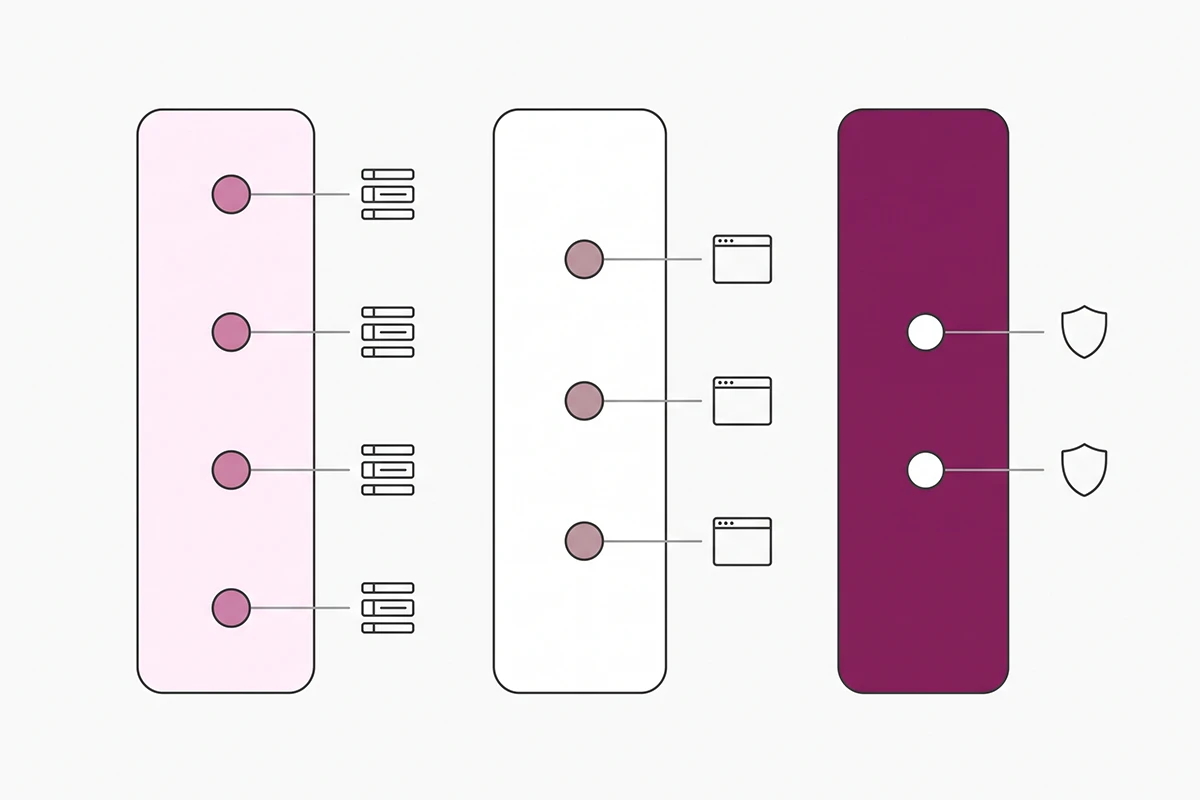
Errors 1 to 3: the product data Google can't match
These three errors say the same thing in three different ways. Google cannot confidently tell what your product is, so it will not put it in front of someone searching for that thing.
Error 1: Missing or invalid GTIN
A GTIN is the barcode number a manufacturer assigns to a product. Google uses it to match your listing to the same product sold by everyone else, which is how it decides your item belongs in a results page.
In Shopify, the GTIN comes from the Barcode field on each variant, under Inventory. If you resell products made by someone else, that number is on the box or in your distributor's sheet. Put it in. This is the most common fix in a new store's feed.
If nobody assigned your product a barcode, which is true for handmade goods, print-on-demand, and most one-person brands, do not invent one. An invalid GTIN is worse than a missing one, because it matches your candle to somebody else's phone case. Supply the brand and an MPN (your own SKU works) and mark the product as having no identifier, which is the identifier_exists attribute set to no.
Error 2: Missing or invalid Google product category
Google has its own taxonomy, separate from your collections and your product type. Your "Cozy Candles" collection means nothing to it. It wants to know the item is Home & Garden > Decor > Home Fragrances > Candles.
Shopify's Category field on the product page maps to this automatically, and Shopify guesses one when you save a product. The guess is usually close and sometimes badly wrong, which is what the "invalid category" error is telling you. Open the product and pick the most specific category that fits.
Specificity matters more than people expect, because categories drive the required attributes for apparel (color, size, age group, gender) and influence which searches you are eligible for. The same discipline applies to how you write the product title, since Google reads both together.
Error 3: Duplicate offers
This one means two products in your feed carry the same set of attributes and values, so Google cannot tell them apart. On Shopify it happens three ways.
The first is two data sources feeding the same catalog, usually the Google & YouTube app plus a feed app someone installed and forgot. Pick one and disconnect the other. The second is variants that differ only in a field Google cannot see, such as a "Gift wrap" option with no price or image change. The third is genuine duplicate products left over from a CSV import.
The fix is to make each offer distinguishable by something real: a different image, a different size or color value, a different title. If they are not actually different products, delete one.
Errors 4 and 5: when your feed and your page disagree
These two are the most frustrating errors on the list, because your Shopify admin looks correct and usually is. The problem is what Google's crawler sees on the live page.
Error 4: Mismatched value (page crawl) [price]
Google crawls your product page and compares the price it finds there against the price in your feed. If they differ at all, the item is disapproved to protect the shopper.
On Shopify, the usual cause is variants. Your page has three variants at three prices, and the theme's structured data publishes only the default variant's price, so Google reads that one number and fails the other two. Owners in the Shopify Community threads about this error spend weeks assuming the feed is broken when the markup is what needs attention.
Three things to check, in order. First, whether your theme writes per-variant pricing into the product schema it already generates, which you can test in Google's Rich Results tool. Second, whether variants share an item_group_id so Google treats them as one product family instead of competing offers. Third, whether a discount app, a currency converter, or Shopify Markets shows the crawler a different price than it shows you. If you run multiple currencies, check the price a visitor from the United States sees. That difference alone disapproves entire catalogs.
Error 5: Unavailable landing page
Google tried to open your product URL and could not. The documented causes are a 404, more than two redirects, a server error, or a DNS problem. On Shopify the practical triggers are narrower.
You archived or deleted a product but the feed still carries the old URL. You changed a product handle more than once, which builds a redirect chain. Or your store is still password-protected, which makes every product page unreachable to everyone including Google.
There is a fourth version worth naming because it surprises people. If your homepage shows only navigation and policy links with no products visible, Google can classify the domain as parked and fail every landing page at once. A brand-new store with a hero image and nothing else is the exact profile that triggers it. Put real products on the homepage.
Errors 6 and 7: the two that live on your store
Error 6: Image quality
Google rejects images that are too small, that are placeholders, or that carry anything promotional. That last one catches more Shopify stores than the size rule does.
No watermarks. No logos laid over the product. No borders. No "50% OFF" badge, no "Best Seller" flash, no price text, no call to action. If your photos come from a supplier who burned their branding into the corner, those images will keep failing until you replace them.
On size, today's floor is 100 x 100 pixels for most products and 250 x 250 for apparel, and that is about to change. Google's 2026 product data specification update raises the minimum to 500 x 500 pixels for every category on January 31, 2027, with warnings appearing from April 14, 2026. Shoot or source at 1500 x 1500 now and stop thinking about it. The same files do double duty for product image SEO on your own site.
Error 7: Shipping settings
This is an account-level issue, so it can quietly hold back your entire catalog while you hunt through item-level errors. Free listings require you to either configure shipping in Merchant Center or submit shipping costs in your product data, and that requirement is mandatory in 29 countries including the US, UK, Canada, and Australia.
On Shopify, the fix is almost always in your shipping profiles rather than in Merchant Center. Rates that live in a custom profile covering only some products do not import cleanly. Put your baseline rates in the General shipping profile so every product inherits something, and give every country you target a rate, not just your home country.
Returns sit in the same bucket. Google wants a return and refund policy reachable from your store, and a missing one is a documented cause of Shopify-side Merchant Center warnings. Shopify generates one under Settings, then Policies. It takes four minutes.
Error 8: health and adult flags
This is the first of the two that is not really a fix. If Google flagged products under healthcare and medicines or adult-oriented content, it is asking you to make a decision about your catalog.
The healthcare rules are broader than most owners expect. Supplements are allowed in most markets, but any claim that a product prevents, cures, or treats a condition triggers disapproval, and so does language implying a medical benefit no regulator has approved. This catches wellness brands constantly, because the copy that sells is the copy that fails. Skincare that "heals" eczema, a tea that "boosts immunity," a supplement compared to a prescription drug: all disapproved. Pharmacy and prescription categories require certification before you can list at all.
Adult-oriented content splits into two tiers. Sexually explicit material is not allowed. Restricted items such as intimate products and suggestive imagery are allowed in many markets but must carry the adult attribute so they do not serve to minors, and more than thirty countries prohibit them entirely.
The honest read: if your product is genuinely in a restricted category, rewriting your copy fixes a claims problem but not a category problem, and free listings may not be a channel you get. Better to know that in an afternoon than after three months of appeals.
Error 9: misrepresentation, and the appeal that works
Misrepresentation is the error that makes people give up, because Google will not tell you what specifically failed. The suspension email names the policy and nothing else. Owners then resubmit an unchanged site, get refused, and burn through their review attempts.
The policy is clearer than the email. Google's misrepresentation policy covers hidden or missing business information, unclear pricing, missing return and refund policies, absent shipping information, and any offer that misleads about what the buyer gets. A clarification published in October 2025 leans specifically on non-delivery and on return processes that do not actually work, which tells you where enforcement attention is going.
For a new Shopify store, misrepresentation is usually not deception. It is a storefront that looks unfinished, so an automated system cannot tell a real business from a shell. Fix the signals before you appeal, not after:
An About page with a real person on it. Your name, what the store sells, why it exists. Two hundred words beats a stock paragraph about passion for quality.
Contact information a human could use. A working email address on a contact page, not only a form, plus a business address or at least a country.
Complete policies. Refund, shipping, privacy, terms. All four, reachable from the footer, with real timelines and amounts instead of Shopify's placeholder brackets.
Visible social proof. Reviews on product pages do more work here than owners realize, because they are evidence that orders exist and get delivered. Once you have them, it is worth getting your review stars into Google too.
Checkout that reveals the full price. No surprise fees, and shipping costs visible before the final step.
Only then request the review. You get one courtesy review during a warning period, a limited ability to disagree with an issue, and a cool-down after that which grows longer with each unsuccessful attempt. Support cannot shorten it. That is why the order matters: fix everything, then appeal once, rather than appealing after each small change.
I will be straight about the limit. No template guarantees reinstatement, and some suspensions are never lifted. What the list above does is remove every reason a reviewer could reasonably point at.
What order should you fix Merchant Center disapprovals in?
Account-level issues first, always. Shipping settings, policies, and misrepresentation gate your entire catalog, so fixing forty item-level errors while an account issue runs is work you cannot see the result of.
Crawl issues second: landing pages and price mismatches. These need Google to re-visit your site, which takes longer than a feed update, so start that clock early.
Feed data last: GTINs, categories, duplicates, images. This is the bulk of the row count and the fastest work per row, where a spreadsheet and an hour of focused editing clears a hundred products.
Then wait. Product data updates typically process within 3 to 5 business days, and a requested review can take up to 7 business days. An approved item becomes eligible to show within about 24 hours. Nothing makes that faster, so resist the urge to resubmit on day two.
Wrapping up
Two things to take away. First, most Google Merchant Center disapproved products on Shopify are data problems, not policy problems, and data problems are the good kind: a specific field, a specific fix, a specific timeline. A store with three hundred disapproved products usually has three errors repeated a hundred times each, which is one afternoon of work rather than three hundred.
Second, the two errors that are not data problems deserve an honest answer rather than a workaround. If your category is restricted, free listings may not be your channel. If your storefront reads as unfinished to an automated reviewer, the fix is to finish it, and that work pays off in conversion whether or not Google ever approves you.
You do not need a paid feed app for any of this. The Google & YouTube app plus your Shopify admin covers all nine. Feed apps earn their price at thousands of SKUs and complex rules, not at a hundred products and a barcode field to fill in.
Start in the Needs attention tab, sorted by how many products each error affects. The top row is almost always worth your whole first hour.
Want the whole feed cleaned up?
The Studio Niza SEO & GEO service covers product data, real schema, and Merchant Center follow-through, including the disapproval triage in this post. Pricing starts at $499 one-time.
See pricing & services →Or email contact@studioniza.com if you have a specific question about your store. I read every one.
Frequently asked questions
If you're still unsure after reading these, just send the question.
How long does it take for disapproved products to be approved again after I fix them? +
Product data updates typically process within 3 to 5 business days, and a review you request can take up to 7 business days. Once a product is approved, it becomes eligible to show within about 24 hours. Resubmitting early does not speed anything up, and repeated unsuccessful review requests trigger a cool-down period that gets longer each time.
Do I need a GTIN for handmade or print-on-demand products on Shopify? +
No. If no manufacturer assigned your product a barcode, you supply your brand and an MPN (your own SKU is fine) and mark the product as having no identifier instead. Never invent a barcode number to fill the field, because an invalid GTIN matches your product to someone else's and causes a harder disapproval than leaving it empty.
Why does Merchant Center say my price doesn't match when my Shopify price is correct? +
Google compares the price in your feed against the price its crawler reads on your live product page, and on Shopify those differ most often because of variants. The theme publishes the default variant's price in its structured data, so Google reads one number and fails the others. Check your variant-level markup, your item group ID, and whether a currency converter or discount app shows the crawler a different price.
Can my store still get free listings while some products are disapproved? +
Yes, as long as the problem is item-level. Item-level issues affect only the specific products named, and the rest of your catalog keeps serving normally. Account-level issues such as shipping settings or misrepresentation are different: those hold back everything you sell, which is why they get fixed first.
How many times can I appeal a Merchant Center misrepresentation suspension? +
Fewer times than most owners assume. You get one courtesy review during a warning period and a limited ability to disagree with an issue, and after that a cool-down period disables the review button. That cool-down gets longer with each unsuccessful attempt and Google support cannot shorten it, so fix every signal on your storefront before you request the first review.
Does the Google & YouTube Shopify app fix disapprovals automatically? +
No. The app syncs your product data to Merchant Center and surfaces issues, but it cannot fill in a missing barcode, correct a wrong product category, or rewrite a supplement claim for you. It does handle the plumbing well enough that a paid feed app is unnecessary for most stores under a few hundred products.