
You are looking at a product page with two reviews on it, trying to decide whether that is a problem worth solving this month or something you can leave alone while you fix the ads.
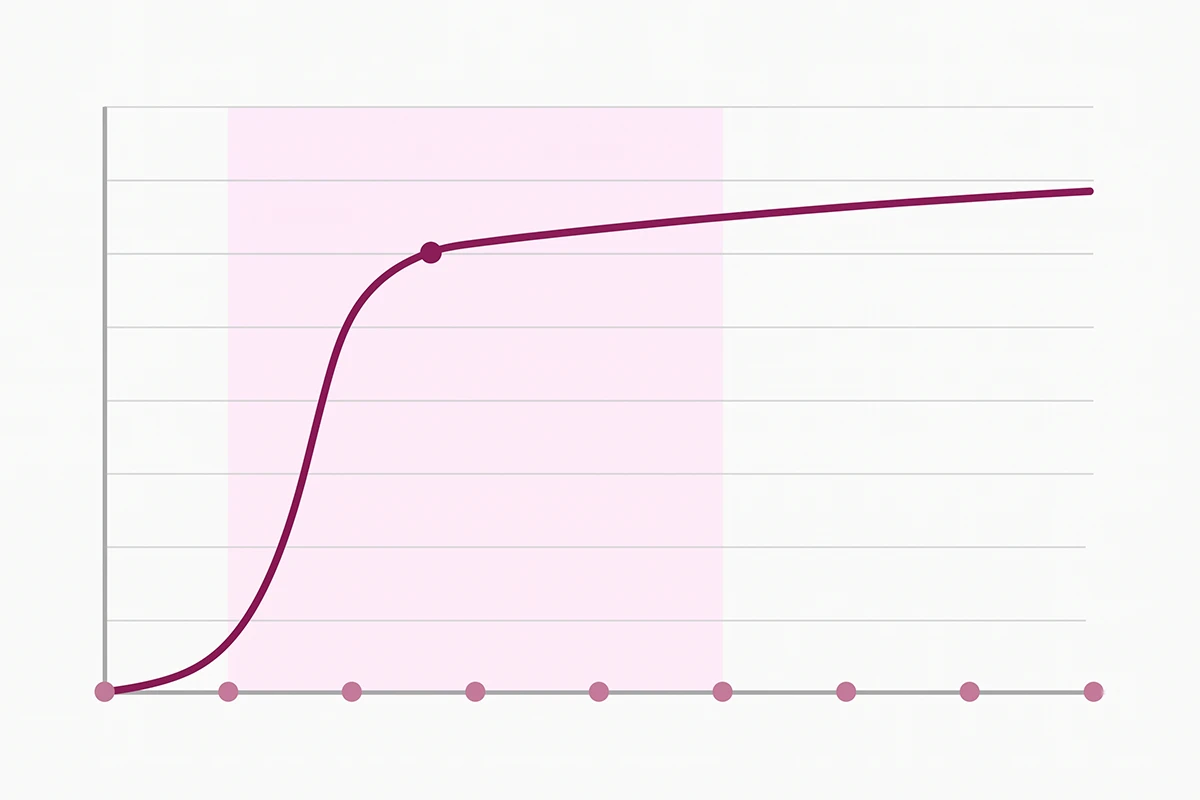
Here is the short version. One review is worth far more than zero. Five reviews is where the steep part of the curve ends. After that the returns get small quickly, and what matters shifts from how many reviews you have to how recent they are.
That answer is more forgiving than most new Shopify owners assume. The question of how many reviews you need gets answered on the internet with a shrug and a vague push toward "more," which is not useful when you have eleven products and a finite number of hours. The published research is more specific than that, and it has been for years.
This post walks through the actual thresholds with the sources behind them: what a single review does compared to none, what happens at five, where the curve flattens by category, why a 4.7 star average tends to outsell a perfect 5.0, and why review freshness overtakes review count sooner than you would expect. It ends with per-product targets by price tier, so you leave with a number for each item in your catalog instead of an instruction to go get more reviews.
One thing up front: none of these numbers get easier if you fake them. Importing supplier reviews is both the most common shortcut new stores try and the fastest way to lose the trust you were building. More on that near the end.
The short answer: the counts that matter
If you want the whole post compressed into one table, this is it. Every figure here is sourced in the sections that follow.
| Review count | What the research shows | What to do at this stage |
|---|---|---|
| 0 | 44% of shoppers say they will not buy a product with no reviews at all | Treat this as urgent, but only on the products you actually sell |
| 1 | Orders rise roughly 10% on average once a page has a single review | Get one review on every product in your active range |
| 5 | Purchase likelihood is 270% higher than at zero. The steep climb ends here | This is your real per-product target |
| 5 to 25 | The strongest-impact zone. Where it lands inside that range depends on your category | Aim for the top of the range on higher-priced items |
| 25 to 100 | Gains continue but slowly. Recency starts mattering more than count | Move your effort to keeping reviews fresh |
| 100 and up | 43% of shoppers say this is what they ideally want to see | A year-two goal, not a month-two goal |
If you remember one number from this post, make it five. Almost everything else is refinement.
What zero reviews actually costs you
Zero is a different category of problem from "not many." It is not a weak signal, it is a missing one, and a meaningful share of your visitors treat it as disqualifying.
PowerReviews found that 44% of consumers will not purchase a product with zero reviews, and the figure climbs among Millennial and Gen Z shoppers. That is close to half your traffic deciding before they read your product description.
The reliance runs deeper than a yes-or-no check. In Baymard Institute's product page usability testing, 95% of users relied on reviews to learn more about a product. For a new store with no brand recognition, reviews are doing the job that a familiar logo does for everyone else.
There is a search cost too. With no reviews, you have no aggregate rating, which means no star snippets in Google results and nothing for AI answer engines to reference when someone asks whether your product is any good. That is a separate mechanism from conversion, and it is worth understanding on its own if you want star ratings to show up in Google search results.
None of this means you should panic across your whole catalog. If you carry forty SKUs and six of them account for your orders, those six are where zero is expensive. The rest can wait.
Why the first five reviews do most of the work
The most useful thing in the published research is not that reviews help. It is the shape of the curve: steep at the start, flat surprisingly early.
What the first review does
Bazaarvoice analyzed roughly 35 billion product page views and more than 57 million reviews and found that orders increased by about 10% on average once a page carried a single review. One review. Not a program, not a campaign, one person saying something about the product.
That is the highest return per unit of effort you will ever get from reviews, and it is available to any store with a handful of completed orders.
The jump from one to five
The number most often quoted comes from Northwestern's Medill Spiegel Research Center, working with PowerReviews data. Purchase likelihood for a product with five reviews was 270% greater than for a product with none, and the marginal benefit of additional reviews began diminishing rapidly after the first five.
Worth being precise about the source: that 270% figure came from data on a high-end gift retailer, so it is a real measurement of a specific catalog, not a universal constant. The pattern it describes, steep early gains that flatten fast, shows up consistently across the other datasets in this post.
Why expensive products get more lift
The same research separated results by price. Displaying reviews lifted conversion by about 190% on a lower-priced product and about 380% on a higher-priced one. Shoppers do more homework before spending more, which means reviews carry more weight the further up your price list you go.
Practically: if you sell a $19 accessory and a $240 flagship item, the flagship is where the review gap is costing you actual money. Start there, not with whichever product is easiest to collect on.
Where the curve flattens
Past five, the honest answer gets less tidy, because the flattening point genuinely varies by what you sell.
The five-to-twenty-five impact zone
Bazaarvoice has addressed the magic-number question directly and declined to give one. Orders keep rising as review count grows, just at a shallower rate, and in their case study the strongest-impact zone ranged from five to twenty-five reviews depending on product category.
That range is a reasonable planning target. Low-consideration items reach their flattening point near the bottom of it. Anything a shopper researches carefully, meaning higher price, technical specs, fit and sizing, or health-related claims, sits nearer the top.
What actually happens above 100
Large numbers do keep working. PowerReviews benchmark data found that products with 1,001 to 5,000 reviews converted at a rate 83.7% higher than those with 1 to 100, and products displaying 5,000 or more converted 122.1% higher. Shopper expectations point the same direction, with 43% saying a product ideally has more than 100 reviews.
Two caveats before you set 1,000 as a goal. Those are comparisons between products rather than before-and-after tests on the same one, and items that accumulate thousands of reviews are usually bestsellers for reasons that also drive their conversion rate. Reaching four figures also takes order volume a first-year store does not have. Read those numbers as a description of where mature catalogs land, not a target for this quarter.
Why a 4.7 average outsells a perfect 5.0
Count is only half the picture. The average attached to it behaves in a way that surprises most owners the first time they see the data.
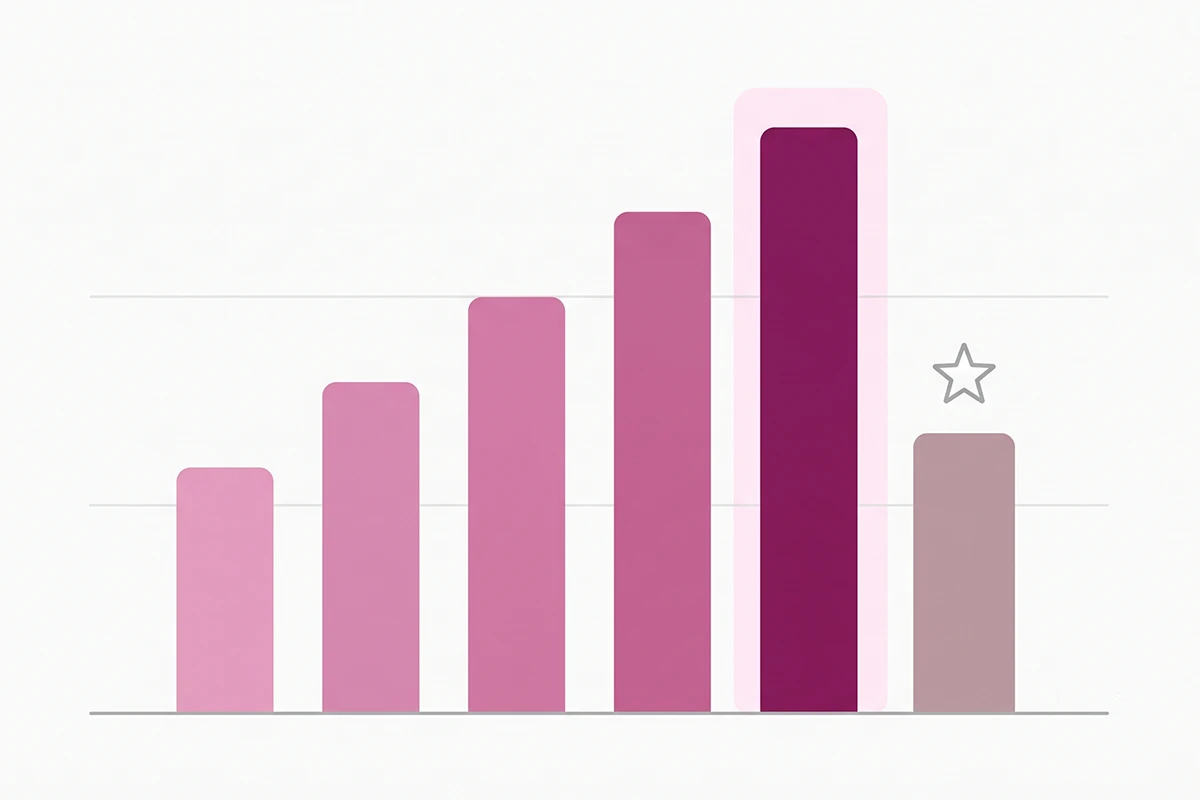
The Spiegel research found that purchase likelihood typically peaked at ratings in the 4.0 to 4.7 range and then began to decrease as ratings approached 5.0. PowerReviews benchmarks put the peak slightly higher and are blunter about the top end: the 4.75 to 4.99 band converts best, and products averaging a flat 5.0 convert at rates comparable to products rated between 3.0 and 3.49.
Read that last part again. A perfect rating performs like a mediocre one. Shoppers have learned that flawless records usually mean the negative reviews were filtered out, and a large minority actively look for the bad ones before deciding.
Baymard's testing points at the mechanism. The ratings distribution summary, the little breakdown showing how many people left five stars versus one, was the most used element of the reviews section and was relied on more heavily than the individual review text. Shoppers are checking the shape of your feedback before they read any of it. When no distribution is shown, testers were more likely to conclude the reviews were fake.
Three things follow. Show the distribution breakdown, not just the average. Do not suppress or gate anything below four stars. And treat a critical review as content rather than damage, which mostly comes down to replying to negative reviews well so the next shopper sees a store that answers.
After the threshold, recency beats raw count
This is the part that changes what you do on Monday, and it is missing from almost every article that answers the how-many question.

PowerReviews surveyed more than 9,000 consumers on volume against freshness. 64% said they were more likely to buy a product with fewer, more recent reviews than one with a large volume of reviews all older than three months. Just over a third would not buy at all if every available review was three months old or more, and 62% would walk away if the newest was a year old.
The expectations are tighter than they sound. More than three-quarters of shoppers prefer reviews under three months old, and 44% want to see something from the past month.
One finding matters more than the rest for a new store: 86% said recency was even more important when they were considering a product or brand they had not bought from before. That is a description of every visitor you have.
So what you are managing changes. Eight reviews collected in the last sixty days will outperform forty that all landed in a burst eighteen months ago. Review collection is not a project that finishes at five. It is a slow trickle, which is why setting it up once beats running it in campaigns.
A realistic plan to hit these numbers
Here is how the thresholds turn into a plan you can actually run alongside everything else.
Set a target per price tier
Sort your catalog by price and assign a number to each band rather than chasing one target across everything.
Under $30: five reviews per product, then two or three per quarter to keep them fresh. $30 to $150: ten to fifteen reviews, then three or four per quarter. Above $150: twenty to twenty-five reviews, then four to six per quarter, because this is where the price-sensitivity effect and the recency effect stack on top of each other.
Those maintenance numbers are the part people skip. They are what stops you from sitting on a healthy count of stale reviews a year from now.
Fix the request timing before anything else
Most stores with weak review counts do not have a customer problem, they have a request problem: no automated ask, or one sent at the wrong moment. Getting the timing of the request right does more for your numbers than any amount of rewriting the email, and building a request flow that runs on its own is what turns collection into a trickle instead of a chore.
If you are starting from nothing at all, there are legitimate ways to get your first reviews without much sales history, mostly involving your earliest customers and a lot of patience.
On tooling, for any Shopify store under roughly $200K a year I default to Judge.me, and the free tier is genuinely enough to run everything described here. If you want to see how it compares against the obvious alternative, there is an honest breakdown of Judge.me against Stamped. Spending money on a reviews app before you have crossed five reviews on your best sellers is solving the wrong problem.
What not to do to hit the number faster
Do not import supplier reviews or reviews attached to a different product. The FTC's Rule on the Use of Consumer Reviews and Testimonials took effect on October 21, 2024 and lets courts impose civil penalties for knowing violations. It also covers paying for reviews that express a particular sentiment and suppressing negative ones.
The practical risk is more immediate than the legal one. Store-feedback threads are full of people identifying imported photo reviews within seconds on stores that have no order history, and once a visitor decides your reviews are staged, nothing else on the page recovers them.
This is also why I never promise a client a review count. Review volume depends on order volume and product quality, and neither of those is something a service controls. What can be guaranteed is that the asking and the replying happen systematically, every time, which is the part most stores never get to.
Wrapping up: your per-product targets
How many reviews do you need? Five per product on the items you actually sell, then a slow trickle to keep them from aging out. That is the whole answer for most first-year Shopify stores.
Three things worth carrying out of this post. The first review is the biggest single jump you will make, so getting one onto every active product beats getting ten onto your favorite. Five is where the steep gains end, which means the anxiety about needing hundreds is mostly misplaced. And once you are past the threshold, freshness does more work than count, so a small steady flow beats a one-time push.
The uncomfortable part is that none of this is fast. At thirty orders a month with a normal response rate, five reviews on a single product takes real time, and there is no version that gets you there in a week without crossing a line you should not cross. The stores with strong review sections set the request up early and left it running while they worked on something else.
Start this week with one thing: pick the five products that generate most of your orders and check how many reviews each one has, and when the most recent one landed. If any of them sit at zero, that is your entire reviews to-do list for the month.
Want the review requests running on their own?
Studio Niza Reviews Management sets up the request automation, the send timing, the reply workflow, and the schema that puts your star ratings in search results. 60-day minimum, because a review program needs a full cycle before you can judge it.
See how Reviews Management works →Or email contact@studioniza.com if you have a specific question about your store. I read every one.
Frequently asked questions
If you're still unsure after reading these, just send the question.
How many reviews do you need before a product looks trustworthy? +
Five is the practical threshold. Research from Northwestern's Spiegel Research Center found purchase likelihood for a product with five reviews was 270% higher than for the same product with none, and the marginal benefit of each additional review drops off quickly after that. Getting from zero to five on your best sellers matters far more than getting from twenty to forty on any of them.
Is it bad to have only one review on a product? +
No. One review is a large improvement over zero, and it is the single biggest step you will take. Bazaarvoice's analysis of billions of product page views found orders rose by roughly 10% on average once a page had a single review. One honest review also gives shoppers something concrete to read, which a star rating alone does not.
Do more reviews always mean more sales? +
More reviews correlate with higher conversion, but the gains flatten sharply after the first handful. Most of the published lift happens between zero and five reviews, and the strongest-impact range tops out somewhere between five and twenty-five depending on the product category. Past that point, the freshness of your reviews does more for conversion than the raw count.
Can I import reviews from AliExpress or a supplier to my Shopify store? +
Not if those reviews are for a different product or from people who did not buy from you. The FTC's Rule on the Use of Consumer Reviews and Testimonials took effect on October 21, 2024 and allows courts to impose civil penalties for knowing violations. Shoppers also spot imported reviews easily, especially on a store with no order history, and that costs more trust than the empty review section did.
How many reviews should a $200 product have compared to a $20 product? +
Aim higher on the expensive one. The Spiegel research found that displaying reviews lifted conversion by about 190% on a lower-priced product and about 380% on a higher-priced one, because shoppers do more homework before spending more. A practical target is five reviews on items under $30 and twenty to twenty-five on items above $150.
Does a 5.0 star rating hurt conversion on Shopify? +
It can. PowerReviews benchmark data shows products averaging a flawless 5.0 convert at rates comparable to products rated between 3.0 and 3.49, while the 4.75 to 4.99 band converts best. A perfect record reads as filtered rather than earned, and a handful of four-star reviews makes the rest of your review section more believable.