
You added a chatbot to answer "where is my order" at 2 a.m., or to catch a question while you were asleep. Fair. What most Shopify owners miss is that the moment it went live, it became a data-collection point with its own compliance surface. Every message a shopper types, their name, their email, the reason they want a refund, now lands in a log somewhere. And shopify chatbot privacy is not a topic anyone raises when they sell you the bot.
This matters more in 2026 than it did last year. Privacy expectations tightened, AI-disclosure rules came into force, and a bot quietly saving conversations is a real exposure most stores never think about. The EU AI Act's transparency rules land on August 2, 2026, and they include a plain duty: if a person is talking to AI, tell them.
Here is the good news. You do not need a legal team to get this right. You need to understand three things: what your bot collects, where it goes, and what you owe the customer in return. In practice that is three small pieces: an AI disclosure, a consent moment, and a few honest lines in your privacy policy.
This guide walks through each one for a small Shopify store. What a support bot touches, where it is stored and for how long, the privacy-policy lines to add, when to show a notice, how GDPR and CCPA apply, and the settings that keep transcripts safe. No panic, no scare tactics about million-dollar fines. Just what to do.
What data a support chatbot actually touches
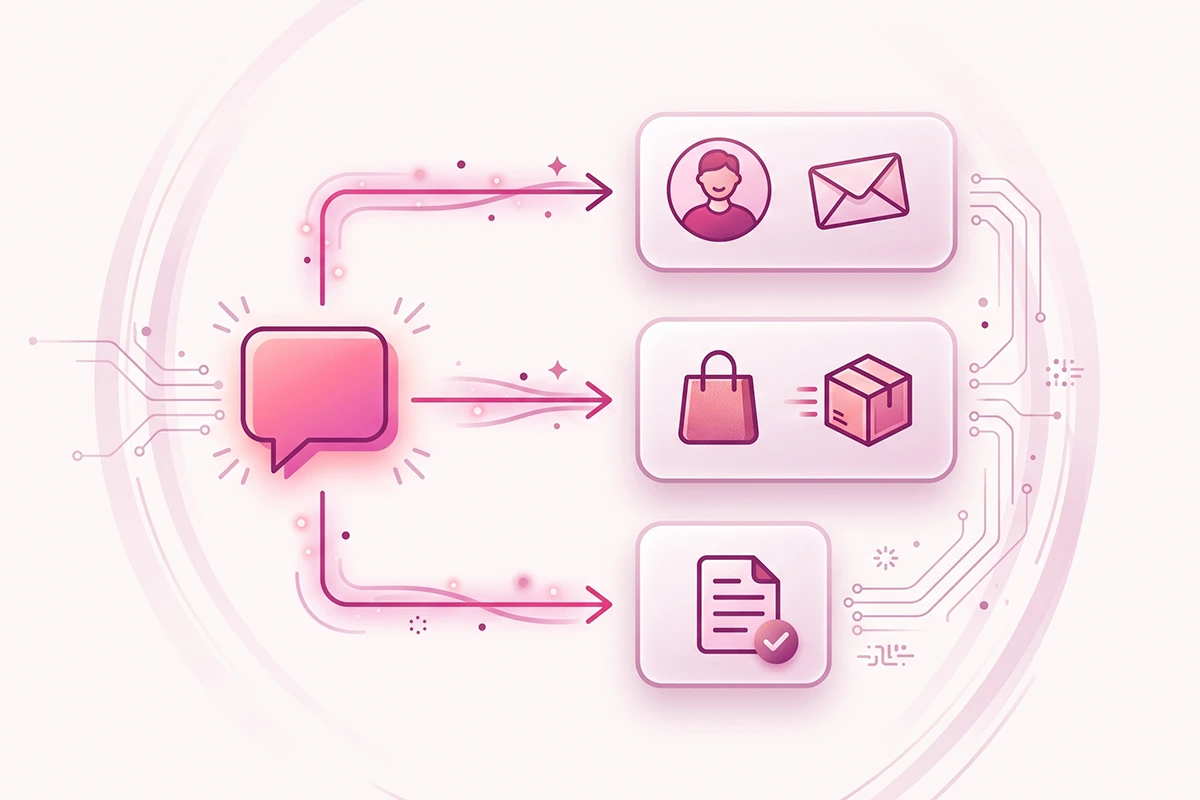
Before you can disclose anything, you need to know what the bot is holding. It helps to split it into three buckets.
What the shopper types
This is the obvious one. A support conversation can contain a name, an email, an order number, a shipping address, and sometimes far more: the reason for a return, a complaint about a product, occasionally health or financial details a customer volunteers without being asked. If you want a refresher on what a Shopify chatbot actually does, the short version is that it answers questions, and answering them often means the shopper hands over identifying details.
What the bot pulls from your store
To tell someone their order shipped, the bot reads order data through Shopify's API: status, tracking, sometimes the full customer record. That is customer data flowing into a third-party tool. Keep this separate in your head from the store knowledge the bot is trained on, your product pages, policies, and FAQs, which is not personal data at all.
The transcript itself
The whole conversation gets saved as a log. Under GDPR and CCPA, a transcript that contains anything that can identify a person (a name, an email, even an IP address) counts as personal data. So the log is not a harmless record. It is a file you are now responsible for.
The principle that ties this together is data minimization: collect only what you need for the task. Shopify's own protected customer data requirements are built on it, and so is GDPR (Article 5). A support bot needs an order number and basic verification. It does not need a date of birth. The most common finding in chatbot privacy reviews is over-collection: asking for data you never use, simply because the widget allows it.
Where those conversations are stored, and for how long
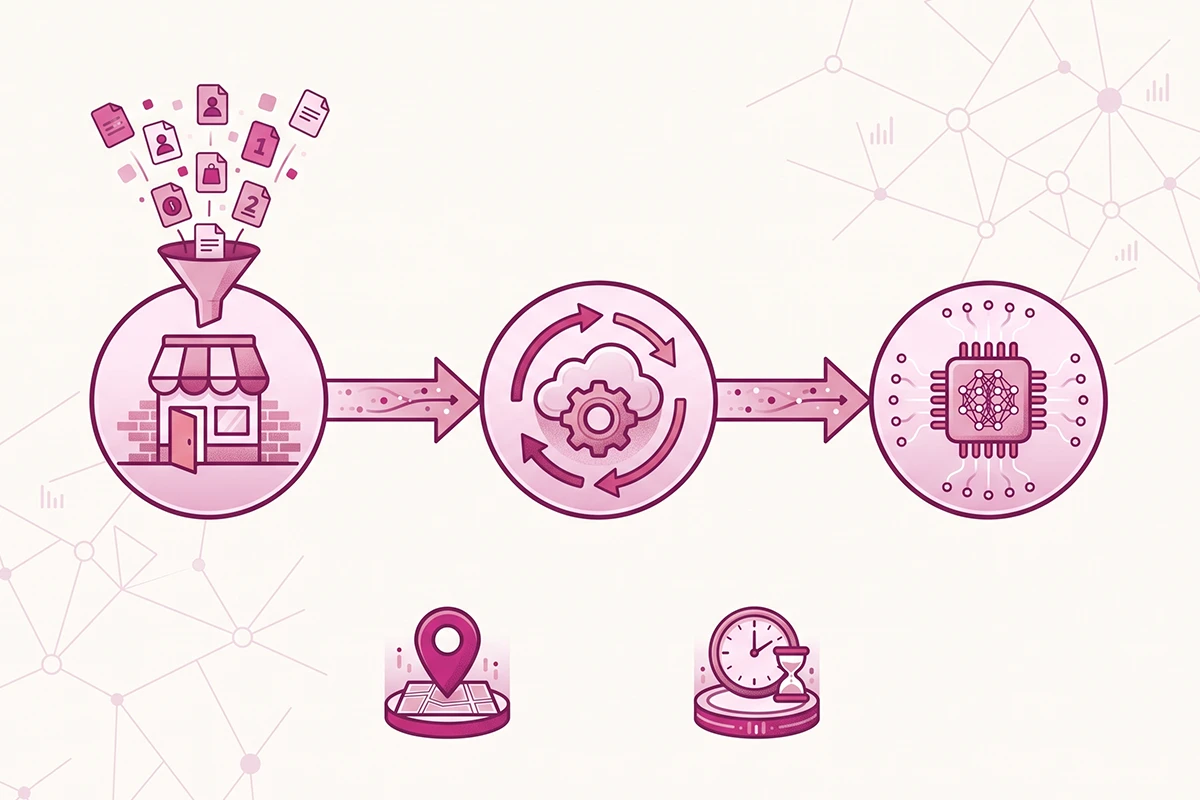
Once the bot saves a transcript, it lives somewhere. Usually that is the chatbot vendor's cloud database, not your Shopify admin. Three questions decide your exposure.
Who is actually responsible
Under privacy law, you are the data controller: you decided to collect the data and why. The chatbot app is a processor acting on your behalf, and the AI model behind it is usually a sub-processor. This matters because you cannot outsource the responsibility. If the vendor mishandles a transcript, the customer's complaint still lands on you.
That relationship should be written down in a Data Processing Agreement (DPA), which GDPR requires between a controller and a processor. Most reputable chatbot vendors offer one. If yours cannot produce a DPA, that is a real answer about how seriously they take this.
Where the data physically sits
Region matters. If you have EU or UK shoppers and the transcripts sit on US servers, you have a cross-border transfer, which is allowed only with the right safeguards in place. When you are picking a Shopify chatbot, ask the plain question: where is our data stored, and can we keep it in a specific region? Shopify holds app developers to encryption at rest and in transit for protected customer data, and your vendor should meet the same bar.
How long it is kept
Most tools keep transcripts until you tell them to stop. There is no fixed legal retention number under GDPR or CCPA. The rule is simpler and stricter: keep personal data only as long as you need it for the stated purpose, then delete it. For a support bot, that is usually short. Many stores set auto-delete at 30 to 90 days, which is long enough to resolve follow-ups and short enough to shrink the risk if anything ever leaks.
The privacy-policy lines you actually need to add
Your privacy policy is where you make all of this official. If it does not mention the chatbot at all, that is the gap to close first. You do not need dense legalese. You need a short, honest section a customer could actually read. An effective ai support privacy policy section covers these points.
| What to disclose | A plain example line |
|---|---|
| The chatbot as a data point | "We use an AI chat assistant to answer questions and help with orders." |
| What it collects | "It may collect your name, email, order number, and the contents of your messages." |
| Why you collect it | "To answer support questions, look up orders, and improve our help." |
| Who processes it | "Conversations are handled by our chat provider and the AI model it runs on, acting on our behalf." |
| How long it is kept | "We keep chat transcripts for 90 days, then delete them." |
| Your rights | "You can ask us to access or delete your data at any time." |
| Where it goes | "Data may be processed outside your country under standard safeguards." |
Two things make this section trustworthy rather than boilerplate. First, name the sub-processors, or at least the categories, so a reader knows the AI vendor exists. Second, match the retention number to what your bot is actually set to. Writing "90 days" while the tool keeps everything forever is worse than saying nothing, because it is a promise you are breaking.
GDPR's right to erasure also means you need a real way to honor a deletion request, not just a sentence claiming you will. If you already published a privacy policy when you launched, this is usually a paragraph added to an existing page, not a new document.
When to show a consent or AI-disclosure notice
This is where owners get confused, because two different notices get lumped together. They are not the same, and you may need both.
The AI disclosure: tell people it is a bot
If a shopper could reasonably think they are talking to a human, you have to tell them they are not. This is now written into law in more than one place. The EU AI Act's Article 50 requires that people be told they are interacting with AI, and it applies from August 2, 2026, including to stores outside the EU whose bot serves EU customers. In California, the B.O.T. Act has required disclosure for commercial bots since 2019, and Colorado's AI Act adds a similar duty in 2026. The fix is tiny: a first message that says the assistant is automated. (One nuance worth knowing: California's newer companion-bot law, SB 243, does not apply here, since it exempts ordinary customer-service bots.)
The consent moment: do not collect before "yes"
The second notice is about data, not identity. If your chat widget sets non-essential cookies or starts logging personal data, EU and UK visitors need to agree before that happens. A consent banner that loads after the tracking already fired is not valid consent.
Practically, this means wiring the chat widget into the same consent tool that gates your analytics, so nothing runs until the visitor accepts. Shopify's customer privacy settings and Customer Privacy API exist to route those signals correctly. The same logic applies at the moment the bot hands a conversation to a human, since that transfer moves the transcript to a new set of eyes.
How GDPR and CCPA apply to your chatbot
The two rules most likely to touch a small Shopify store are the EU's GDPR and California's CCPA and CPRA. Neither cares how small you are.
GDPR, even if you are not in Europe
GDPR applies to any business that processes the personal data of people in the EU or UK, wherever the business itself is based. If a shopper in Berlin chats with your bot, you are in scope. It asks for a lawful basis to process (usually legitimate interest for basic support, or consent for anything beyond that), data minimization, and the ability to delete data on request. It also requires reporting a serious data breach within 72 hours. Fines run up to 20 million euros or 4% of global turnover, though enforcement against a small store looks more like an order to fix things than a headline penalty. This is what makes gdpr chatbot ecommerce a real topic and not a scare tactic.
CCPA and CPRA in California
California's CCPA gives shoppers the right to know what you collected, to delete it, to correct it, and to opt out of it being sold or shared. A chat transcript with a name or email is personal information under that law too. For most stores the practical work overlaps with GDPR: if you can honor an EU deletion request, you can usually honor a California one.
| For your chatbot | GDPR (EU and UK) | CCPA and CPRA (California) |
|---|---|---|
| Who it protects | People in the EU and UK | California residents |
| Transcript status | Personal data | Personal information |
| Key rights | Access, deletion, correction | Know, delete, correct, opt out of sharing |
| Consent model | Opt in before collection | Opt out of sale or sharing |
| Breach reporting | Within 72 hours | Without unreasonable delay |
The settings that keep transcripts safe
Most of this is not writing, it is toggling. Nearly every capable chatbot tool already has these controls. The work is turning them on and checking them.
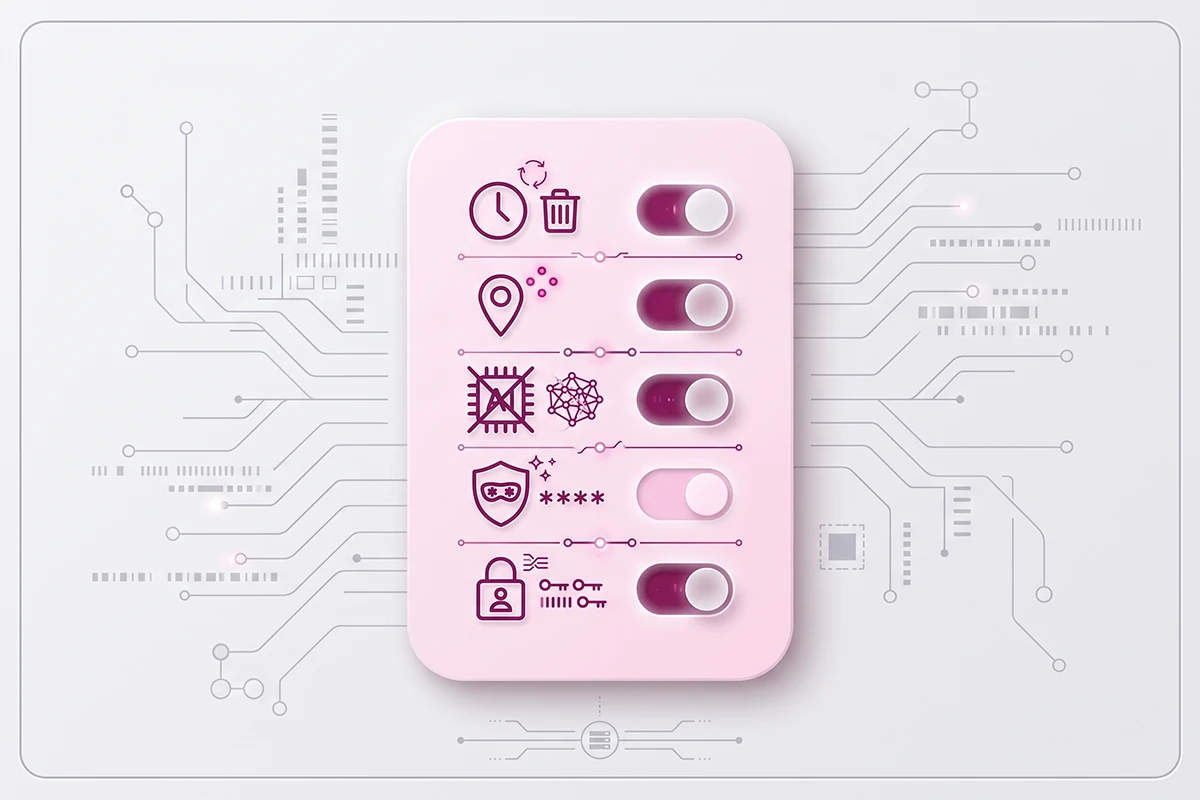
Set a retention limit. Turn on auto-delete so transcripts clear after 30 to 90 days instead of piling up forever. This single setting shrinks your risk more than anything else on the list.
Check the data region. If you sell to the EU or UK, confirm the vendor can store data in an appropriate region, or that a valid transfer safeguard is in place.
Turn off model training on your data. Some tools feed conversations back into model training by default. Look for the "do not train on our data" option, or a zero-retention setting on the AI side, so a customer's message never becomes training material.
Mask or redact sensitive fields. Better tools can strip things like card numbers before they are logged. Turn that on.
Limit who can read transcripts. If you have a VA or a small team, give transcript access only to the people who need it.
Sign the DPA and wire up consent. Get the data processing agreement on file, and connect the widget to your consent banner so it respects a shopper's choice.
None of these is hard on day one. The harder part is that they drift. A tool updates, a setting resets, a new integration quietly starts collecting more. That is why the first 30 days of monitoring matter, and why a bot that someone actually watches stays compliant longer than one you set up once and forget. Honest scope beats impressive scope here too: it is better to run a small bot you fully control than a feature-packed one you never audit.
Getting this right without a legal team
Strip away the acronyms and shopify chatbot privacy comes down to a short list. You are the data controller, so the buck stops with you. Collect only what the bot needs, disclose it plainly, and set a retention limit so transcripts do not live forever. Add the three notices: a line telling shoppers the assistant is AI, a consent moment before non-essential data collection, and a short section in your privacy policy that names the chatbot and its sub-processors.
The reason this is worth the hour it takes is not only the rules. A store that handles data carefully is a store people trust with their card, and trust is what turns a browser into a buyer. Doing this well is quietly a conversion move, not just a compliance chore.
The honest catch is that none of it stays fixed by itself. Settings reset, laws shift (the EU's AI-disclosure duty arriving in August 2026 is a live example), and a bot that was compliant in July can drift by autumn. If you want the short version to act on this week: find your retention setting, add the AI disclosure line, and update your privacy policy. Those three cover most of the exposure for a small store.
Want a chatbot that ships compliant?
The Studio Niza AI Chatbot service sets retention, disclosure, and consent up correctly, then monitors it monthly so it stays that way. $599 setup, $99/month all-in.
See how the chatbot service works →Or email contact@studioniza.com if you have a specific question about your store. I read every one.
Frequently asked questions
If you're still unsure after reading these, just send the question.
Do I have to tell customers my Shopify chatbot is AI? +
Yes, in most cases. The EU AI Act requires an AI disclosure from August 2, 2026 for bots that serve EU customers, and California's B.O.T. Act has required it for commercial bots since 2019. The simplest approach is to disclose globally with a one-line note at the start of the chat, so you do not have to guess where each shopper is.
Is my chatbot's chat transcript considered personal data? +
Usually yes. If the transcript contains anything that can identify a person, such as a name, an email, an order number, or even an IP address, it counts as personal data under GDPR and personal information under CCPA. That means you are responsible for storing it securely and deleting it on request.
Who is responsible if my chatbot vendor has a data breach, me or them? +
Both, but the customer's relationship is with you. You are the data controller, so you are accountable for how the data was handled, while the vendor is the processor bound by your data processing agreement. Under GDPR, a serious breach has to be reported within 72 hours, so you want a vendor who will tell you fast.
How long should I keep chatbot conversations? +
There is no fixed legal number. The rule is to keep transcripts only as long as you need them for support, then delete them. Many small stores set an auto-delete window of 30 to 90 days, which handles follow-up questions while keeping your stored data small.
Do I need a cookie consent banner for my Shopify chatbot? +
If the chat widget sets non-essential cookies or collects personal data before a visitor agrees, then EU and UK shoppers need to consent first. The cleanest fix is to connect the widget to the same consent tool that gates your analytics, so the bot does not run until the shopper accepts. A banner that loads after the tracking already fired does not count as valid consent.
Does a small Shopify store really need to worry about GDPR for a chatbot? +
Yes, if you have any EU or UK visitors. GDPR applies based on where your shoppers are, not where your store is or how small it is. For a small store, enforcement usually looks like being told to fix a problem rather than a large fine, but the obligation is still real.