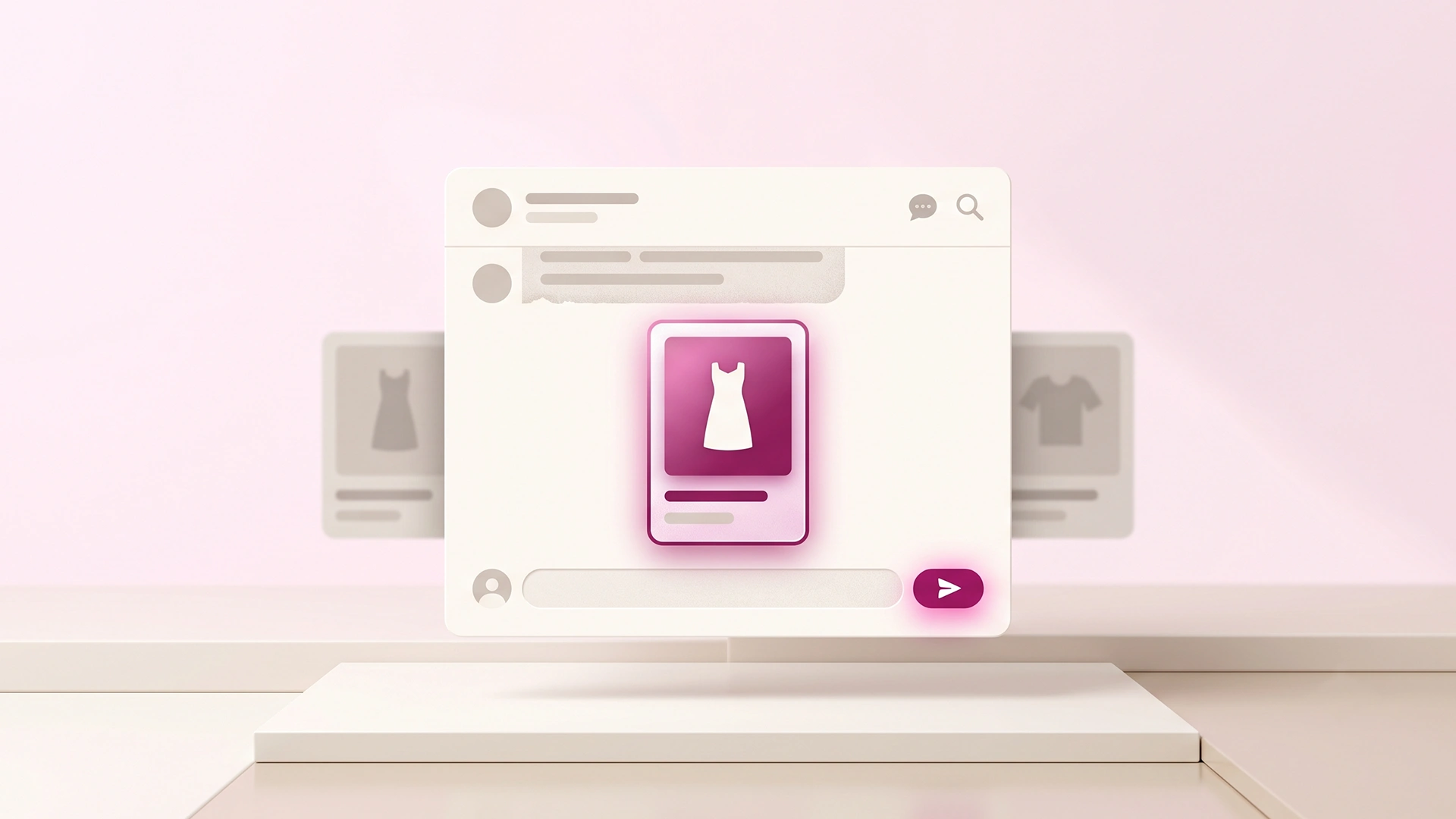
You added products because each one deserves a place. Your shopper does not always see it that way. When someone lands on a broad or similar-looking catalog and cannot tell which item is right for them, they often do the easiest thing available. They leave.
That gap between "I want something like this" and "this is the one" is where a lot of small stores lose the sale. Chatbot product recommendations on Shopify exist to close it. Instead of asking the shopper to filter, compare, and guess, the chatbot asks a few questions and points them to the product that actually fits.
Done well, this is the moment a chatbot stops being a support cost and starts being a sales tool. It is also easy to do badly, in ways that annoy shoppers or, worse, recommend the wrong thing with total confidence. This post covers how a chatbot maps a shopper's answers to the right product, the real difference between a scripted finder quiz and an AI recommendation, how to feed the bot accurate data so it does not guess, the guardrails that stop it overselling, and where a gentle upsell is welcome versus where it just feels pushy.
If you are still deciding whether you need one at all, start with what a Shopify chatbot actually does. This post assumes you are past that and ready to set discovery up properly.
Why a big or confusing catalog quietly costs you sales
More choice feels generous. For the shopper, it often is not. When people face too many similar options, a share of them stop deciding altogether.
The most cited study here is a classic supermarket test. A display of six jams led to more purchases than a display of twenty-four, even though the bigger display drew more lookers. The research summarized by UCLA Anderson found the purchase rate dropped as the option set grew, and later work suggests the slowdown can start at just a handful of choices. The effect has a name most owners feel before they can label it: choice overload.
Your store is not a jam table, but the mechanism is the same. A shopper who cannot quickly tell your "daily" serum from your "intensive" one, or your beginner kit from your pro kit, carries a small worry that they will pick wrong. That worry is enough to make them close the tab and mean to come back later. Most never do.
This shows up in your numbers as healthy traffic and a weak add-to-cart rate. It also feeds cart abandonment, which the Baymard Institute puts around 70 percent on average across ecommerce. Not all of that is discovery, but a real slice of it is people who added something they were unsure about and never came back to confirm.
A chatbot helps here because it does the narrowing for the shopper. Instead of twenty products on a collection page, they get one clear answer with a reason attached. If you are not sure the volume justifies it yet, here is an honest look at whether a chatbot is worth it for a small store.
What product recommendations in a chatbot actually do
Strip away the marketing and a recommendation chatbot does one simple thing. It turns a vague need into a specific product. The shopper says what they want in plain language, the bot asks a couple of clarifying questions, and it returns a match with a short reason.
That reason matters more than most owners expect. "This one, because you said sensitive skin and a small budget" builds far more confidence than a silent product card. People trust a recommendation they can see the logic behind.
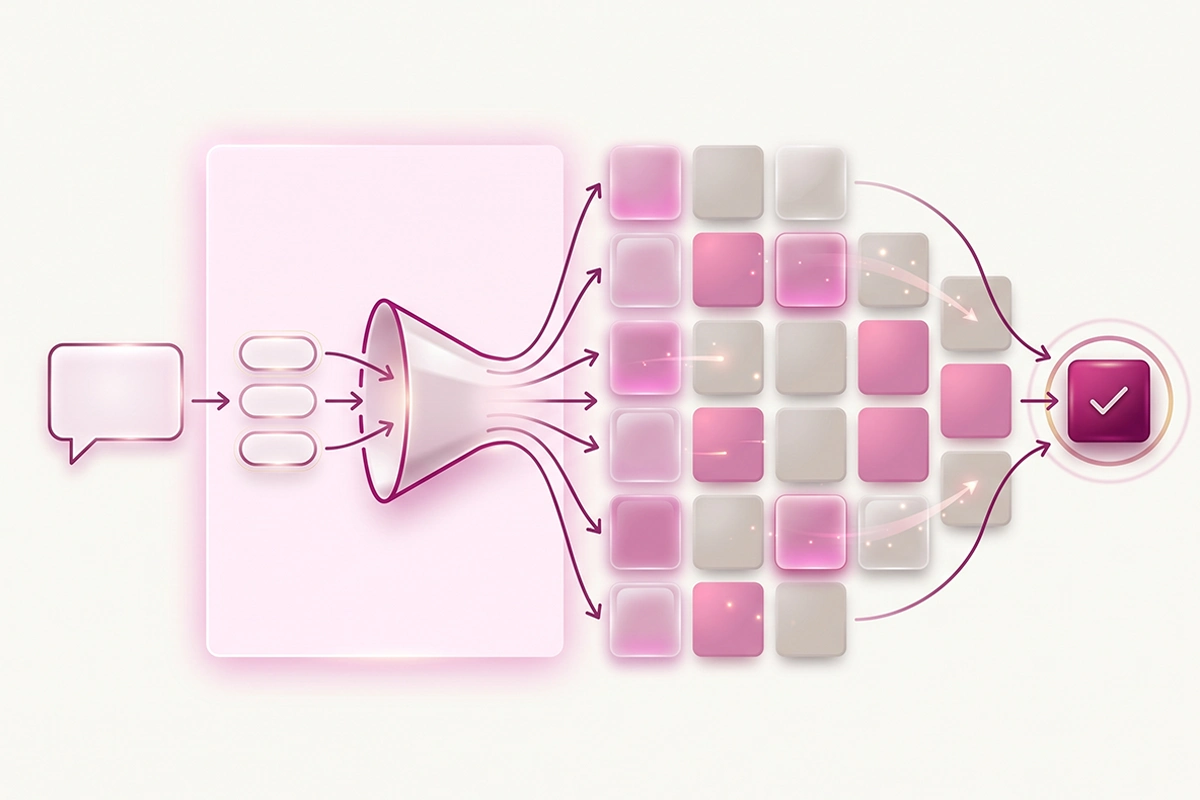
Under the hood, the bot is mapping answers to attributes. "A gift, under fifty dollars, for someone who likes strong scents" becomes a filter across price, category, and product tags, then a ranked shortlist, then usually a single top pick with one alternative. This is what people mean by an AI product finder on Shopify, or by conversational merchandising: the same narrowing a good salesperson does on a shop floor, done in chat.
The important part is that a recommendation is only as good as the questions behind it. A bot that asks nothing and pushes a bestseller is not recommending, it is guessing in public. A bot that asks two or three sharp questions can feel genuinely helpful, because it is.
Scripted finder quiz vs AI recommendation: which do you need?
There are two common ways to build product discovery in Shopify, and they are not the same tool. Owners often buy one expecting the other.
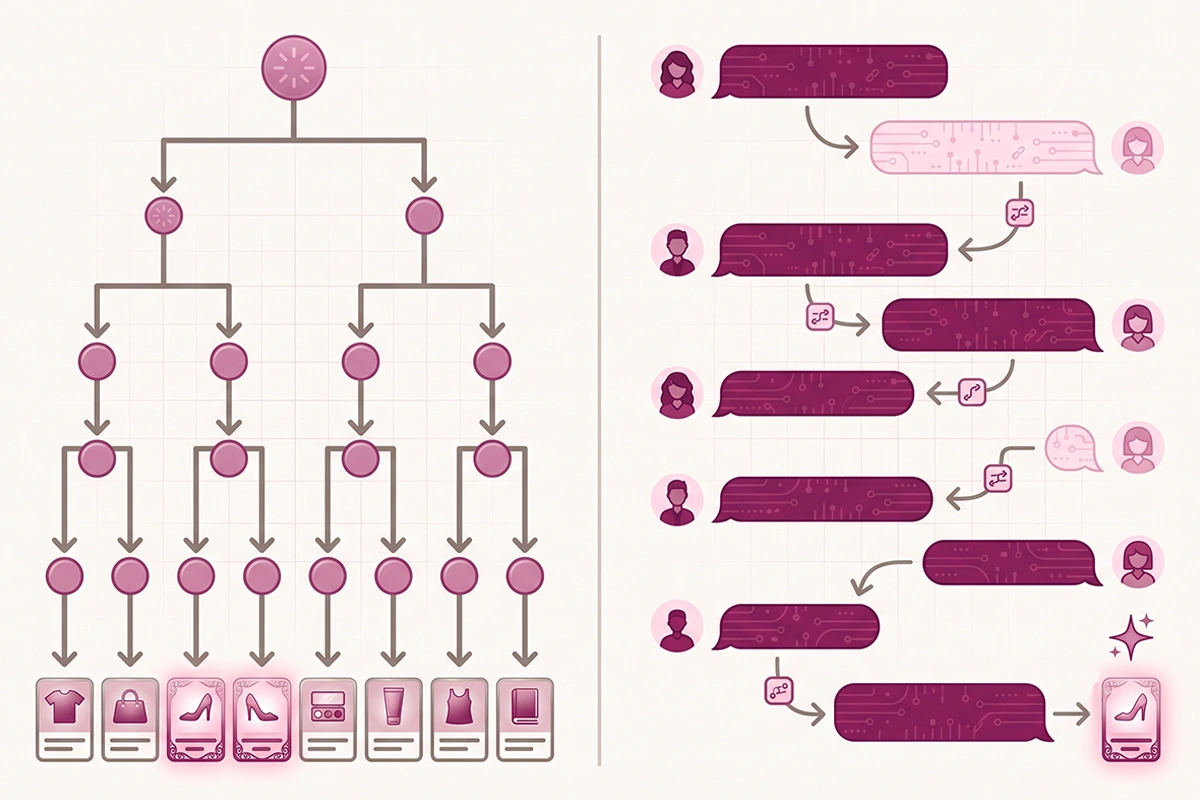
A scripted finder quiz walks the shopper through a fixed set of questions and matches their answers to products using rules you set. Apps like RevenueHunt and Octane AI do this well. You decide that "oily skin plus a small budget" points to product A, and it always does. It is predictable, easy to explain, and strong when the decision follows a clear path, like skincare, supplements, sizing, or gift finders.
An AI recommendation works through open conversation instead of a fixed form. The shopper can type something you never scripted, and the bot reasons across your product data to answer. Tools like Rep AI and Zipchat sit here. This handles the messy questions a quiz cannot, like "can I use this with my other serum" or "which of these is better for travel."
| What to compare | Scripted finder quiz | AI chatbot recommendation |
|---|---|---|
| How it decides | Fixed rules you set in advance | Reasons over your live product data |
| Unexpected questions | No, it stays on script | Yes, it adapts in the conversation |
| Best for | Known, simple decision paths | Broad catalogs and layered questions |
| Setup effort | Build the questions and rules once | Feed clean data, then monitor it |
| Risk to watch | Dead-ends when the path was not scripted | Wrong answers if the product data is thin |
| Example tools | RevenueHunt, Octane AI | Rep AI, Zipchat |
Neither is automatically better. A quiz can outperform AI when the decision is simple and the paths are known, because it never wanders. AI earns its place when shoppers ask unpredictable, layered questions and a rigid form would dead-end them. Plenty of stores end up using both: a quiz on the collection page, and a chatbot for everything the quiz did not anticipate.
If you want the free way to test the idea before paying for anything, Shopify Inbox includes basic product suggestions inside chat. It is limited, but it will tell you whether your shoppers engage with recommendations at all.
How to feed your chatbot accurate product data so it doesn't guess
Here is the rule that decides whether your recommendations help or hurt. The bot should only answer from your real product data, never from what it "knows" in general. A recommendation is a promise about a specific item. If the bot invents the promise, you own the fallout.
Feeding it well means four things. Give it clean product titles and descriptions, so it understands what each item is. Tag products with the attributes shoppers actually ask about, like size, material, skin type, use case, and price band, because a bot matches on attributes, not vibes. Keep inventory and price connected, so it never recommends something you cannot sell. And write down your policies for shipping, returns, and warranty, so a "which should I buy" chat does not fall apart at "and can I return it."
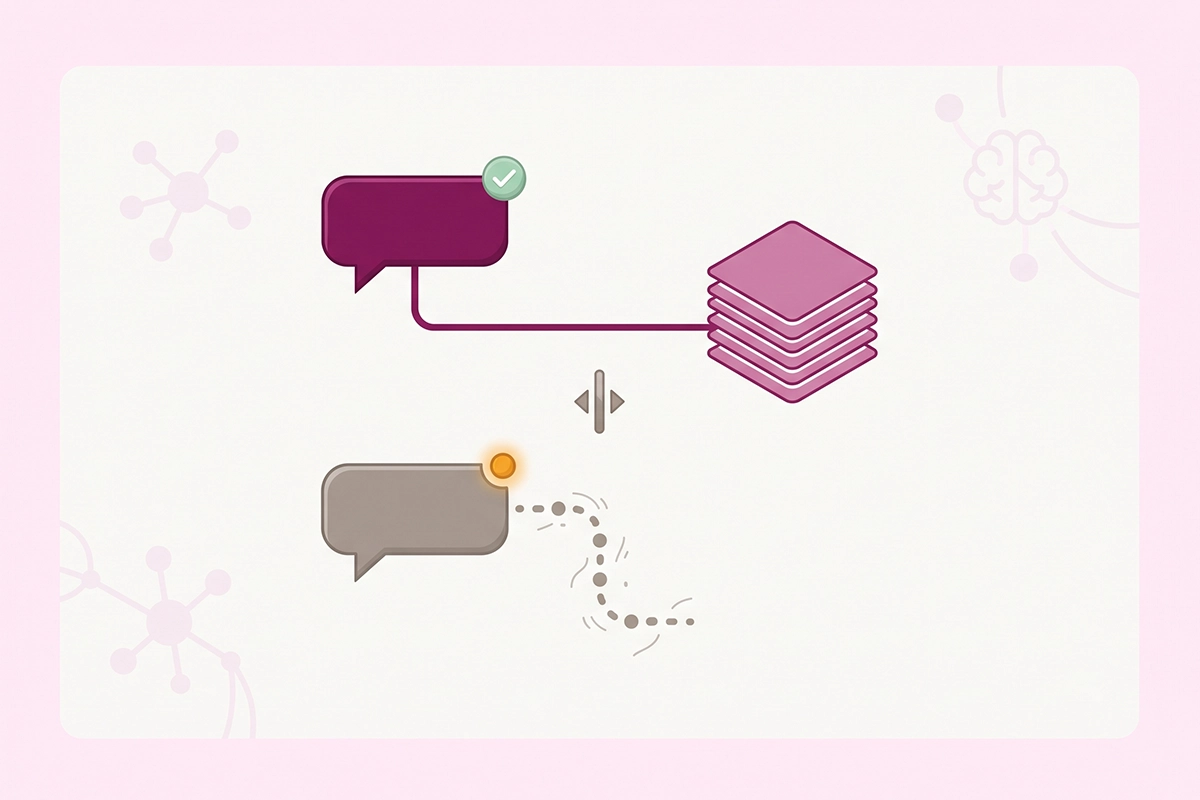
The deepest work is attribute tagging, and it is where most stores are thin. If your products only differ by a line of description, the bot has little to reason with. The fix is boring and effective. Decide the three or four attributes that actually drive the choice in your category, then make sure every product carries them. This is the same groundwork behind training a chatbot on your own store data.
One honest thing about running these. A recommendation engine is only as current as its last update. When you add a product, the bot does not automatically know it exists in a useful way until that product is in the data it reads. In my own chatbot work, a new product is not really live for recommendations until it has been added to what the bot can see and match on. Build the habit of updating the bot when you update the catalog, or discovery quietly drifts out of date.
The guardrails that stop your chatbot from overselling
A confident wrong answer is worse than no answer. The whole risk of recommendations is a bot that fills a gap with a guess and says it like a fact.
This is not hypothetical. In April 2026, WIRED asked ChatGPT to name the products its own review team recommended, and the bot fabricated picks the publication had never endorsed. That is an ungrounded model doing exactly what an ungrounded store bot will do: inventing a plausible answer when it does not have the real one. Amazon's shopping assistant avoids this by only recommending items actually sold on the platform, which is the right instinct to copy.
The common failures are specific and worth naming. A write-up from support platform Gorgias lists the usual ones: claiming a product is waterproof when it is only water-resistant, inventing a discount code that fails at checkout, or promising a return window you do not offer. Each one is a recommendation the bot made up.
Three guardrails prevent most of it. First, ground every answer in your product data, so the bot can only recommend what exists. Second, give it permission to say "I am not sure" and stop, instead of guessing, because a bot that admits a gap keeps your trust. Third, set a clear point where it stops trying and hands off to a human, especially on anything about safety, compatibility, or money.
The test to run before you trust it: ask your own bot five awkward questions you already know the answer to, including one about a product you do not carry. If it invents an answer for the product that does not exist, it is not ready to recommend anything.
Where a chatbot upsell is welcome, and where it's pushy
A recommendation and an upsell are close cousins, and the difference is timing. Help someone decide, and a suggestion feels like service. Interrupt someone who has already decided, and the same suggestion feels like a sales tactic.
A chatbot upsell on Shopify works best when it answers a need the shopper already has. If they are buying a camera, "most people also grab a case and a spare card" is genuinely useful. If they picked a starter kit, "the refill saves you reordering in three weeks" is a real reason, not a grab for a bigger number. The upsell earns its place by making the first purchase work better.
It turns pushy when it ignores the answer the shopper gave. Pushing the premium tier at someone who told you they want the budget option reads as not listening. Stacking three add-ons onto a single cheap item feels like the bot is working for you, not for them. A good rule is one relevant suggestion, tied to what they bought, then stop.
There is a quieter, more honest use of the same skill. When a shopper leaves mid-decision, a well-timed chat can nudge an abandoned cart back by answering the question that stalled them, rather than by dangling a discount. That is discovery finishing the job it started, which converts better than pressure ever does.
How to start without overbuilding it
You do not need a perfect system on day one. You need the smallest version that answers real questions, and improvement from there.
Start by writing down the five questions shoppers ask most before buying. Your inbox and chat logs already have them. Those five questions are your recommendation logic in plain form, and they tell you whether a simple quiz or a full conversational bot fits your catalog.
Then get your product data honest before you automate anything. Clean titles, the three or four attributes that drive the choice, accurate stock and price. A modest bot on clean data beats a clever bot on messy data every time.
Launch narrow. Point the bot at one category or one common decision, watch the real conversations for a week, and fix what it gets wrong. Recommendations improve by reading transcripts, not by guessing at what shoppers will say.
Measure two things above the rest. Whether shoppers who use the recommendation add to cart more than those who do not, and whether the bot ever recommends something wrong. The first tells you it is working. The second tells you it is safe. Everything else is detail.
Product discovery is where a chatbot stops being a help desk and starts paying for itself. It will not fix a catalog that genuinely lacks the right product, and it will not rescue thin product data. But for a store whose shoppers keep bouncing because they cannot tell which item is theirs, a chatbot that recommends the right product is one of the highest-return additions you can make.
Want a chatbot that recommends the right product?
The Studio Niza AI Chatbots service builds a bot trained on your real catalog, so it recommends from your actual products instead of guessing, and I monitor it every week. Setup is $599, then $99 per month all-in.
See how the chatbot service works →Or email contact@studioniza.com if you have a specific question about your store. I read every one.
Frequently asked questions
If you're still unsure after reading these, just send the question.
Can a Shopify chatbot recommend products from my catalog automatically? +
Yes, but only if it is connected to your product data. The bot reads your titles, tags, price, and stock, then matches a shopper's answers against them. It does not know your catalog by magic, so accurate product data is what makes automatic recommendations reliable.
Do I need a big catalog for chatbot product recommendations to be worth it? +
Not a huge one, but you need enough similar options that shoppers struggle to choose. If you sell five clearly different products, a chatbot adds little. If you sell thirty variations that look alike, recommendations start earning their keep.
How do I stop my chatbot from recommending out-of-stock products? +
Keep the bot connected to live inventory so it only suggests items you can actually sell. If it reads a static export instead of current stock, it will eventually recommend something sold out. Connected inventory plus a rule to skip zero-stock items solves this.
Can I use both a product quiz and a chatbot? +
Yes, and many stores do. A scripted quiz handles the common, predictable decision on the collection page, while a chatbot catches the unpredictable questions the quiz did not anticipate. They cover different gaps, so running both is reasonable.
How much does a chatbot with product recommendations cost for a small Shopify store? +
Self-serve chatbot apps generally run from about $39 to $279 per month with no setup help. Managed services that build and monitor the bot for you typically run $300 to $2,000 per month. The Studio Niza chatbot is $599 setup plus $99 per month all-in, which sits deliberately below the managed range.
How do I know if the chatbot is recommending the right products? +
Read the transcripts and check two things: whether shoppers who used the recommendation added to cart, and whether the bot ever suggested something wrong or unavailable. A weekly read of real conversations catches bad answers faster than any dashboard. Fix what it gets wrong and the recommendations sharpen over time.