If your Shopify blog is picking up impressions while the clicks line stays flat, nothing is broken. That gap is what zero-click search in ecommerce looks like from inside your own Search Console, and it is now the normal shape of organic search rather than a warning sign.
I can show you exactly what it looks like, because it is happening to this site. Between May 8 and August 1, 2026, studioniza.com earned 8,816 impressions and 47 clicks. That is a click-through rate of 0.53 percent. Of the 324 queries the site ranked for, 322 sent zero clicks.
Most advice about this either tells you not to worry or tells you blogging is finished. Both are unhelpful. The useful version is more specific: the scoreboard changed, and if you are still reading the old one, you will make bad decisions about where your time goes.
This post covers what zero-click search actually means with current numbers, why impressions are now the pool AI engines draw citations from, which content shapes still earn attention, what to stop writing, and how to measure a blog when clicks undercount its value. Written for new Shopify stores, where the entire content budget is usually one person's evenings.
What zero-click search actually means in 2026
A zero-click search is a search where someone finds their answer on the results page and never visits a site. It is not new. Featured snippets, knowledge panels, and calculators have been doing this for years.
What changed is the pace. SparkToro, working with Similarweb clickstream data, found that 68.01 percent of United States Google searches ended without a click between January and April 2026, up from 60.45 percent in 2024. A 7.5-point move in two years is the steepest jump they have measured.
That headline number is the one everyone quotes. It is also the least useful one for a store owner, because it averages every kind of search together.
The number that actually matters is your query type
Seer Interactive's April 2026 study, covering 53 brands and 5.47 million tracked queries, breaks AI Overview appearance down by what kind of question is being asked. Informational queries surfaced an AI Overview about 36 percent of the time. Commercial queries, roughly 8 percent. Transactional queries, about 5 percent.
Inside the informational bucket the spread gets wider still. Comparison queries phrased as X versus Y triggered an AI Overview 95.4 percent of the time. Question-format queries starting with what, why, how, is, or are triggered one 85.9 percent of the time. Review queries, 86.3 percent.
Read that list again and you are looking at most blog calendars. If your posts are comparisons, explainers, and buying questions, you are operating in the most exposed territory there is. Your product pages are largely fine. Your blog is where the change lands.
My own numbers, since I would rather show you mine
Case studies are easy to cherry-pick. Mine are not flattering, which is the point. Here is the full picture from Google Search Console for the first 86 days this site existed.
| Metric | Result | What it tells you |
|---|---|---|
| Impressions | 8,816 | Google is indexing and surfacing the content |
| Clicks | 47 | Almost none of that visibility becomes a visit |
| Click-through rate | 0.53% | Roughly 1 visit per 188 times a link is seen |
| Queries ranking | 324 | Topical coverage is building normally |
| Queries with zero clicks | 322 of 324 | The gap is the rule here, not an outlier |
| Pages with zero clicks | 46 of 62 | Not a single bad post. A pattern. |
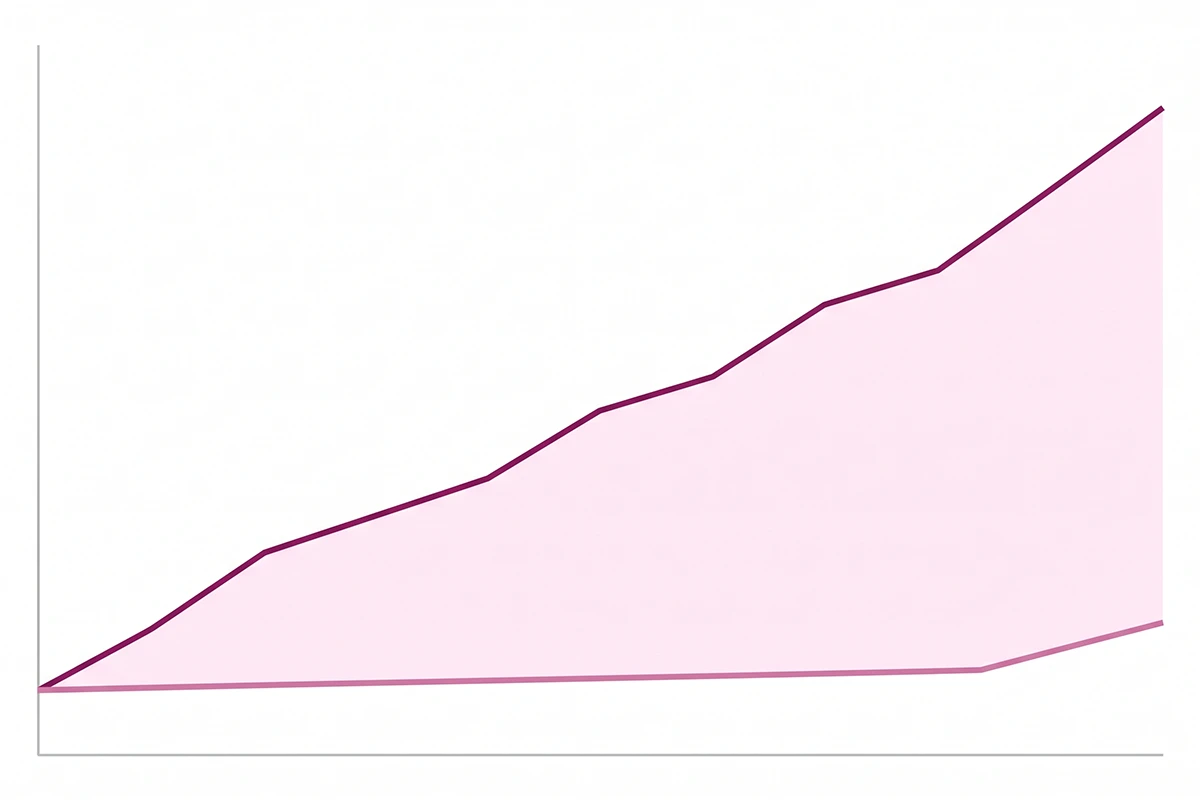
One page tells the story on its own. A post targeting the query "shopify seo checklist" collected 2,224 impressions and 3 clicks at an average position of 30.8. The query itself shows 1,644 impressions and zero clicks. Plenty of people are asking. Almost nobody is arriving.
The device split is the part I did not expect. Desktop produced 7,372 impressions and 19 clicks, a rate of 0.26 percent. Mobile produced 1,417 impressions and 28 clicks, a rate of 1.98 percent. Mobile earned fewer than a fifth of the impressions and more clicks in absolute terms.
I want to be careful here. One small site over three months is not proof of anything, and average position is a heavy factor. But the direction is consistent with what larger studies report: the surfaces where AI summaries take up the most room are the surfaces where clicks thin out fastest. I wrote up the full 90-day breakdown separately if you want the daily curve.
Why impressions stopped being a vanity metric
For most of the last decade, impressions were the number you skipped past on your way to clicks. That has changed, and not because anyone decided to be generous about it.
An AI Overview is assembled from sources. Those sources are drawn from pages Google already considers relevant enough to surface for the query. Google counts an impression when your link appears inside an AI Overview or AI Mode, and per Search Console's own documentation, the entire AI Overview occupies a single position with every link inside it assigned that same position.
In plain terms: impressions are the pool you have to be in before a citation is even possible. No impressions, no citation. No citation, no mention when the assistant answers your buyer's question.
Being cited is worth roughly twice as much as being present
Seer's study translated the difference into click volume, which is the version that is actually usable. For every million organic impressions on informational queries:
| Situation | Organic clicks per 1M impressions | What to take from it |
|---|---|---|
| No AI Overview on the results page | ~33,500 | Still the best place to rank. Find these queries. |
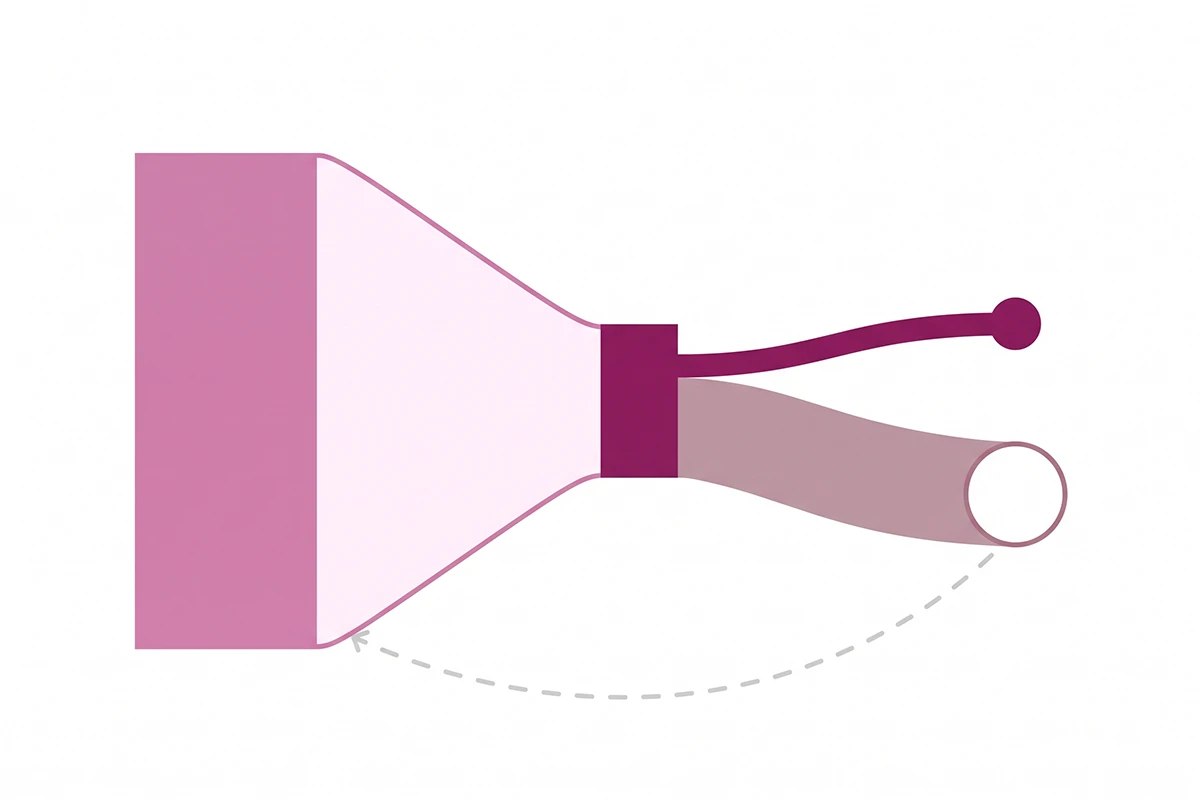
| AI Overview present, your brand cited | ~20,743 | A citation roughly doubles your clicks versus not having one |
| AI Overview present, your brand not cited | ~9,445 | You are on the page and functionally invisible |
Being cited delivers about 120 percent more clicks per impression than not being cited on the same results page. It still lands about 38 percent below what you would get with no AI Overview at all. Both halves of that sentence are true and both matter: citation is the best available outcome on an AI Overview page, and it is not a return to 2019.
The number most people are quoting is a year old
You will see "AI Overviews cut click-through rate by 61 percent" and "cited brands get 35 percent more clicks" repeated everywhere. Those come from Seer's September 2025 study and they were accurate for that window.
The April 2026 update tells a more complicated story. Organic click-through rate on AI Overview queries bottomed out at 1.3 percent in December 2025, then climbed to 2.4 percent by February 2026. Every informational and transactional organic segment beat the model's projection. The decline did not continue in a straight line.
There is also a measurement trap worth naming. When brand-cited click-through rate dropped sharply in late 2025, clicks were essentially flat and impressions had more than doubled. The rate fell because the denominator grew. That is a site earning more citations, not fewer clicks. Always read clicks and impressions separately before deciding something is going wrong.
The content shapes that survive zero-click
Four shapes hold up. None of them is a format trick, and all of them come down to being worth quoting.
Direct answers in the first two sentences
Put the answer at the top of the section, then explain it. If a post buries its point under three paragraphs of setup, an AI engine has to work to extract the useful part, and it will usually pull from a page that made it easy instead. Google's own guidance on AI features notes that clicks from AI Overview results tend to be higher quality, with people spending more time on the page. Earning that click starts with being the clearest source. I broke down the structural details in a post on writing Shopify blog content that gets cited in AI Overviews.
First-hand data nobody else has
The single most defensible thing you own is your own numbers. Your return rate by product category. How long your average customer waits before a second order. What your support inbox asks most in November. An AI engine cannot synthesize that from other pages, because the data only exists on yours.
This post is the example. The Search Console figures above are not repeatable by anyone else writing about zero-click search.
Comparison posts with an actual verdict
Comparison queries trigger an AI Overview 95.4 percent of the time, which means writing one and hoping for clicks is a losing bet. Writing one to be the source it quotes is a different exercise.
The difference is a verdict. "Both are good options, it depends on your needs" is not quotable. "Under $200K a year, the free tier covers you, and here is the specific feature that changes at scale" is. Tie the recommendation to store size, budget, or a named constraint.
FAQ schema and clean structure
Question-format queries trigger an AI Overview 85.9 percent of the time. If you are going to write them, mark them up. FAQ schema hands an engine a clean question-and-answer pair instead of asking it to infer one from your paragraphs. It costs almost nothing to add and it makes your content machine-readable, which is now half the job.
What to stop writing
This is the part most content advice skips, because telling people to write less is a poor way to sell content services. It is still the right answer.
Stop writing thin definitional posts. "What is dropshipping." "What is a conversion rate." These are exactly what an AI Overview handles completely, and there is nothing left over for you. You will earn impressions and no clicks, permanently.
Stop writing listicles with no position. A list of ten review apps with a neutral paragraph each is a summary of information already available. That is what the summary layer does now, and it does it faster.
Stop writing anything you could have found in five minutes. If the research took you five minutes, the post carries five minutes of value, and an engine can reproduce it instantly.
On most new-store blog calendars that is roughly a third of the planned posts. Cutting them is not a loss. It is the frequency question answering itself: fewer posts with something in them beats more posts without. I would rather publish two posts a week that hold up than seven that do not, and I tell clients the same thing.
How to measure a blog when clicks undercount it
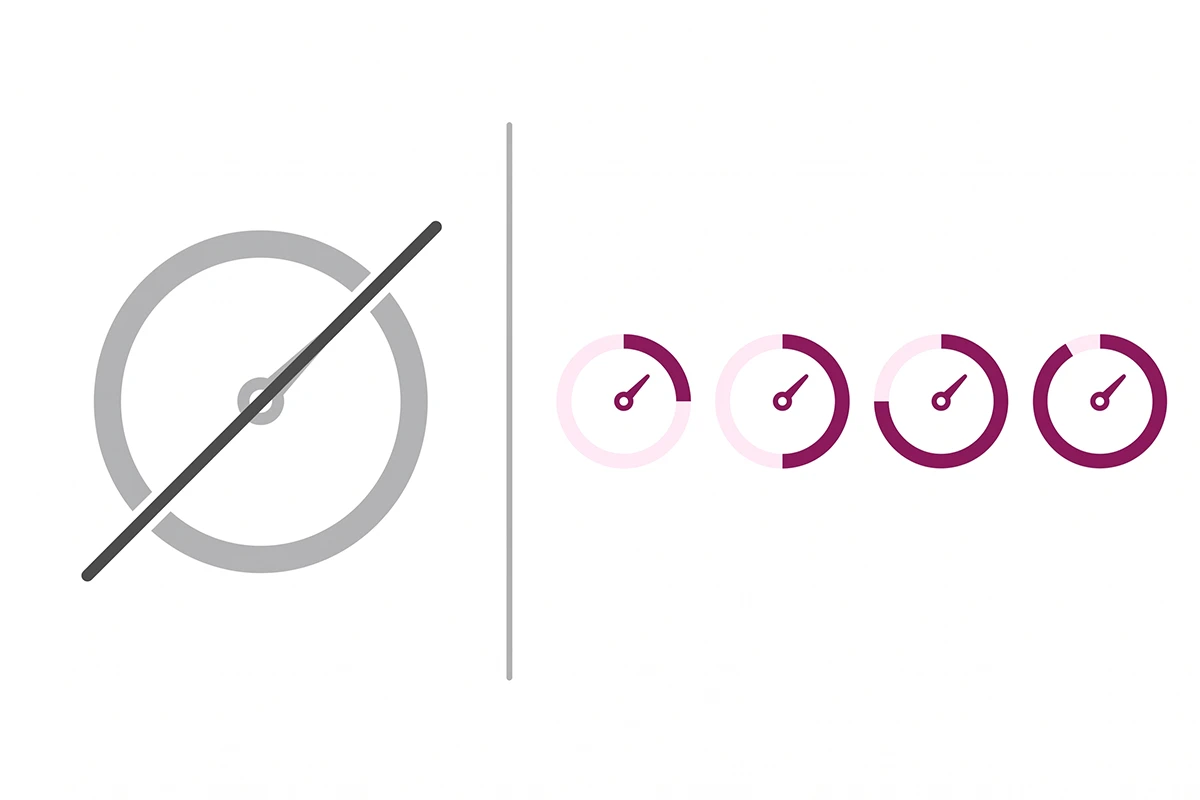
If clicks no longer capture what a blog does, you need other instruments. Four are worth tracking, and none of them requires a new tool.
| Signal | Where to find it | What a healthy trend looks like |
|---|---|---|
| AI feature impressions | Search Console, Generative AI features report | Impressions rising and spread across more than one or two pages |
| Branded search volume | Search Console, queries containing your store name | Slow, steady growth over quarters, not weeks |
| AI referral traffic | Analytics referral report, grouped manually | Small numbers, high engagement, improving conversion |
| Assisted conversions | Analytics attribution or conversion paths | Blog pages appearing anywhere in the path, not just as last click |
The Search Console report most stores have not opened
On June 3, 2026, Google launched Search Generative AI performance reports in Search Console, giving site owners a dedicated view of impressions inside AI Overviews, AI Mode, and generative features in Discover. It sits under Performance alongside the standard Search results view.
Be clear about what it is. Version one reports impressions, pages, countries, devices, and dates. No clicks, no position, no click-through rate, no query data. There is no historical backfill either, so early data starts when the report started for your property.
That limitation is the most honest signal Google has sent about the new economics. The metric they can report is exposure. The metric they cannot is the click, because increasingly there is not one.
Branded search is the slowest and most trustworthy number
When someone reads your name inside an AI answer and later searches for your store directly, that shows up as a branded query. It is delayed, hard to attribute, and almost impossible to fake, which is what makes it worth watching.
Filter your Search Console queries to those containing your store name and check the trend every quarter. If it is climbing while your blog clicks stay flat, your content is working through a channel that clicks do not measure.
AI referral traffic is small and behaves differently
The volume will look disappointing. The behaviour will not. Adobe Analytics, tracking about a trillion visits to United States retail sites, reported that retail traffic from generative AI sources grew sharply through the 2025 holiday season and converted better than other channels, with those visitors less likely to bounce immediately.
The mechanism makes sense. Someone who arrives after a conversation with an assistant has already done their comparison shopping. They land closer to a decision than a cold searcher does. A hundred of those visits is not the same as a hundred visits from a broad keyword. For the setup details, I covered how to track AI search traffic to your store in a separate post.
So is blogging still worth it for a Shopify store?
Yes, with a condition attached. It is worth it if you accept that zero-click search in ecommerce moved the payoff from click volume to being the source, and you write accordingly. It is not worth it if you keep publishing thin posts and measuring them by sessions, because that combination will disappoint you for as long as you run it.
Three things to take away. First, impressions with flat clicks is a visibility pattern, not a fault, and the fix is being cited rather than being present. Second, the shapes that survive are direct answers, first-hand data, comparisons with a verdict, and clean structure, and roughly a third of a typical calendar can go. Third, clicks alone now undercount what a blog does, so track AI feature impressions, branded search, AI referrals, and assisted conversions alongside them.
The honest part: this is slower than it used to be. Branded search moves over quarters. Citations accumulate over months. If you need traffic next week, content is the wrong lever and paid is the right one. I have written about a realistic timeline for blog traffic if you want the month-by-month version.
What has not changed is the underlying requirement. Being worth citing and being worth reading are the same problem. The engines got better at spotting the difference, which is inconvenient if you were publishing filler and useful if you were not.
Want posts built to be the source, not the summary?
The Studio Niza Blog Content service writes posts with the answer up top, real data in the middle, and FAQ schema an AI engine can actually parse. Pricing starts at $449/month.
See pricing & services →Or email contact@studioniza.com if you have a specific question about your store. I read every one.
Frequently asked questions
If you're still unsure after reading these, just send the question.
What is zero-click search in ecommerce? +
Zero-click search is any search where the person gets their answer on the results page and never visits a website. In ecommerce it usually shows up as an AI Overview, a featured snippet, or a shopping module answering the question above the links. SparkToro found that 68.01 percent of United States Google searches ended without a click between January and April 2026, up from 60.45 percent in 2024. For a Shopify store, it means a growing share of the people who see your content never land on your site.
Is blogging still worth it for a Shopify store in 2026? +
Yes, but the payoff moved. Blog posts used to earn traffic directly through clicks. Now they earn citations, brand recognition, and the impressions that AI engines draw from, and some of those turn into clicks later. If you judge a post only by the sessions it produced in its first month, most posts will look like failures even when they are working.
Why does my Shopify blog get impressions but no clicks? +
Usually because the query you rank for is being answered above your link. Informational queries trigger an AI Overview roughly 36 percent of the time, and comparison queries phrased as X versus Y trigger one about 95 percent of the time. If your average position sits between 6 and 20 on those queries, you are visible but not the first thing anyone reads. It is a visibility problem with a specific shape, not a technical fault.
Do AI Overviews count as impressions in Google Search Console? +
Yes. Google reports AI Overview and AI Mode data inside the standard Performance report under the Web search type, and an AI Overview occupies a single position with every link inside it assigned that same position. Since June 3, 2026, there is also a separate Generative AI features report showing impressions from AI Overviews and AI Mode on their own. That report shows impressions only, with no clicks, no position, and no query data.
How do I know if my Shopify store is being cited by AI search engines? +
Check three places. The Generative AI features report in Search Console shows how often your URLs appeared inside Google AI features. Your analytics referral report shows visits arriving from ChatGPT, Perplexity, Gemini, and Copilot, which usually need to be grouped manually. And asking the assistants your own buyer questions directly tells you whether your store comes up by name. None of these is complete on its own, so read them together.
Should I stop writing comparison posts if AI Overviews answer them? +
No, but write them differently. Comparison queries trigger an AI Overview about 95 percent of the time, so assume the summary will appear and aim to be the source it quotes rather than the link it replaces. That means a plain verdict near the top, a specific recommendation tied to store size or budget, and details an AI cannot synthesize from other pages, like pricing you actually checked or a limit you actually ran into.