
You have probably done this yourself. A package is late, you open the chat window on a store, and a cheerful bubble asks how it can help today. You paste the order number. It sends you a link to the shipping policy. You type "human." It sends you the shipping policy again.
So when you consider putting a chat widget on your own Shopify store, the question is not really whether chatbots save you time. It is whether you are about to do to your customers the thing that was just done to you.
The research on whether customers hate chatbots is genuinely split, and no vendor page will tell you the uncomfortable half. Ask people what they prefer and the answer is overwhelming, and not in the bot's favour. Measure how satisfied people actually were with specific interactions and the picture shifts depending on what the bot was asked to do.
Both are true at once. Customers do not hate chatbots evenly. They hate a short, repeatable list of things bots do, and most of that list is a design decision rather than a limit of the technology.
Below: what the 2026 data shows, where bots beat a human and customers agree, the four failure modes that earn the resentment, the fixes, and an honest checklist for whether your store should run one at all. Some stores should not, and I will tell you which.
Start with the bad news: what customers say
If you only look at stated preference, the case against chatbots is close to settled. SurveyMonkey research covering roughly 2,000 US adults found that 79 percent strongly prefer dealing with a human agent over an AI one, just 8 percent prefer AI, and 89 percent want the option to reach a person available at all times.
It gets sharper. In the same body of research, among people who had recently dealt with an AI chatbot, only 10 percent came out as promoters while 76 percent came out as detractors. For the people who dealt with a human, it was 38 percent promoters and 32 percent detractors. That is not a small gap in satisfaction. That is a different experience entirely.
And before you assume the objection is really about waiting: a joint HubSpot and SurveyMonkey study of 15,000 consumers across seven markets, reported by CX Dive, found 82 percent would still prefer human support even when the wait time and total time spent were identical. Just over half said they actively dislike or hate the use of AI in service interactions.
Nor is the trend quietly resolving. A 6,000-person survey across the US, UK, and Canada comparing late 2025 to April 2026 found preference for a real person rose from 83 to 85 percent while frustration with AI agents rose from 54 to 59 percent. Worth noting who published it: that company sells human answering services. I include it because the direction matches the independent data, not because it stands alone.
If you were looking for permission to skip the chatbot, that section is your permission. But it is only half the data.
Why the satisfaction data disagrees with the preference data
Researchers at Penn State and the University of Toronto ran four studies asking people whether they wanted an empathetic response from a human or from an AI. Their paper in Communications Psychology found that participants consistently chose the human, and then rated the AI-written responses as higher in quality, better at making them feel heard, and more effortful. They picked the option they liked less.
The researchers call this the AI empathy choice paradox. Writing about the same body of work, Forbes made the point that matters for store owners: the AI label itself carries a penalty, separate from anything the AI actually does. People have been stuck in enough loops and kept away from enough humans that they now read any bot in front of them as a barrier rather than a service. That read is rational. It was earned.
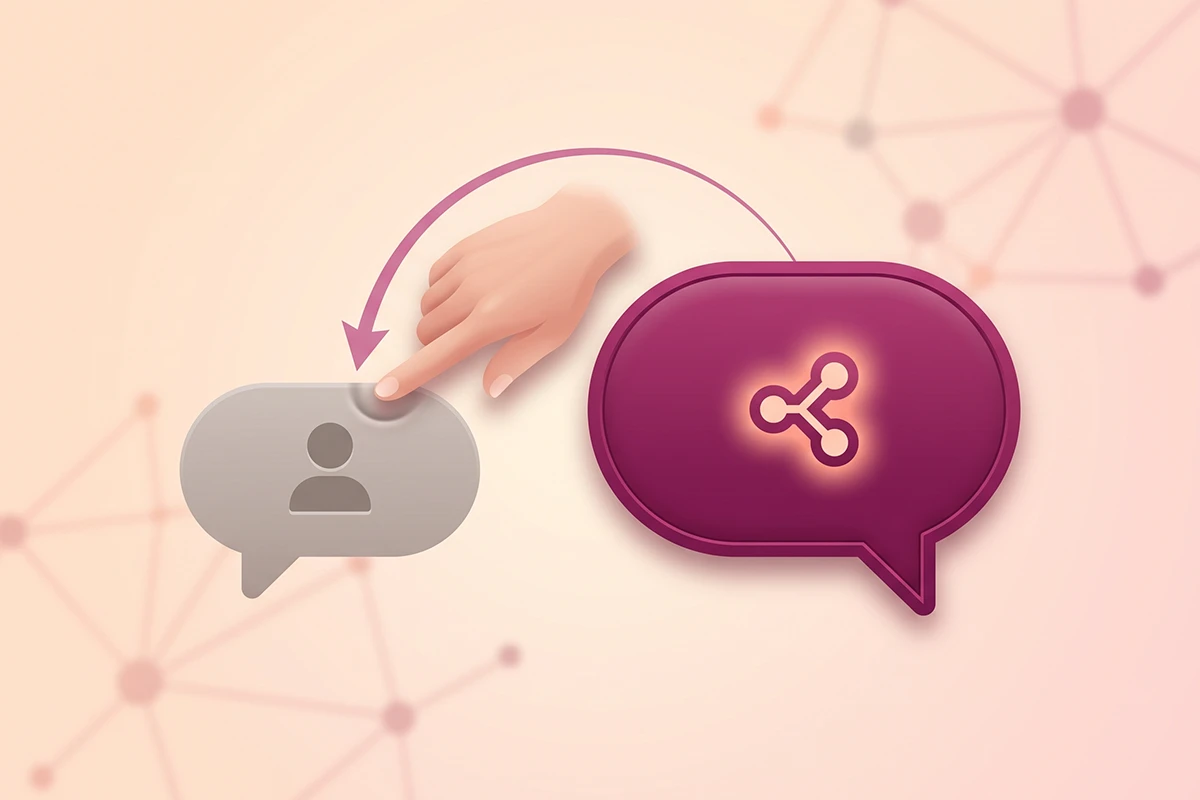
So there are two kinds of hate here, and they need different responses.
Inherited hate
The penalty your bot carries on arrival because of every other bot your customer has met. You cannot argue your way out of it or fix it with a friendlier greeting. You reduce it only by not being another data point.
Earned hate
The part that is entirely yours. Loops, dead ends, hidden humans, a bot that answers a broken-item complaint with a link. Fixable in an afternoon of scoping decisions, and the reason most of the inherited hate exists in the first place.
For a new Shopify store the takeaway is simple: assume you start in a deficit, and spend your effort on not adding to it.
Where chatbots genuinely beat a human
The same customers who say they prefer humans have also quietly raised the bar on availability. Zendesk's CX Trends 2026 report, based on responses from more than 11,000 consumers and business leaders across 22 countries, found 74 percent now expect customer service to be available 24/7, and 88 percent expect faster responses than they did a year ago.
For a solo founder those numbers sit in direct tension with sleeping. You cannot answer a tracking question at 11pm on a Tuesday, and the customer asking it does not want a relationship with you. They want a number.
The minority who do prefer AI say so plainly. In the SurveyMonkey data they cite better availability (41 percent), speed (37 percent), and more accurate information (30 percent). Nobody in that group is choosing AI for the warmth.
Order status is the textbook case: high volume, factual, already sitting in your Shopify admin, and worth less by the hour. A bot wired to live order data resolves it in seconds. I covered how a Shopify chatbot handles order tracking without a human separately. The stakes are not trivial either. Salesforce notes in its guidance on order status inquiries that 43 percent of consumers say a poor service experience puts them off buying from a brand again.
Here is the split that matters, sorted by what the customer wants rather than by how hard the question is.
| Customer question | What they actually want | Better handled by |
|---|---|---|
| Where is my order? | A tracking number, right now | Bot, if it reads live order data |
| What is your return window? | A fact from your policy | Bot |
| Will this ship before Friday? | A cutoff date and a stock check | Bot |
| Does this fit a size 8? | A fact from your product data | Bot, only if the data exists |
| It arrived broken. | Acknowledgement, then a decision | Human |
| This is the second wrong item. | Someone with authority to fix it | Human |
| I want my money back. | Someone accountable | Human |
The pattern is worth naming. Bots win when the customer wants a fact. Humans win the moment the customer wants a judgment, an apology, or a decision that costs the business money.
The four failure modes that earn the hate
Almost every genuinely enraging chat experience is one of four things. None of them are AI problems. All four are scoping problems.
1. The loop
The customer rephrases the question three ways and gets the same help article each time. This is what people mean when they say a bot is useless: not that it was wrong, but that it was wrong identically and forever. A bot that says "I do not have that" on the first attempt is less annoying than one that keeps confidently missing.
2. The missing escape hatch
There is no visible way to reach a person. The exit is buried in a menu, or it requires typing a magic word the customer has to guess. Every minute spent hunting for that exit converts mild irritation into a story they tell other people.
3. The hidden human
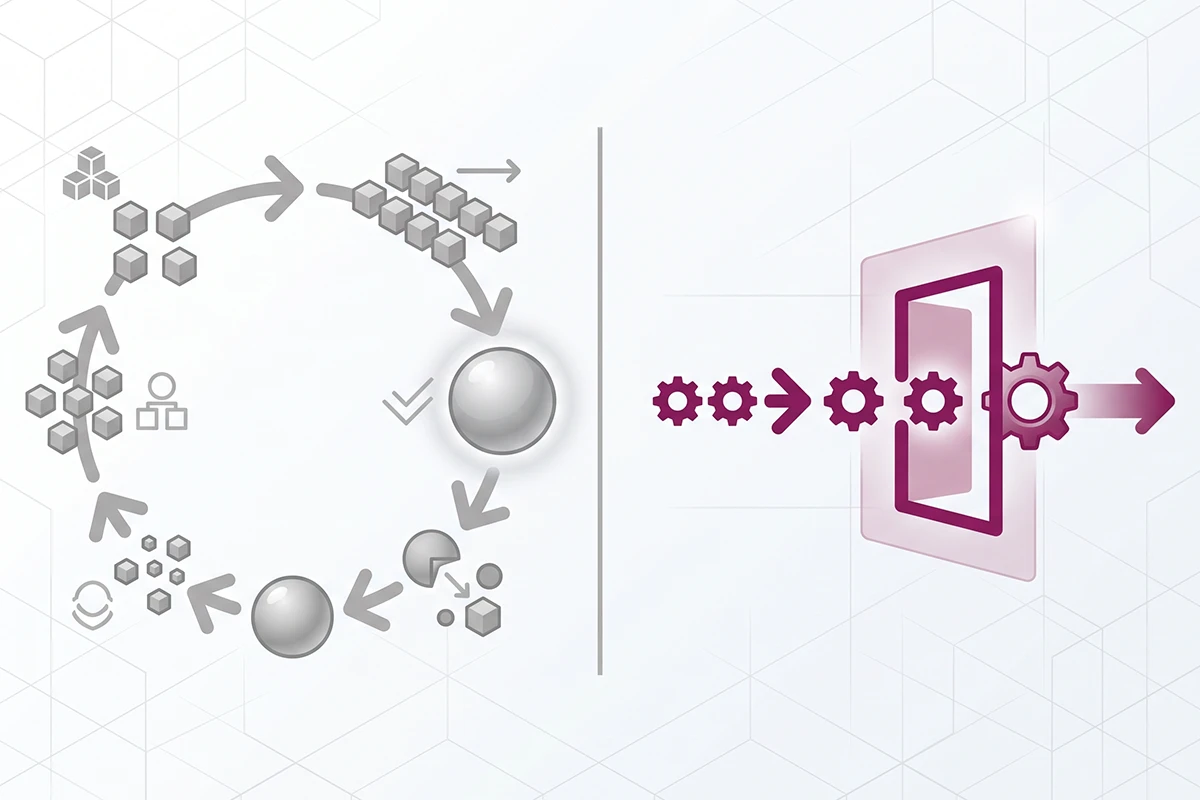
The widget is styled to look like a person is on the other end, with a name and a photo, and the customer works out midway through that it is not. This one does the most brand damage per incident, because the customer now has to reassess everything else you have told them. Disclosure up front costs you almost nothing by comparison.
4. The bot fronting an emotional complaint
Someone whose order arrived smashed does not want efficient. They want to be heard by a person who can decide something. Putting an automated first response in front of that conversation reads as the store hiding, whatever the bot actually says.
Two companies that learned this in public
Klarna is the loudest example. In early 2024 the company announced its AI assistant was doing the work of 700 support agents. By May 2025, as Entrepreneur reported, CEO Sebastian Siemiatkowski was reversing an AI-driven hiring freeze and bringing human agents back specifically so customers would always have a person available if they needed one. The bot stayed for routine volume. The humans came back for everything else.
The second example is closer to home. Shopify store owners spent a long stretch trading tips in the community forums about which phrases would get their own support bot to hand them over to an advisor. In November 2025, Shopify shipped a "Chat with a human" button on Help Center pages, saying openly that after self-serve it had not always been clear how to reach a person, and that most contacts are reached within about five minutes.
That is the whole lesson compressed into one button. The bot was not the problem. The missing door was.
Five design choices that flip the experience
These five decisions separate a bot customers thank from one they curse. None require a bigger budget. All are made before the bot goes live.
Say it is a bot in the first line
Not in a tooltip or a footer. In the greeting, before the customer invests anything. You lose a sliver of warmth and gain the thing that matters more: nobody feels tricked later. Several regions require this by law anyway, so check it against your chatbot disclosure and privacy obligations before launch.
Put the human exit on every screen
A persistent, visible button. Not a keyword to guess, not an option that appears after two failed attempts. Owners resist this because they assume everyone will press it immediately. In practice people press it when the bot has failed them, which makes a high press rate diagnostic information rather than a leak to plug.
Scope it narrow and let it say "I do not know"
Pick the five to eight questions that make up most of your inbox and let the bot own those completely. Everything else routes to you. A bot that answers eight things well and admits the rest beats one attempting everything at 60 percent accuracy, because the failures are what customers remember. What your bot says in the first 60 seconds does most of this work by setting expectations it can meet.
Wire it to real order data
A bot that cannot look up an order is a search box wearing a costume. Without live Shopify order status it falls back to policy links, and policy links are the raw material of the loop. This is the dividing line between a bot that resolves things and one that describes things.
Hand off with the transcript attached
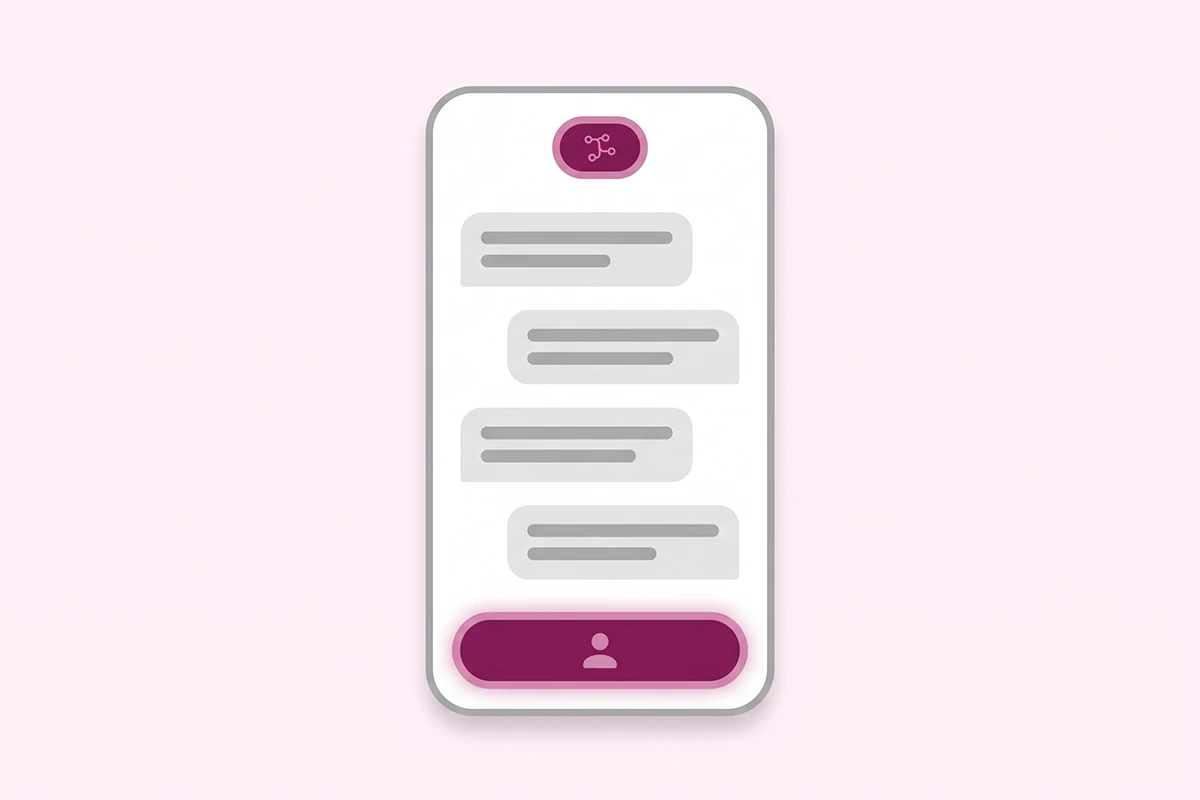
The conversation should reach you carrying everything the customer already typed. Making someone repeat their story is the second insult after the bot failed, and it spends the goodwill the handoff just bought. The mechanics are in designing the escalation to a human.
This is why every Studio Niza chatbot ships with disclosure, a visible human exit, and live agent handoff into Gorgias or Zendesk as standard rather than as an upgrade tier. Selling the escape hatch as an add-on would mean selling the failure mode as the default.
Would your store run a bot customers thank or curse?
Answer these honestly. They are ordered so the disqualifying ones come first.
Are you getting more than about 30 support messages a month? If not, you do not need a chatbot yet. A clear FAQ page and an inbox you answer within a day will serve customers better and cost nothing. Plenty of experienced store owners argue a well-organised FAQ beats a mediocre bot, and at low volume they are right. Shopify Inbox is free and will cover you for a while.
Is more than half your inbox the same handful of questions? If messages are mostly order status, shipping timing, and returns policy, a narrow bot has real work to do. If every message is different, there is nothing repeatable to automate.
Can the bot read live order data? If not, stop here. Fix that or do not launch. Everything good about bot support depends on it.
Can a customer reach you within a day when the bot fails? The bot is a filter in front of you, not a replacement for you. If the handoff leads nowhere, you have built the exact experience this post is about.
Will you actually read the transcripts? An hour a week for the first month. Skip it and the bot drifts into the failure modes above without you noticing until it turns up in a review. The chatbot metrics worth watching are few enough to check over coffee.
Four or five yeses means a bot will probably help. Two or three means fix the gaps first. A no on order data or on the handoff means the honest answer is not yet, and not yet is a perfectly good answer.
Wrapping up
So, do customers hate chatbots? They hate the badge a little and bad bots enormously. The stated preference for humans is real and not softening, but the same customers now expect answers at midnight from a business run by one person who sleeps. Both facts have to be designed around at once.
What the 2026 data supports is narrower than either the vendors or the backlash suggests. Bots earn their place when the customer wants a fact immediately. They lose badly the moment the customer wants a judgment, an apology, or someone who can decide something. A bot scoped to the first category, honest about what it is, and one tap away from you is a bot most customers will not resent. A bot that guards the door is one they will remember.
The rest is yours. Read your own inbox and find out which questions repeat, decide what the bot is not allowed to touch, and commit to being reachable when it hands off. That last one is what most stores skip, and it determines everything else. If you are under 30 messages a month, do nothing yet. A bot solving a problem you do not have is just one more thing standing between you and your customer.
Want a bot customers do not resent?
The Studio Niza chatbot build starts at $599 setup plus $99/month, and every build ships with bot disclosure, a visible human escape hatch, and live agent handoff into Gorgias or Zendesk. Not as an upgrade tier. As the default.
See chatbot pricing & scope →Or email contact@studioniza.com if you have a specific question about your store. I read every one.
Frequently asked questions
If you're still unsure after reading these, just send the question.
Do customers hate chatbots more on small Shopify stores than on big ones? +
No, and small stores actually have the advantage. Most of the worst chatbot experiences people carry around come from enterprise support systems built to keep volume away from expensive agents. A small store with a narrow catalog has fewer edge cases, which makes it far easier to scope a bot that stays inside what it genuinely knows.
Should I tell customers they are talking to a bot? +
Yes. Disclosure costs you a small amount of goodwill in the first message and saves you the much larger penalty of being caught pretending. Customers who feel misled about who they were talking to react far worse than customers who knew from the start, and in several regions disclosure is a legal requirement rather than a courtesy.
What percentage of customers will ask for a human anyway? +
It depends almost entirely on what you let the bot handle. A bot scoped to order status and policy questions typically hands off a small share of conversations, while a broadly scoped bot that tries to answer everything hands off far more. Rather than chasing a benchmark, measure your own handoff rate weekly and watch which question types drive it.
Is it better to have no chat at all than a bad chatbot? +
Often yes. A clear FAQ page and an email address you answer within a day will beat a bot that loops customers through irrelevant links. Adding chat only helps if the chat can actually resolve something, so if you cannot wire it to real order data yet, hold off.
Do chatbots hurt conversion rate on a Shopify store? +
The bot itself does not. Dead ends do. A shopper who asks a pre-purchase sizing question and gets a policy link instead of an answer leaves, and that shows up as a lost sale rather than a support complaint, which is why it goes unnoticed for months.
How do I know if my chatbot is one customers hate? +
Read fifty real transcripts in one sitting. Count how many end without an answer, how many contain a request for a person, and how many repeat the same reply twice in a row. Those three numbers tell you more than any satisfaction survey, and you can gather them in an afternoon.