
Black Friday 2026 lands on November 27. Cyber Monday is November 30. That deadline does not move, and neither does the pipeline that produces your reviews.
Here is the part most store owners find out too late: you cannot get reviews before Black Friday simply by deciding to get reviews before Black Friday. Reviews are the output of a slow sequence. An order ships, a customer uses the thing, a request email lands a couple of weeks later, and a small percentage of people write something. A request flow switched on in August produces holiday-ready review counts. One switched on in late October produces a trickle that arrives after the weekend is over.
Meanwhile the traffic you are about to pay for is the most comparison-heavy audience of the year. Shopify merchants did $14.6 billion over BFCM 2025, up 27 percent year over year, with more than 81 million customers buying across the platform. Those shoppers are not landing on your product page and deciding in isolation. They arrive with three other tabs already open.
So this is a calendar, not a tips list. Four phases, working backward from November 27: audit in August, push in September, move the proof in October, freeze in November. If you are reading this in August, you have the full runway. If you are reading it in October, skip ahead to the section on what to do when you are behind. It is shorter, and honest about what is still fixable.
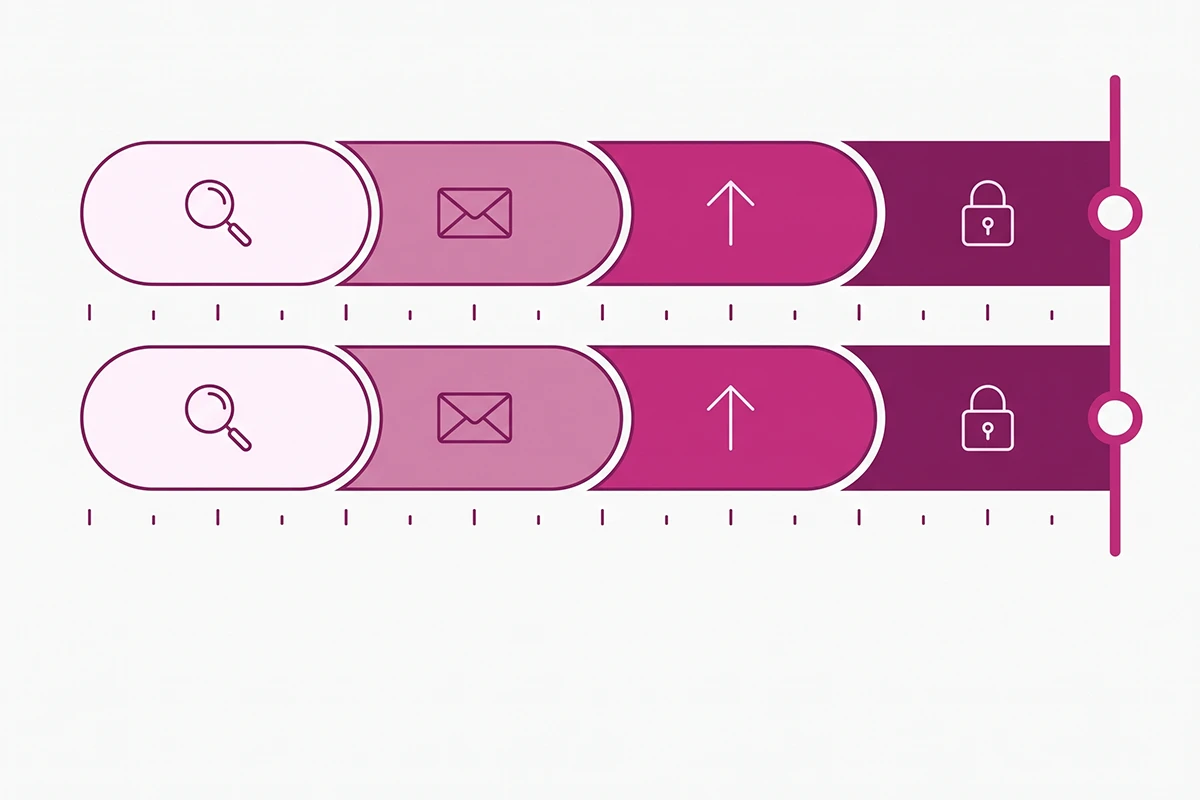
Why starting in November does not work
The math here is unglamorous, which is exactly why it gets skipped.
Take a store doing 120 orders a month. Judge.me's default review request delay is 14 days after the order event, and more than 76 percent of stores keep that default because it lands after the product has actually been used. Review request conversion for most small stores sits somewhere between 2 and 10 percent depending on category, price point, and how good the email is.
Run that at 5 percent. Roughly six new reviews a month. Start in August and you add about 24 reviews by November 27. Start in mid-October and you add six to twelve, most of which show up during or after the weekend itself.
How many reviews will a request flow actually produce in 90 days?
Multiply monthly orders by your review conversion rate, then by three. That is the whole formula. If you do not know your conversion rate yet, plan with 4 percent and correct once you have real numbers.
The important detail is that this number is per store, not per product. If you sell 40 SKUs, 24 new reviews spread evenly is under one per product. Which is why the August audit comes first. You are not trying to lift the whole catalog. You are trying to get three to five products over a line.
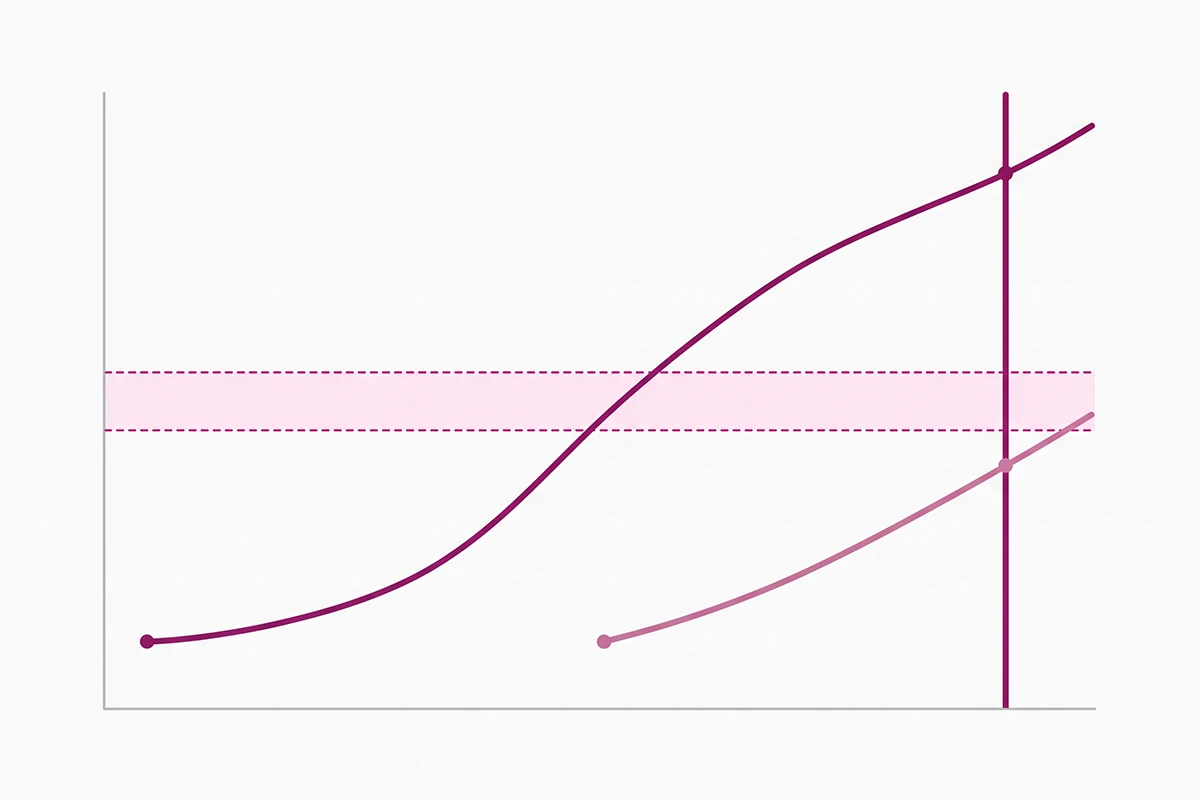
That line is lower than most owners assume. Northwestern's Spiegel Research Center found that purchase likelihood for a product with five reviews is 270 percent higher than for a product with none, and that the marginal benefit of each additional review drops off quickly after the first handful. Five is the cliff edge. Twenty is comfortable. Two hundred is not the goal. If you want the thresholds in more detail, I broke them down in how many reviews a Shopify product needs before shoppers trust it.
One honest caveat before the plan, and it is the same thing I tell clients: nobody can promise you a review count. Review volume depends on order volume, product quality, and customer satisfaction, and none of those are things a service controls. What is controllable is whether the request actually goes out every week. That is the entire job.
August: audit which products are under the trust threshold
August is diagnostic month. Two hours and one spreadsheet.
Pull your product list, sort by revenue over the last 12 months, and take the top ten. For each one write down three numbers: total review count, average rating, and the date of the most recent review. Those three columns tell you almost everything you need.
Which products do you audit first?
The ones that will carry your BFCM ads. Not the newest product, not the one you personally like best. If 70 percent of your holiday budget points at three SKUs, those three SKUs are the audit and everything else is optional.
Flag any hero product with fewer than five reviews as urgent and anything under 20 as worth pushing. BrightLocal's 2026 consumer review survey found that 47 percent of consumers will not use a business with fewer than 20 reviews. That is a business-level figure rather than a product-level one, but the underlying reaction carries over: thin looks risky, and risky loses to the other tab.
Do reviews from last spring still count?
They count toward volume. They do not count toward recency, and recency is doing more work every year.
The same BrightLocal survey found 74 percent of consumers only care about reviews written in the last three months, and 32 percent look specifically at the last two weeks, up from 20 percent the year before. Bazaarvoice's 2025 shopper survey landed in a similar place, with 53 percent saying reviews older than three months are no longer relevant.
In practice: a product with 40 reviews where the newest is from March reads worse in November than a product with 12 reviews where the newest is from last week. Your date column matters as much as your count column.
There is one more August task, and it is the one most stores skip entirely. If you plan to retire SKUs or merge variant listings before the holidays, and most stores do some version of this in Q3, migrate the reviews before you pull the listing. Sunsetting a product usually orphans every review attached to it, which means years of accumulated proof vanishes in the month before you need it most. Judge.me supports product merging natively. Other platforms need a CSV export and reimport, done deliberately.
September: tune the request flow and ask for photos
September is when the flow has to actually run. Three checks, in order.
Is it sending at all? Open your reviews app and compare requests sent in the last 30 days against orders fulfilled in the same window. If those two numbers are not close, something is being skipped: unsubscribed customers, excluded products, a per-order line item cap, orders with no email attached. Fix the plumbing before you touch the copy. If the flow is not built yet, I walked through the setup in building a review request flow that runs on autopilot.
Is the timing right for what you sell? The 14-day default works for most physical goods. Consumables that get used up in a week want a shorter delay. Furniture, apparel that needs a fit test, anything with a break-in period wants longer. International orders need more room than domestic ones, or the email arrives while the parcel is still sitting in customs. More on the tradeoffs in the best time to send a review request.
Is it asking for a photo? This is the September priority. A photo review does two jobs: it converts better on the product page, and it becomes creative you can use in ads. A text review only does the first one. The gap is large enough that I wrote a whole post on why photo reviews outperform text-only ones.
Ask plainly in the request email. A line like "if you have a photo of it in use, we would love to see it" outperforms a generic star prompt. Set a target of three to five usable photo reviews per hero product, which is enough for one ad set and one product page gallery.
Two compliance notes, because September is when impatience sets in. You can offer an incentive for leaving a review. You cannot offer one conditioned on the review being positive. The FTC final rule on fake and misleading reviews took effect October 21, 2024, carries civil penalties currently listed at $51,744 per violation, and the Commission sent its first round of warning letters in December 2025. This is a live enforcement risk now, not a theoretical one.
Second: get usage rights in writing before a customer photo goes into a paid ad. A checkbox in the review form covers it. Assuming consent does not.
October: move the proof onto your BFCM pages
October is a moving job, not a collecting job. The reviews exist by now. What matters is whether they are visible on the pages where the decision actually happens.
Start with the product page. Star rating and review count belong above the fold, directly under the product title, on mobile as well as desktop. Photo reviews belong in or beside the main gallery, not buried in a widget below the fold that nobody scrolls to. Full written reviews can live lower down.
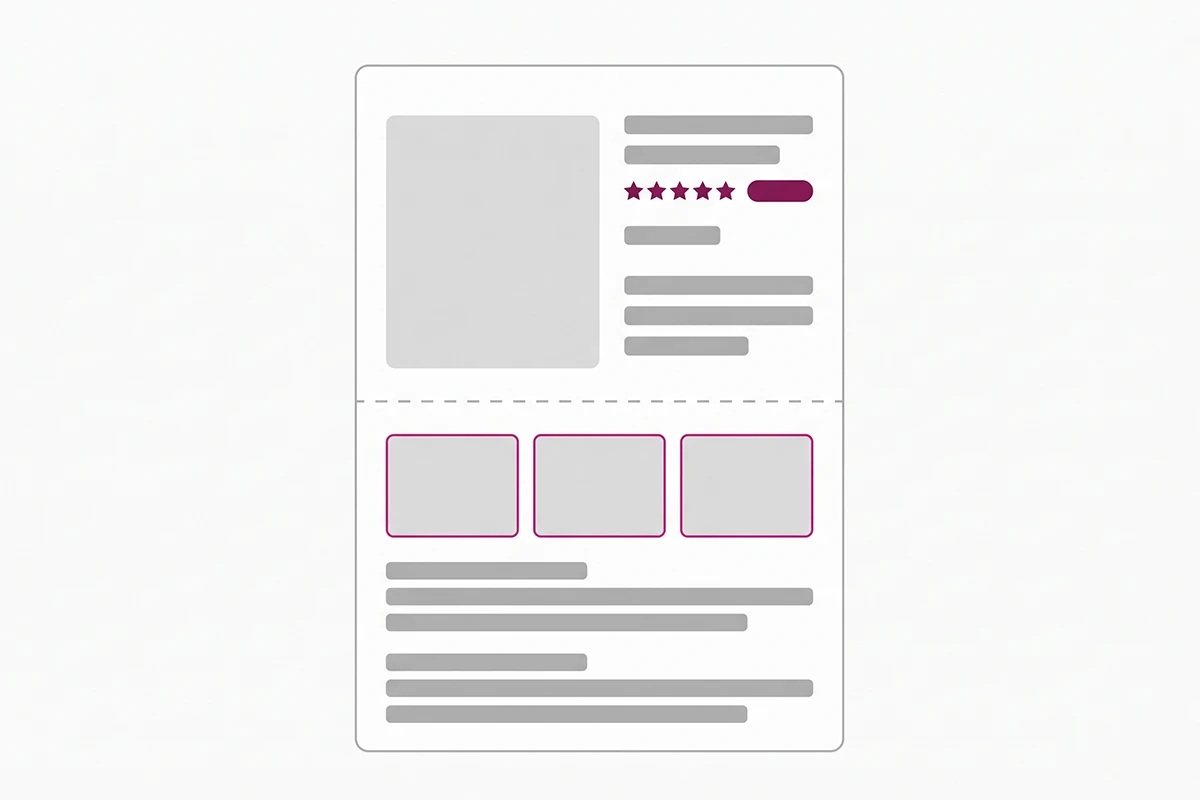
Then the BFCM landing page. If you are building a dedicated sale collection or a gift guide, it needs proof too. Pull two or three of your strongest recent reviews for the featured products and place them next to the offer, not in a testimonial band at the bottom of the page. The rest of the seasonal publishing schedule sits in the BFCM content plan.
Then the ads and email. The photo reviews you collected in September become the creative, and the written ones become subject lines and body copy. I covered the mechanics in turning reviews into ad and email creative.
Why October rather than November: 71 percent of shoppers plan to start their holiday shopping before Black Friday this year and 46 percent start before November, according to an Attentive survey of 600 US consumers reported by Retail Dive this month. Your product pages are being evaluated in October by people who buy in November. Proof that lands on November 20 arrives after a large share of the comparison already happened.
There is a second reason, and it is newer. Salesforce's 2026 holiday research found that reliance on AI assistants as the first stop in the shopping journey grew 200 percent between May 2025 and May 2026, with 74 percent of shoppers saying they trust the product recommendations they get from AI chat. Those systems read what is on the page. Reviews rendered client-side inside a widget iframe may not be visible to them at all. Check that your review app is emitting product review schema in the page source, and check it in October rather than in December.
November: the freeze, and what not to change
By November 1 the structural work is finished. From there the rule is simple: collect and respond, change nothing else.
What keeps running is the request flow, which you do not pause. Orders placed in early November produce reviews that help you in December and January, and January is when most stores have nothing new to show. Responses keep running too. Reply to reviews within a day or two, including the unflattering ones.
What freezes on November 1:
| Frozen until December | Why |
|---|---|
| Reviews app migrations | Risks orphaned reviews, broken schema, and a widget rendering wrong on your highest-traffic day |
| Product page redesigns | You cannot diagnose a conversion drop during a traffic spike |
| Widget layout tests | Traffic mix is abnormal, so the data will not tell you anything usable |
| Merging or retiring listings | That is August work, and doing it now strips proof mid-sale |
The one exception is a broken thing. If reviews stop rendering, fix it immediately. Repairing a break is not the same as making an improvement.
One more thing worth saying out loud, because November is when nerves show up. A 4.3 average is fine. Spiegel's research found purchase likelihood peaks somewhere in the 4.0 to 4.7 range and starts falling as ratings approach 5.0, because a spotless score reads as curated. If a two-star review lands on November 20, reply to it well and leave it up. A visibly handled complaint does more for a skeptical holiday shopper than an unbroken wall of five stars.
The shortcuts that backfire when you are behind
What if you are reading this in October?
You still have something workable. Narrow it hard: pick your top three products, send a one-time request to every past customer who bought them in the last six months (your reviews app can do this from a CSV import), ask specifically for photos, and put whatever comes back above the fold.
You will get maybe a third of what an August start would have produced. A third beats nothing, and the reviews that arrive in December still work for you in Q1.
What not to do, in any month:
Do not buy reviews. Purchasing reviews, selling them, or generating them with AI all fall under the FTC rule, and liability now extends to businesses that knew or should have known. The compliant version of asking is covered in how to ask customers for reviews without breaking FTC rules.
Do not write them yourself. Insider reviews without a clear disclosure sit under the same rule, and that includes owners or managers soliciting reviews from immediate family.
Do not filter out the negatives. Suppressing negative reviews is separately prohibited, and it removes the credibility signal that makes your positive reviews believable in the first place. Spiegel's own recommendation to retailers is to accept negative reviews rather than hide them, for exactly this reason.
Do not blast every customer you have ever had in a single day. A sudden send of several thousand emails to a cold list is a deliverability problem, and a deliverability problem in October is a revenue problem in November. Spread a backfill send across seven to ten days.
Wrapping up: the whole plan on one page
| Month | What you do | What it produces | Rough time cost |
|---|---|---|---|
| August | Audit your top ten products for count, rating, and recency. Migrate reviews off any listing you plan to retire. | A shortlist of three to five products that need reviews before November | 2 to 3 hours, once |
| September | Verify the request flow is sending, tune the delay, ask for photos, collect usage rights | Three to five photo reviews per hero product and a flow running weekly | 3 to 4 hours setup, then 30 minutes a week |
| October | Move proof onto product pages, BFCM landing pages, ad creative, and email | Social proof visible where the comparison actually happens | 3 to 4 hours |
| November | Collect and respond only. No structural changes. | A stable, trusted page on the highest-traffic weekend of your year | 20 to 30 minutes a day |
Three things to take away. First, the reason you cannot get reviews before Black Friday by starting in November is arithmetic, not effort. The pipeline has a fixed length and no amount of urgency shortens it. Second, the target is narrow. Three to five hero products past five reviews each, with recent dates, beats a scattered attempt across your whole catalog. Third, recency has quietly become as important as volume, which means the work never really ends. It just gets easier once the flow is running.
None of this is complicated. It is calendar work, and calendar work is the kind that slips when you are the only person running the store. If you do one thing after reading this, open your three best-selling product pages right now and write down the date of the most recent review on each. That number will tell you how much of August you actually need.
Want the request flow running before September?
The Studio Niza Reviews service sets up the request flow, tunes the timing and templates, prioritizes photo reviews, and handles responses through the holiday surge. Setup is a one-time fee, then a flat monthly rate with a 60-day minimum. I do not promise a review count. I promise the system runs every week.
See how the Reviews service works →Or email contact@studioniza.com if you have a specific question about your store. I read every one.
Frequently asked questions
If you're still unsure after reading these, just send the question.
How long before Black Friday should I start collecting reviews? +
Plan on 90 to 120 days. For Black Friday 2026, which falls on November 27, that makes August the last comfortable start. A request flow needs time to cycle through fulfillment, the delivery window, the request delay, and the small share of customers who actually write something. Starting in August gives you roughly three full months of accumulation before the weekend.
Is it too late to get reviews before Black Friday if I start in October? +
It is late, but not useless. Expect roughly a third of what an August start would produce. Narrow your effort to your top three selling products, send a one-time request to past customers who bought those products in the last six months, and ask specifically for photos. Whatever arrives after the weekend still helps you in December and January.
Can I offer a discount code in exchange for a Shopify review? +
You can offer an incentive for leaving a review. You cannot offer one conditioned on the review being positive. The FTC final rule on fake and misleading reviews took effect October 21, 2024 and carries civil penalties currently listed at $51,744 per violation. Offer the same incentive regardless of star rating, and say so plainly in the request email.
Do reviews from last year still help during Black Friday? +
They count toward volume but not toward recency, and recency now carries real weight. BrightLocal's 2026 consumer survey found 74 percent of shoppers only care about reviews written in the last three months. A product with 12 reviews where the newest is from last week often reads better than one with 40 reviews where the newest is from March.
How many photo reviews do I need for BFCM ad creative? +
Three to five usable photo reviews per hero product is enough to build an ad set and a product page gallery. Ask for photos directly in the review request rather than hoping for them. Get usage rights in writing before the photo goes into a paid ad, which a checkbox in the review form handles.
Should I switch reviews apps before Black Friday? +
Not after October 31. Migrating platforms mid-season risks orphaned reviews, broken review schema, and a widget that renders incorrectly on your highest-traffic day of the year. If you want to switch, do it in August or wait until January. A migration is a structural change, and November is for collecting and responding only.